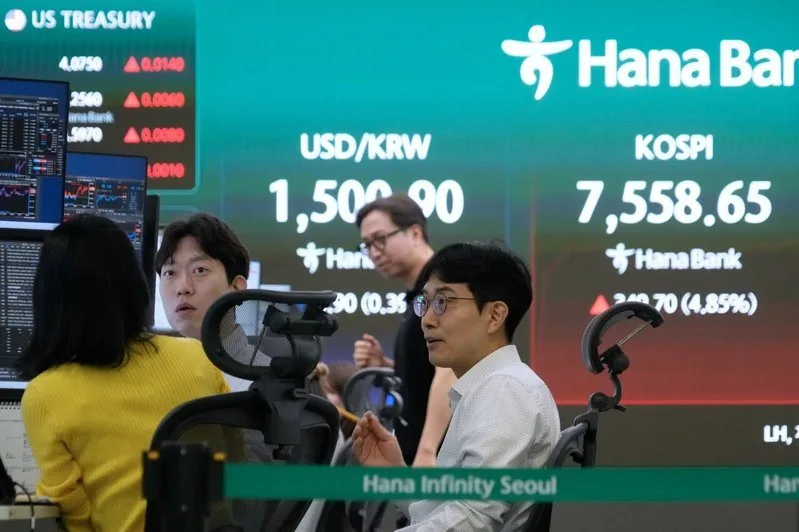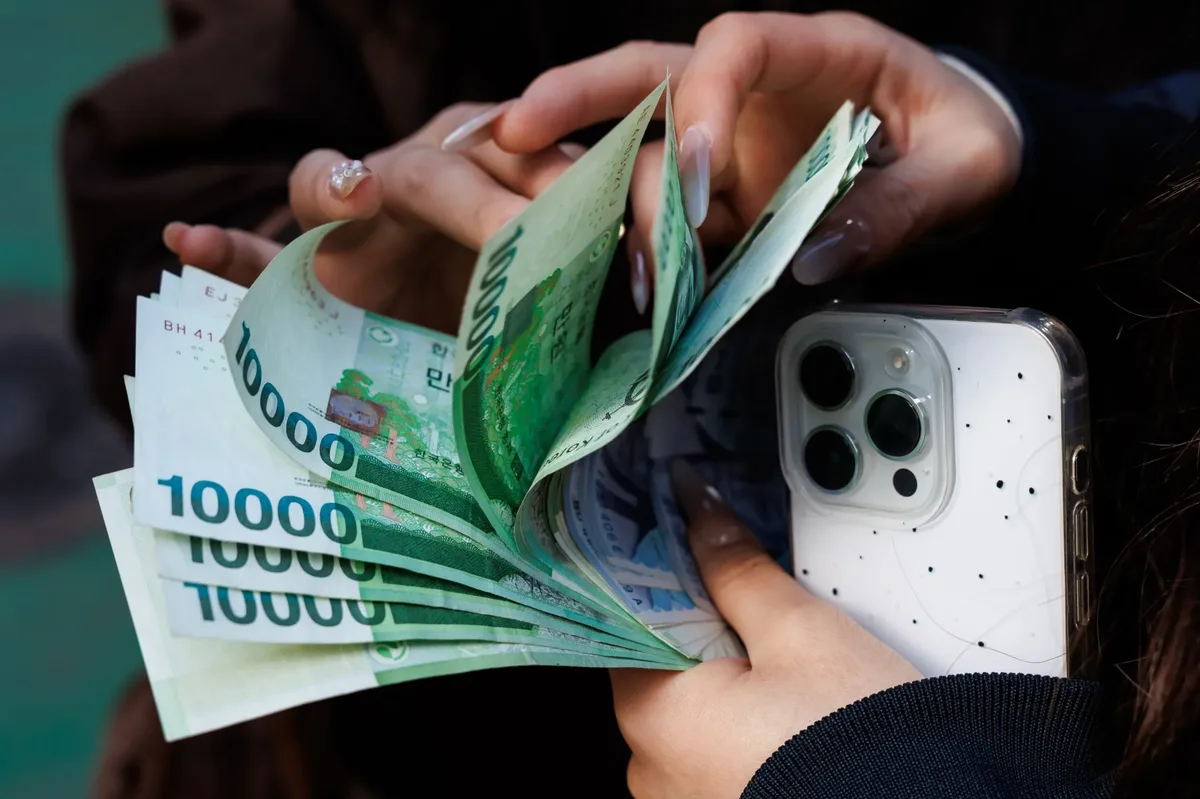
South Korea's Kospi stock index has risen more than 150% over the past year, making it the strongest performing major equity market worldwide, fueled mainly by the global AI boom and robust demand for semiconductor chips [1, 2]. Despite this stellar stock market performance, the South Korean won weakened approximately 4% against the US dollar over the same period, remaining one of Asia's weakest currencies [1, 2].
Normally, strong equity gains attract foreign capital that appreciates the domestic currency. However, in South Korea this usual positive correlation has broken down [1, 2]. Several factors have driven the won lower despite Kospi strength. Rising oil prices, which topped $100 per barrel in May due to conflict in Iran, increased South Korea's demand for US dollars to pay for energy imports, putting downward pressure on the won [2].
Increased geopolitical tensions and broader global risk aversion also led foreign investors to withdraw from risk assets like Korean stocks and buy dollars, further weakening the won currency [2]. Meanwhile, the traditional mechanism that linked Korean stock market gains to won strength through foreign investor conversions and exporter dollar repatriation has weakened since 2015, partly due to capital outflows as aging domestic investors seek higher returns abroad [2].
Local investors have increasingly absorbed foreign selling in the stock market, enabling the Kospi to rise even as foreign capital exits and the won depreciates [2]. The South Korean government has tried to support the won with measures including encouraging repatriation of overseas earnings, raising tax exemptions on foreign dividends, and verbal currency interventions, but these have had limited effect [2].
In recent months, South Korea pledged $350 billion in investments in the United States, raising new concerns the won may weaken further as funds convert won into dollars [2]. There is market speculation on whether Seoul and Washington might revive a currency swap agreement as a longer-term step to stabilize the won [2]. The won's performance and government actions remain closely watched in the months ahead.