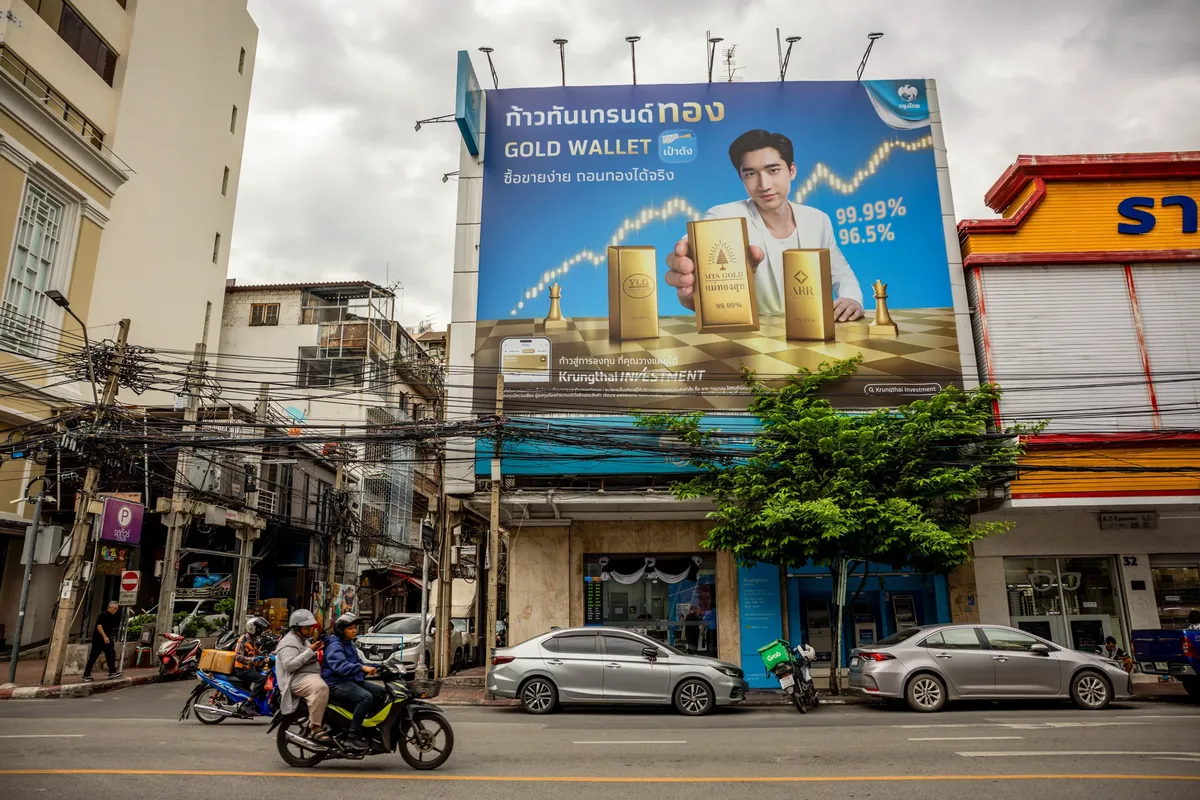
Thailand's central bank imposed a daily online gold trading limit of 50 million baht per person from March 1, 2026, citing concerns that online gold speculators were amplifying baht volatility [1, 2]. The bank attributes price swings of up to 30% in 2025 to speculative trading in digital gold platforms accessible nationwide [1, 2]. Officials are considering further restrictions, including cutting the daily trading cap by 40% to 30 million baht [2].
Gold holds a significant cultural and economic role in Thailand, with citizens buying more gold per capita than in China or India. All 14 major Thai gold trading companies offer digital platforms that let everyday investors trade fractional gold amounts priced in baht [2]. This widespread access has made gold trading deeply embedded in Thai finance.
Pawan Nawawattanasub, CEO of YLG Bullion International, criticized the central bank's curbs, saying, "We've built an ecosystem that makes gold accessible to everyday investors — one that's the envy of the world. Instead of nurturing it, they're trying to dismantle it" [2]. He warned that stricter limits could undermine the system.
Pawan also suggested that moving digital gold trading to dollar-based platforms would shift currency exchange risks to investors, saying, "To see a significant impact, the entire digital gold trading system would need to move to dollar-based platforms, shifting the burden of currency exchange onto investors" [2].
In 2025, gold prices rallied globally and the Thai baht rose to a five-year high with marked volatility, partly blamed on online speculative gold trading [1, 2]. The restrictions aim to curb these sharp swings and stabilize the currency.
The next development could involve the bank implementing a further 40% reduction in the daily online gold trading limit, lowering it to 30 million baht per person as it weighs additional measures to manage currency fluctuations [2].