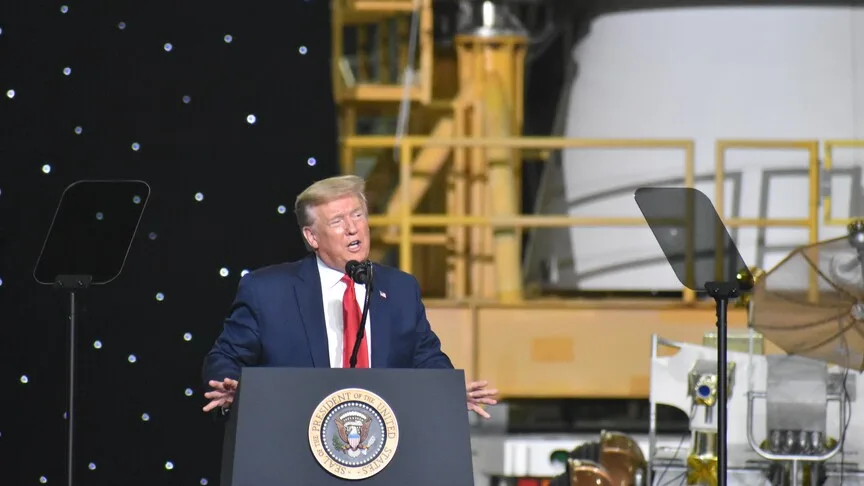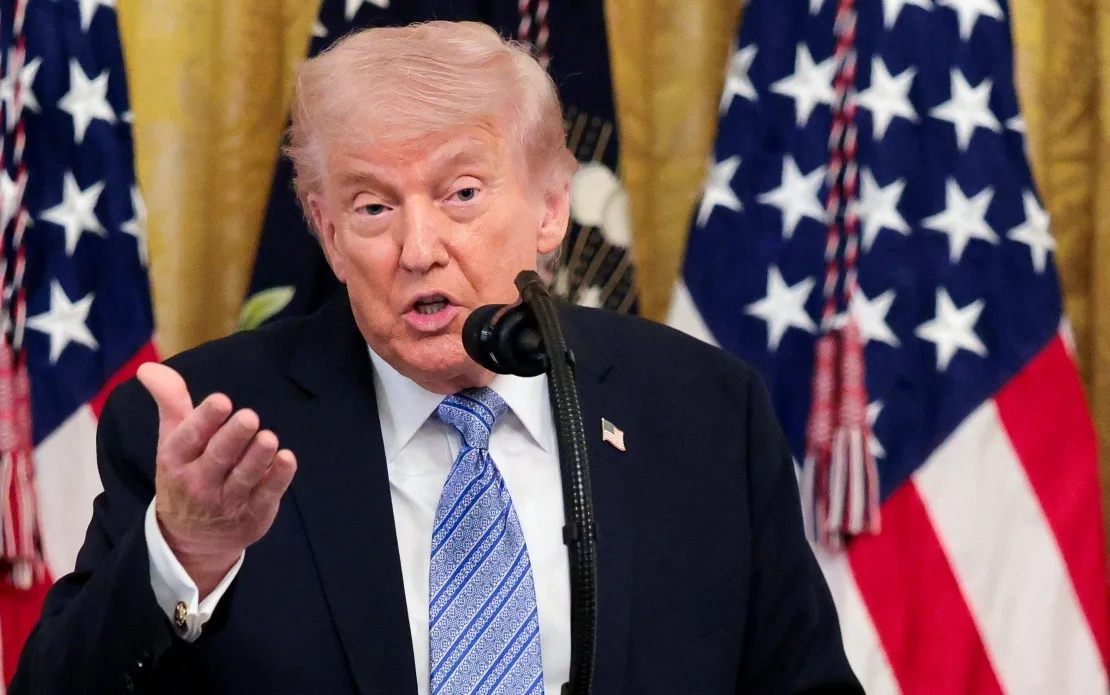
US President Donald Trump signed a memorandum on August 20-21, 2026 to expand US commercial space launches and reentries to more than 1,000 annually by 2030, replacing the outdated National Space Transportation Policy [1, 2, 3, 4]. The directive calls for federal agencies to work closely with private companies on developing space transportation infrastructure, speeding permitting and environmental reviews, improving launch scheduling, identifying new launch and reentry sites, and designating priority airspace corridors [1, 2, 3, 4].
The policy tasks NASA with facilitating commercial transportation to and from the Moon, supporting robotic missions to Mars, and exploring commercial options for human missions to Mars [1, 2, 3, 4]. Trump aims to return US astronauts to the Moon by 2028 and deploy initial lunar base infrastructure by 2030 [3, 4]. The memorandum also directs federal agencies to avoid competing with US commercial space companies unless national security requires it [3, 4].
Federal agencies have been ordered to identify a new federal spacecraft reentry site within 90 days and to integrate space transportation into modernized air traffic control systems while finding available government land for new launch and reentry sites [3, 4]. The goal is to strengthen national and economic security, support military readiness, and foster commercial opportunities in space transportation and aerospace manufacturing [1, 2, 3, 4].
In 2025, US space launches totaled 178, with SpaceX dominating at 170 launches [3, 4]. SpaceX has proposed increasing annual launches to 10,000 within five years, a target the FAA Administrator confirmed in May 2026 [3, 4]. Despite the policy support, SpaceX stock dropped 4.1% on August 20, 2026 amid short-term selling pressure [3].
Michael Kratsios, White House Office of Science and Technology Policy Director, said the new space transportation policy "meets the moment of explosive growth and allows the US to remain a leader in the next space era" [4].