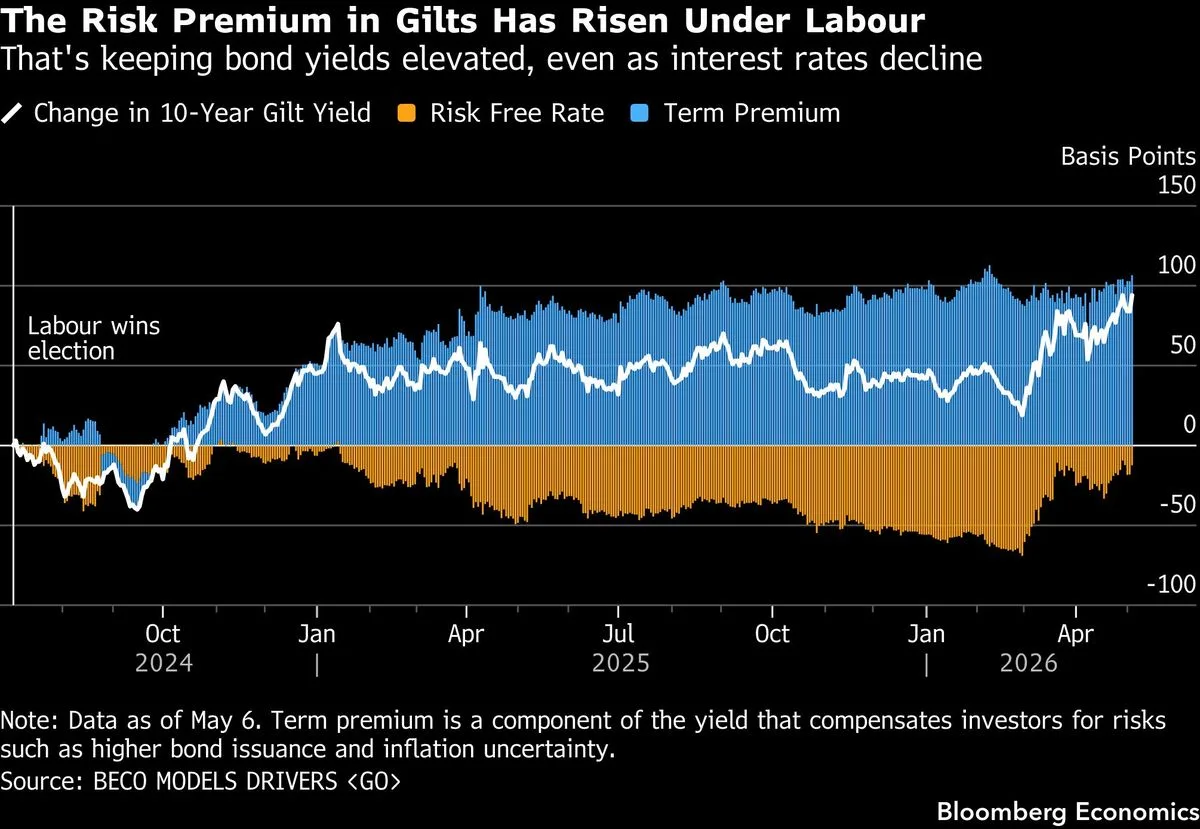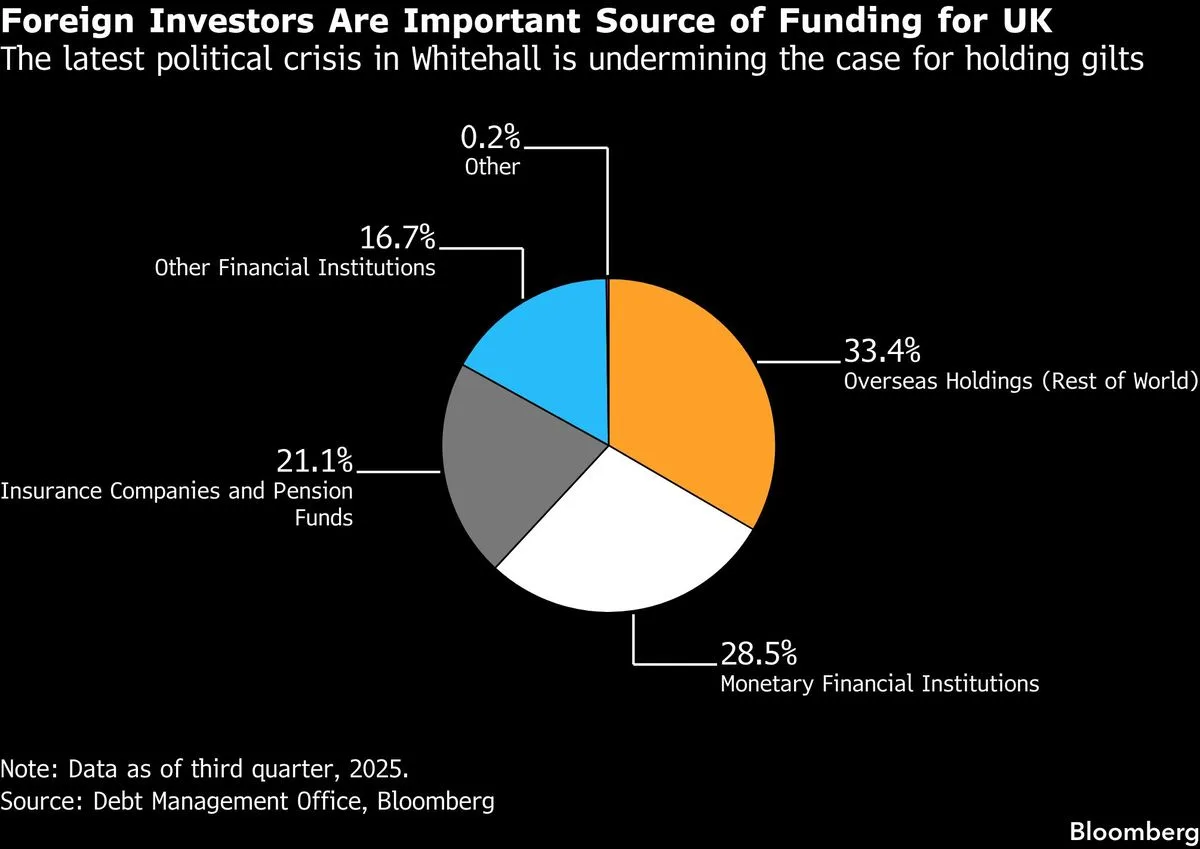
About a third of the UK government’s gilts is held by overseas investors who can quickly shift funds elsewhere during a crisis, heightening the risk of market instability amid ongoing political struggles [1, 2]. Bond-market volatility intensified on May 14 as tensions in London combined with global inflationary pressures linked to the Iran war pushed gilt yields near 30-year highs [1, 2]. UK 10-year gilt yields briefly fell five basis points to 5.02% following gains that tracked international government bond movements affected by oil prices [2].
Officials warned about the growing influence of hedge funds in the gilt market, cautioning that these investors may be forced to unwind leveraged trades if bond prices move against them. This could deepen price swings amid uncertainty [1, 2]. Similar volatility in 2022 helped trigger Britain’s political upheaval when a surge in gilt yields and a bond selloff contributed to Liz Truss becoming the shortest-serving UK prime minister in history [2].
In summer 2025, a smaller bond selloff occurred amid speculation about a possible change in the Chancellor of the Exchequer and the fiscal rules under current Labour leader Keir Starmer [2]. Starmer now faces a divisive leadership battle after Reform UK scored significant local election gains. Angela Rayner has indicated she is preparing a leadership bid, and Wes Streeting resigned as health secretary with plans to challenge Starmer [2].
Antonina Tarassiouk, director of international economic analysis at Reams Asset Management, said investors are cautious: "People are trying to stay out of it and see how this plays out. If rates have become attractive globally speaking, why would you go to somewhere where there’s significantly more risk right now?" [2].
The fallout from the UK’s political crisis underscores that foreign appetite for gilts cannot be taken for granted, especially as global borrowing costs rise due to inflation impacted by the Iran conflict [1, 2]. The next key developments will likely hinge on outcomes of the Labour leadership challenge and how market participants respond to evolving fiscal policies.