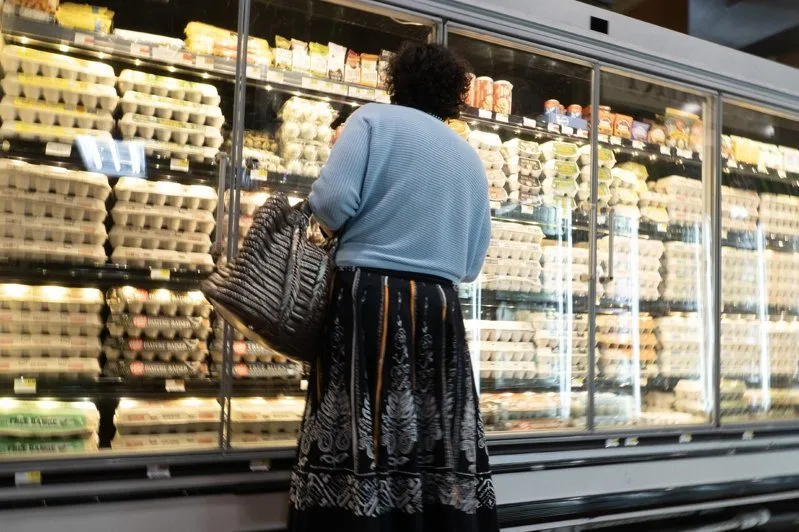
The US personal consumption expenditures (PCE) price index increased 3.8% year-over-year in April 2026, marking the fastest rise since May 2023 [1, 2, 3, 4]. Core PCE inflation, which excludes volatile food and energy prices, grew 3.3% over the same period, the highest since late 2023 [1, 2, 3, 4]. On a monthly basis, overall PCE inflation rose 0.4% in April, slightly below expectations of 0.5%, while core PCE increased 0.2%, also below forecasts of 0.3% [1, 2, 3, 4].
US consumer spending showed signs of strain, rising just 0.1% in real terms for April amid high prices [1, 5, 6]. Personal income remained flat during the month, contributing to a drop in the household savings rate to 2.6%, the lowest since 2022 [1, 4, 5, 6]. The US Commerce Department also revised its first-quarter 2026 GDP growth estimate downward from 2.0% to 1.6%, citing weaker consumer spending and investment [1, 2, 4, 6, 7].
The ongoing US-Iran conflict, which escalated in late February 2026, has disrupted global energy markets and pushed inflation higher [1, 8, 4, 7]. Since US and Israeli attacks on Iran, gasoline prices have surged more than 50%, adding inflationary pressures [6, 7]. New York Fed President John Williams said on May 27 that the inflation impact of the conflict could peak within a few months, but noted supply chain disruptions remain a concern [1, 4].
Federal Reserve Board member Lisa Cook said on May 27 she is prepared to support further rate hikes if inflation expectations loosen. She noted that risks still lean toward higher inflation amid recent price rises linked to the conflict and energy costs [1, 4, 6]. "Regarding my risk assessment, I want to be clear: risks still tilt toward higher inflation. If expected inflation does not ease in time, I am ready to support hikes," Cook said [1].
Economists expressed concern about ongoing pressures. Dan North called the outlook "the wrong direction" given multiple inflation risks, while Joe Brusuelas said US households face mounting strain as inflation-adjusted spending and incomes point to slowed consumption in May [6].
Alongside rising inflation worries, investment in inflation-protected Treasury securities ETFs has picked up, though experts caution about risks related to interest rate changes [9].
The Federal Reserve is closely monitoring these inflation trends. Officials have signaled readiness to tighten policy further if inflation does not subside soon [1, 4, 6, 7]. The Fed's next policy meeting and economic data releases in coming months will be key to assessing the path for interest rates.