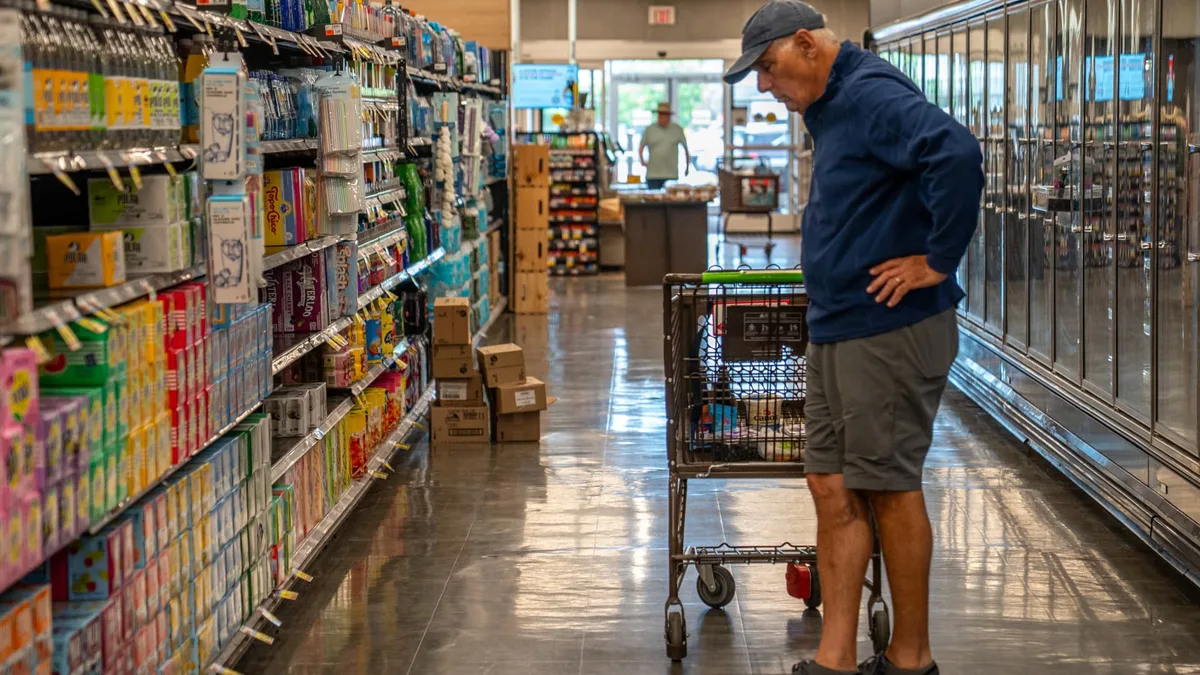
The share of U.S. households who described their current financial situation as "much worse" compared to a year ago rose to 13.3% in May 2026, marking the highest level since July 2022 [1, 2]. When combined with those who saw their situation as "somewhat worse," 43.7% of households reported a decline in their finances, the largest share reported since January 2023 [1, 2].
Despite increased financial worries, inflation expectations have remained relatively stable. The one-year inflation outlook held steady at about 3.5%, while three-year and five-year expectations stood at roughly 3.1% and 3.0%, respectively [1, 2]. Expectations for gasoline prices eased slightly to 5%, even as food price inflation expectations climbed to 5.8%, and rent inflation expectations rose notably to 7.4% in May 2026 [1, 2].
Consumer concerns appear to be shifting from inflation to employment and income security. More respondents expressed worries over involuntary unemployment and reported declining confidence in their ability to find new jobs if needed [2]. Concurrently, home price expectations rose to 3.5% from 3.0% in April, reaching the highest level since July 2022 [2].
Geopolitical tensions, including the ongoing Iran conflict and Middle East instability, contributed to sustained pressure on energy prices, though overall inflation fears among consumers have remained steady [1, 2].
Looking ahead, the Federal Open Market Committee is expected to keep interest rates unchanged at its mid-June 2026 meeting amid persistent inflation above target and solid employment data [1, 2]. Latest news reports published on June 8 summarized these May survey results, highlighting the rising financial stress amid steady inflation outlooks [1, 2]. The FOMC decision scheduled for June 16–17 will be closely watched for direction on monetary policy.