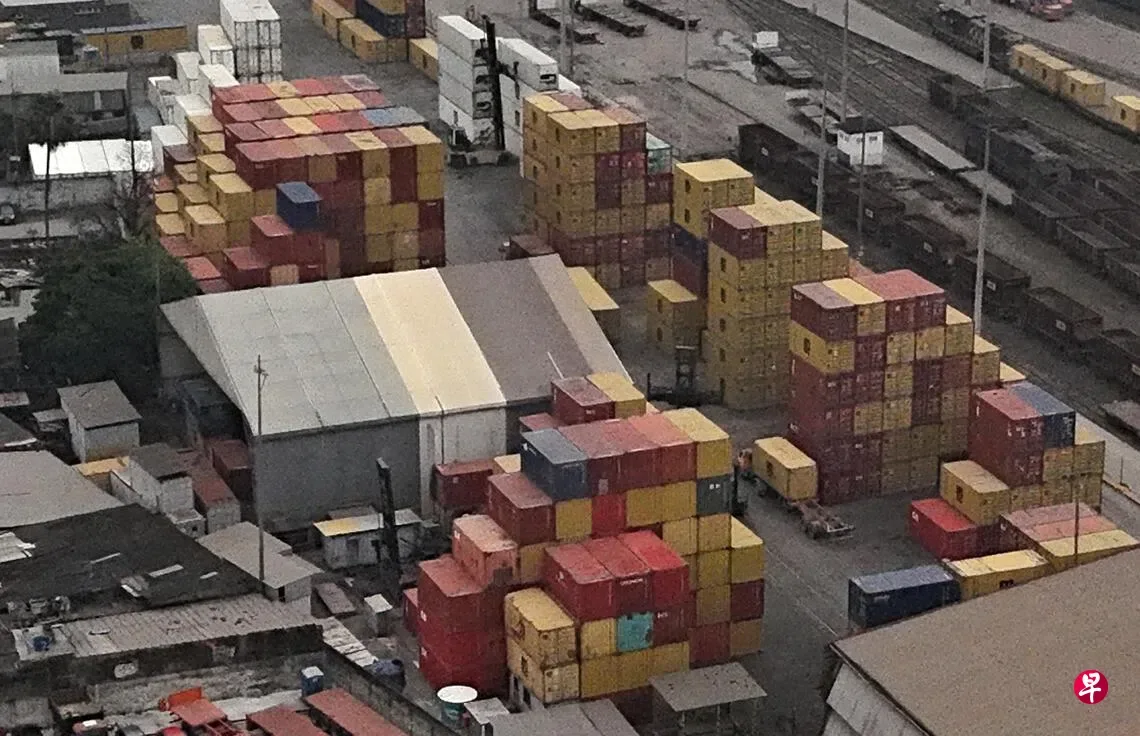
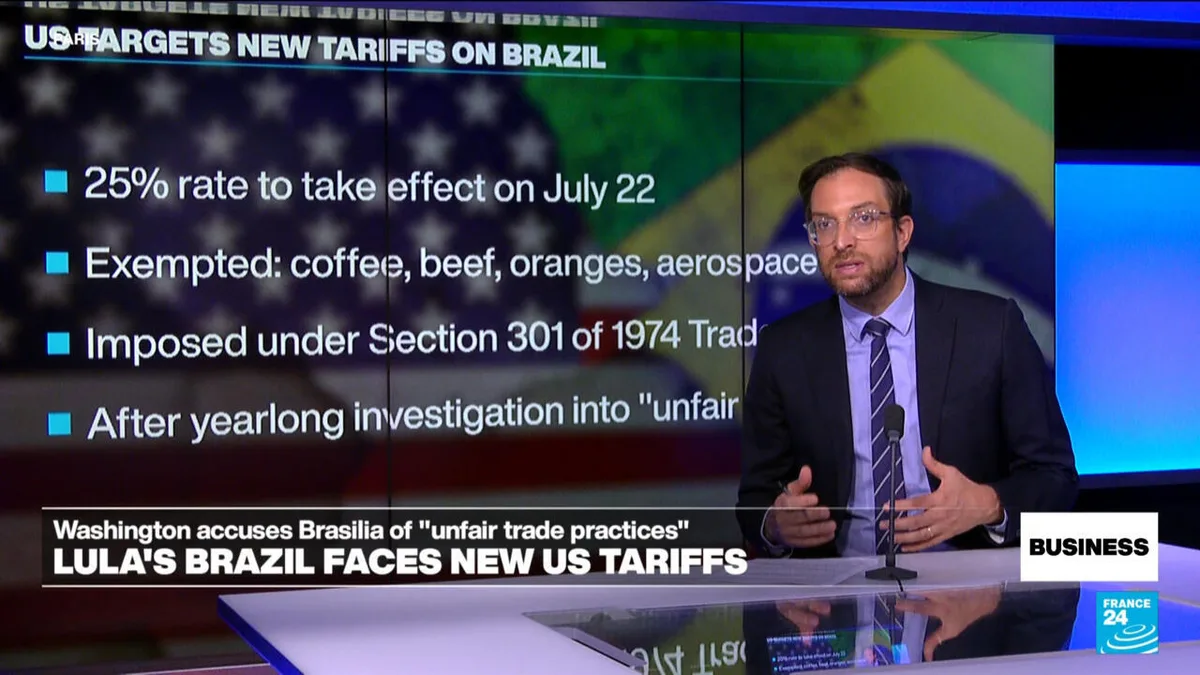
The US government announced it will impose a 25% tariff on most imports from Brazil starting July 22, 2026, following a year-long investigation under Section 301 of the Trade Act of 1974 [1, 2, 3, 4, 5, 6, 7, 8, 9]. The tariffs target thousands of Brazilian products including sugar, furniture, machinery, electrical equipment, shoes, paper, and steel [1, 4, 7, 9]. Certain items such as coffee, beef, orange juice, some ethanol and energy products, aircraft, and aerospace parts are exempt [1, 2, 3, 4, 5, 7, 8, 9].
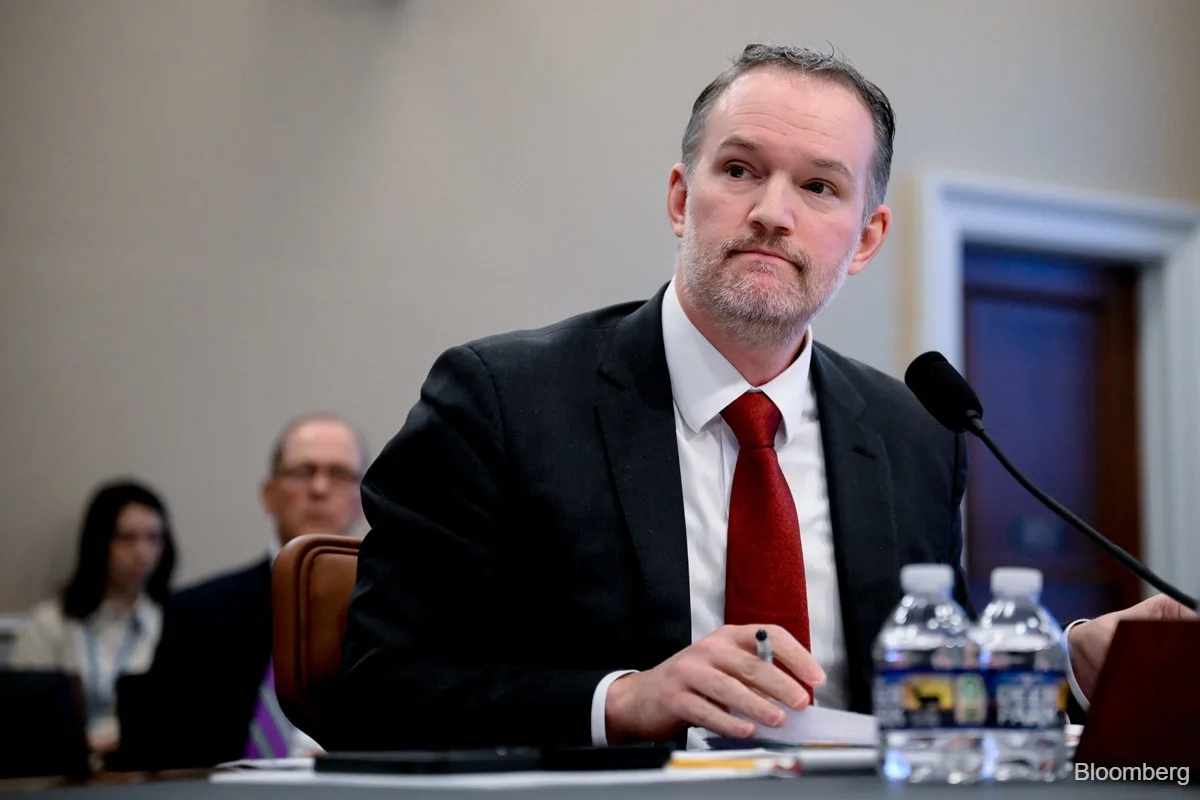
The US investigation concluded Brazil engaged in unfair and discriminatory trade practices. These include favoring the electronic payment system Pix, lax enforcement of anti-corruption measures, protectionist tariffs, and digital trade restrictions, which the US says harm American companies [1, 2, 3, 4, 5, 8, 9]. US Trade Representative Jamieson Greer said, "Today’s action is necessary to address these unfair trade practices to ensure American workers and companies can compete on a level playing field," and added negotiations with Brazil remain open [1].
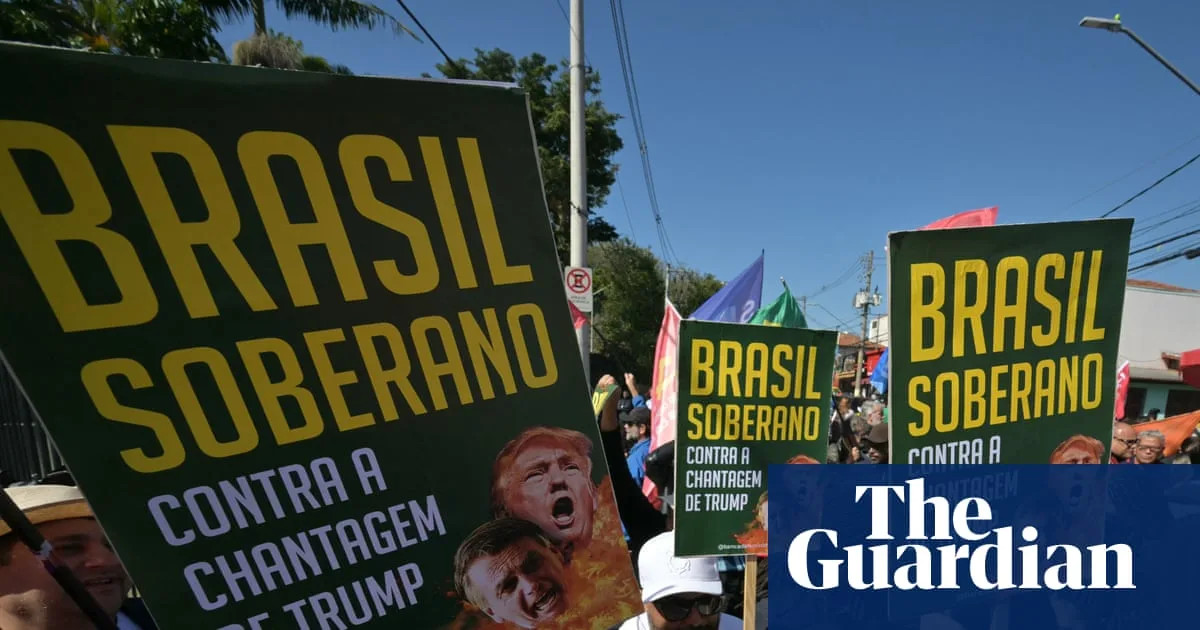
Brazil condemned the tariffs as unjustified and politically motivated. President Luiz Inácio Lula da Silva said, "The Brazilian government repudiates the decision announced today by the United States government regarding the imposition of 25 percent tariffs on Brazilian products," and insisted there was no justification for the unilateral tariffs [2, 6]. Brazilian Foreign Minister Vieira called the tariffs "unjustified and politically motivated," accusing the US of imposing excessive demands in negotiations [10]. Political tensions in Brazil have intensified ahead of October’s presidential election, with accusations exchanged over responsibility for the trade dispute [2, 4, 5, 11].
Brazil is considering retaliatory measures targeting pharmaceuticals, agricultural patents, and the audiovisual industry, and may file a complaint with the WTO’s dispute settlement body [10, 7]. US officials have linked Brazil’s adoption of Pix and preferential tariffs for Mexico and India as proof of discriminatory behaviors affecting US business interests [1, 5, 9]. Despite these claims, the US has run a goods trade surplus with Brazil for years [2, 6, 8].
The tariffs follow the February 2026 US Supreme Court ruling that struck down previous tariff authority used by President Trump, prompting reliance on Section 301 for this action [4, 5, 8]. The US proposed the tariffs on June 1 and officially announced them on July 15, with implementation on July 22 [1, 3, 5, 8, 9].
The US government said the tariffs protect American workers from unfair competition by leveling the trade playing field with Brazil [1, 2, 3, 4, 5, 8, 9]. US Trade Representative Greer emphasized that extensive talks with Brazil failed to resolve the issues but that negotiations remain open to find a resolution [1].