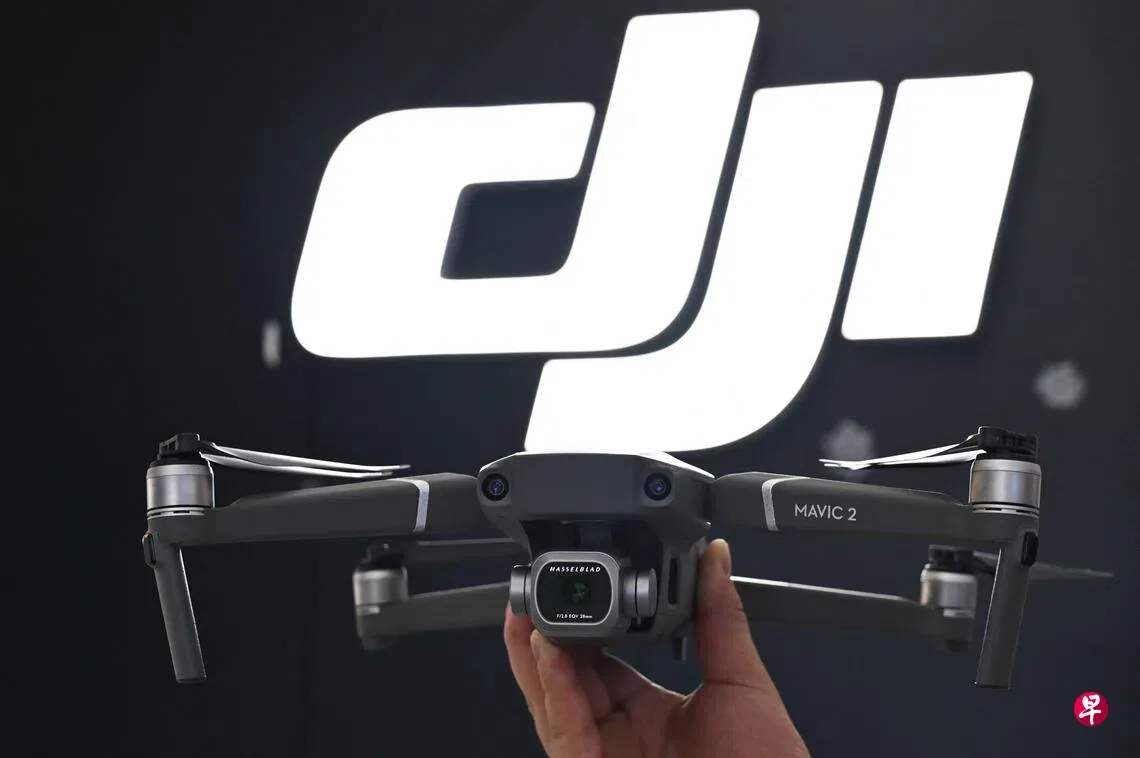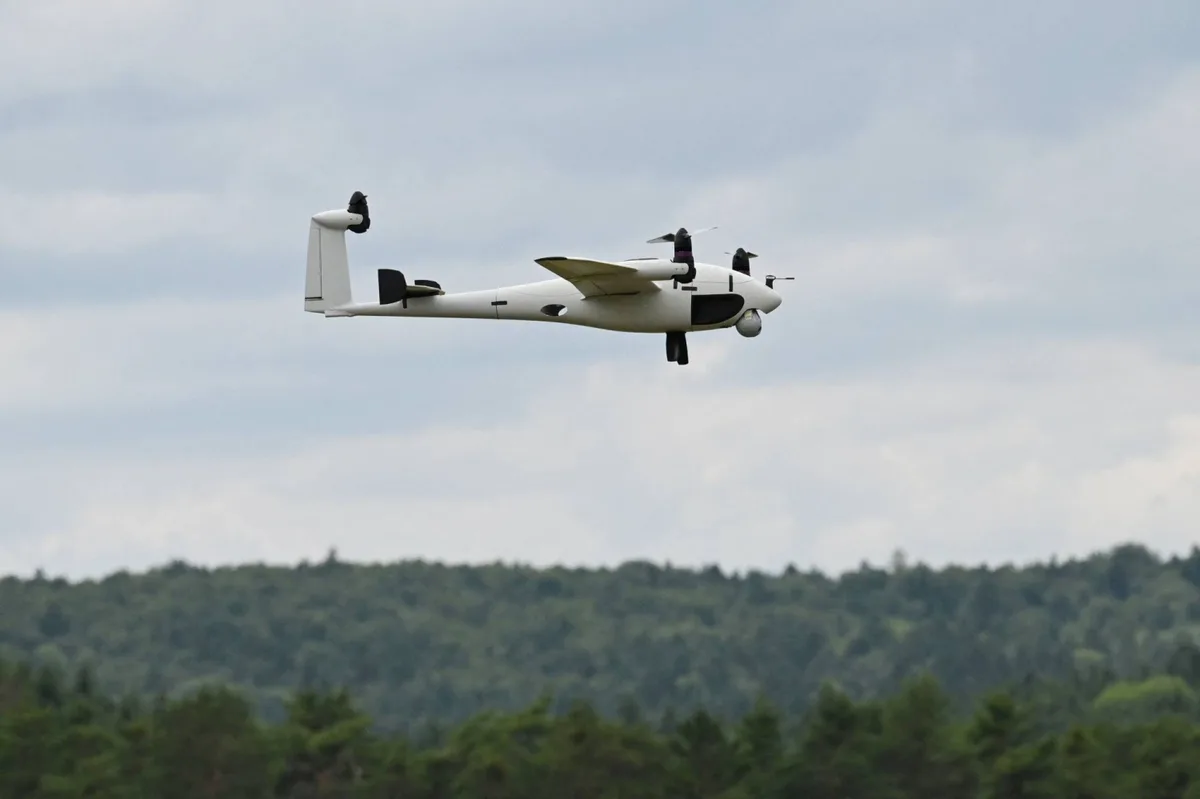
On August 13, 2026, President Donald Trump signed a proclamation imposing new tariffs on imported drones and their components to address national security risks and reduce reliance on foreign suppliers, particularly China [1, 2, 3, 4, 5]. Drones weighing over 25 kilograms or equipped with sensitive technologies like thermal imaging will face a 100% tariff, while smaller or less sensitive drones are subject to a 25% tariff [1, 2, 3, 6, 4, 5].
Imports from allied countries including the European Union, Japan, South Korea, Taiwan, Liechtenstein, and Switzerland will be charged a 15% tariff, and imports from the United Kingdom will face a 10% tariff [2, 3, 6, 7, 4, 8, 9]. The new tariffs will go into effect starting September 3, 2026, with tariffs on less sensitive drone components starting February 9, 2027 [2, 3, 4, 9].
Trump said, "These tariffs will encourage increased domestic production and reduce reliance on foreign supply chains," underscoring the administration's aim to rebuild US manufacturing capacity in drone technology [1]. Commerce Secretary Howard Lutnick noted the US is heavily dependent on foreign drone imports, calling import penetration from foreign producers "substantial" and warning of over-reliance on foreign unmanned aircraft systems and parts [5].
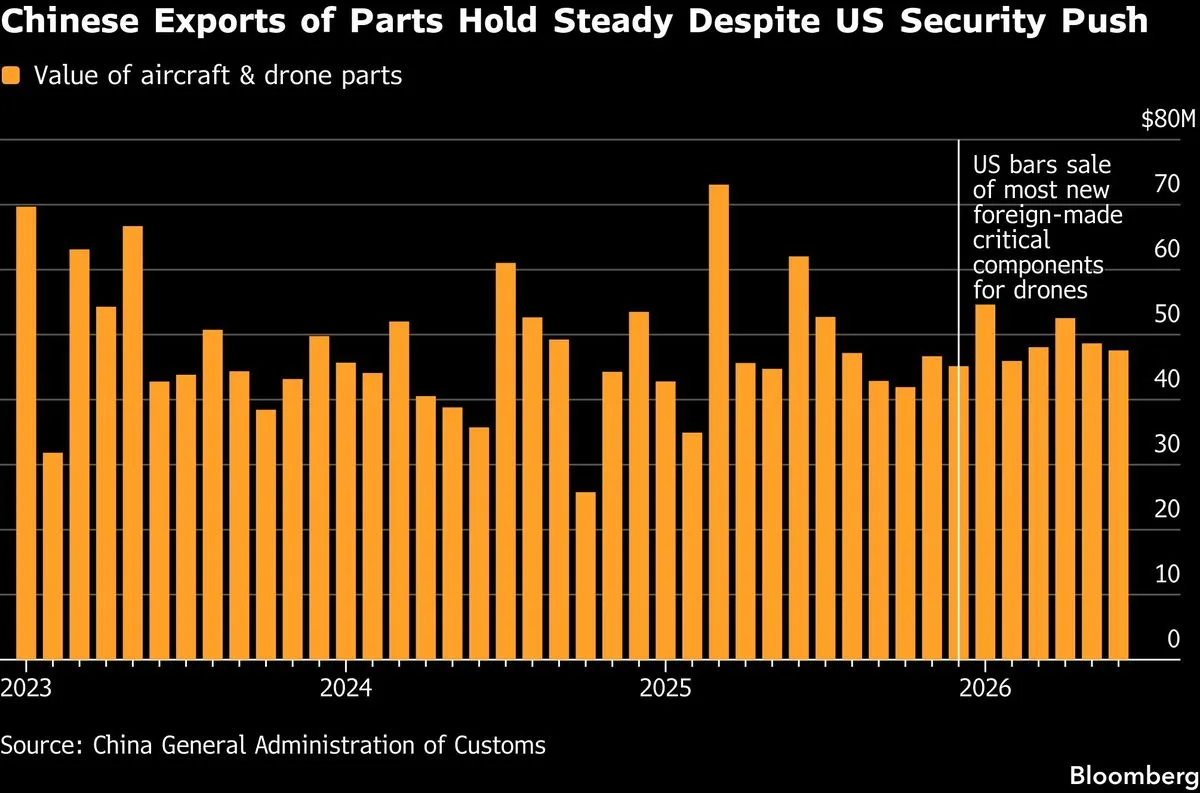
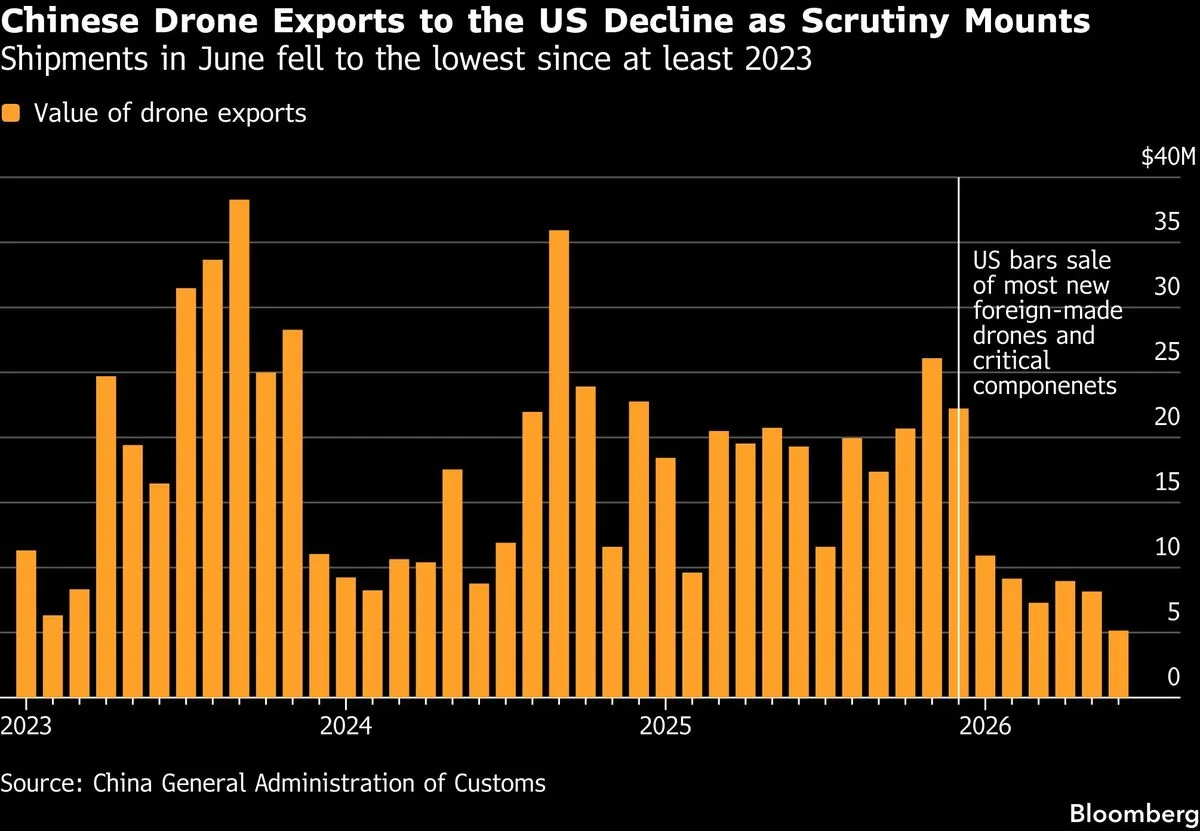
China dominates the global drone market, controlling over two-thirds of it, with exports worth roughly $50 million to the US in the first half of 2026 [1, 2, 6, 9, 10]. In response, China retaliated with export restrictions on drones to the US and blacklisted several US companies linked to the sanctions [1, 9].
A Commerce Department program will incentivize relocating drone and component manufacturing to the US to improve supply chain security and promote domestic production [2, 3, 7, 4, 8, 9]. US drone makers like AeroVironment Inc and Aevex Corp saw stock gains after the tariff announcement [10].
Experts warned that US-made drones often cost more and perform below Chinese models, making supply chain decoupling challenging. Craig Singleton said the tariffs "are mainly targeting China" and will force US businesses and government customers to quickly switch to American or allied suppliers "even if pricier" [9]. Christopher Beddor added that "in the long term, we are probably slipping towards an outcome of a hard decoupling for at least certain types of drones" [10].
Separately on August 13, the US International Trade Court upheld the government's authority to impose tariffs on small shipments below $800, supporting Trump’s effort to close loopholes in tariff enforcement [3].
The tariffs will start for most products on September 3, 2026, with less sensitive drone component tariffs coming into force on February 9, 2027 [2, 3, 4, 9].