The US Producer Price Index (PPI) for July increased 4.7% year-on-year, falling short of June's 5.5% and market expectations of 4.9% [1, 2]. Month-on-month, the PPI was flat, missing the anticipated 0.2% gain. Core PPI, which excludes food and energy, rose 0.2% month-on-month, matching forecasts but down from June's 0.4% increase. Year-on-year core PPI climbed 4.2%, slightly above estimates but below June's 4.7% [2, 3, 4].
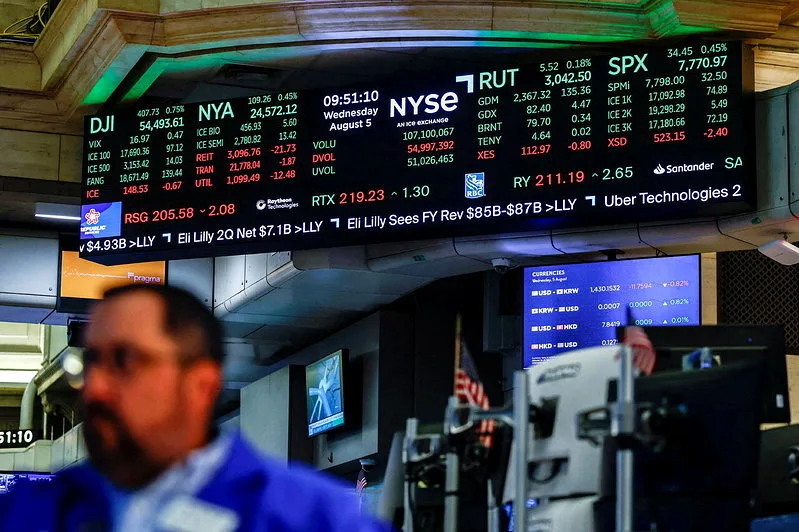
Following the inflation data on August 13, US stock markets surged. The S&P 500 closed at a new high amid easing concerns over Federal Reserve rate hikes and falling bond yields. Yugo Tsuboi, Daiwa Securities Chief Strategist, said the inflation data "showed no worsening, reducing market fears of a Fed hawkish shift, driving strong tech stock buying" [5, 6, 1]. On August 14, the Singapore Strait Times Index rose 0.41% to 5743.59 points, led by a rebound in Asian tech stocks after the US PPI release [1, 7].
However, weaker US economic data weighed on markets soon after. July retail sales fell 0.6% month-on-month, the largest drop since May 2025, accompanied by an 8% decline in consumer confidence in August [7, 8]. These figures triggered declines in US stock indices on August 14 and 17, with the Nasdaq falling 0.28% and the Dow down 0.51% respectively [7, 8]. Jay Hatfield, CEO of Infrastructure Capital Advisors, noted that "the tech boom driven by AI profits is ongoing. This is a profit boom, not a bubble," highlighting continued investor interest despite volatility [6].
Oil prices reacted to the mixed signals. Brent crude fell to around $87 per barrel immediately after the PPI data but rebounded to approximately $91 per barrel by August 18 amid escalating Middle East tensions and a failure to extend the Strait of Hormuz ceasefire [1, 9, 6]. The turmoil also pushed US 10-year Treasury yields up to 4.75% and 30-year yields to 5.32%, their highest levels in years [9].
Markets remained volatile through August 18 as US stocks dropped on a tech selloff and geopolitical worries, while oil prices and Treasury yields climbed [9].