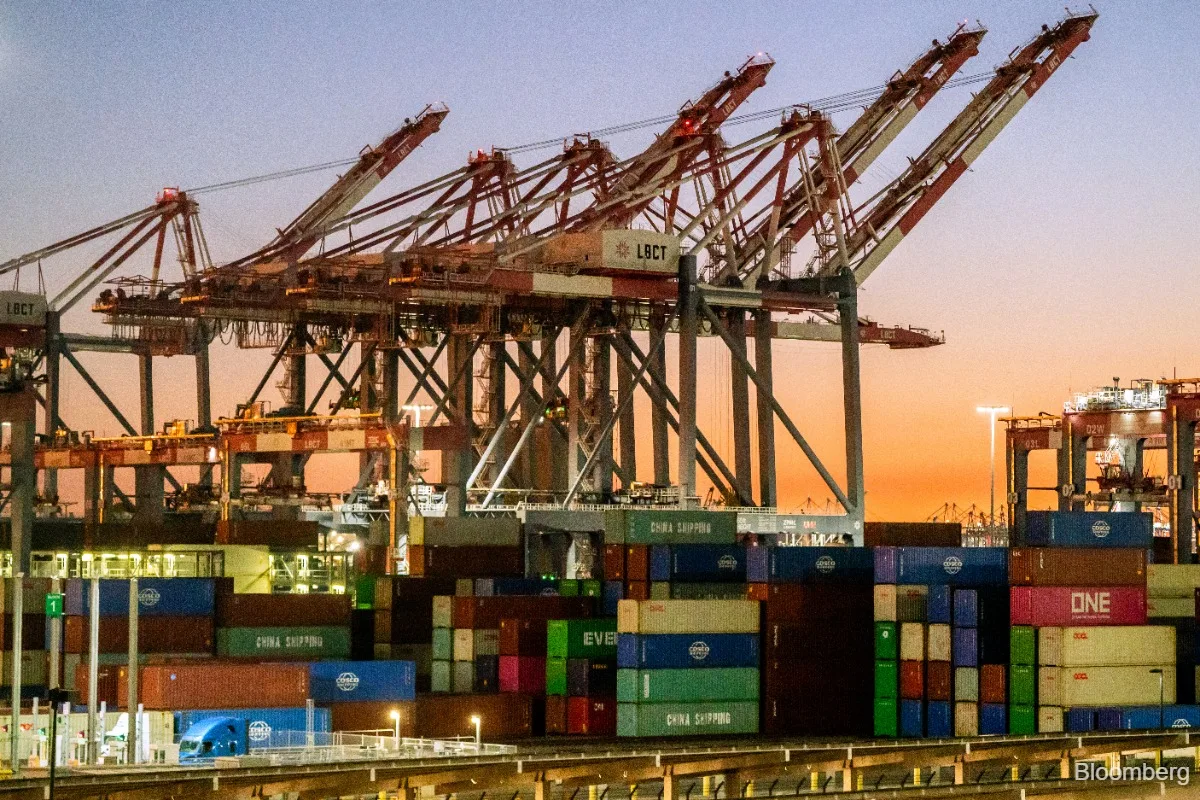
The US goods trade deficit narrowed by 4.2% to $101.5 billion in June 2026, the US Commerce Department Census Bureau reported, saying "the goods trade gap contracted 4.2% to US$101.5 billion last month" [1]. Goods imports declined about 2.6% to roughly $306.2 billion, while goods exports fell around 1.8% to $204.7 billion [1, 2, 3].
Despite the overall decline in imports, continued strong spending on artificial intelligence-related goods helped keep import levels higher than might have been expected [1, 3]. Economists had forecast the trade deficit to narrow to about $100 billion, so the $101.5 billion figure came in slightly above expectations [1, 2, 3].
Trade has subtracted from US GDP growth for two straight quarters through the second quarter of 2026, pointing to ongoing weaknesses in net exports contributing to slower economic expansion [1, 2]. Consumer confidence weakened as well, with the US consumer confidence index falling 1.4 points to 90.8 in July 2026, below market expectations [2]. Labor market sentiment also cooled, with a labor market diffusion index narrowing to 3.1 points [2].
In the US housing market, home prices rose 2.2% year-over-year in May 2026, accelerating compared to April [2]. The Federal Housing Finance Agency noted "5月份的房价年比涨2.2%,涨幅比4月份大" (home prices rose 2.2% year-over-year in May, a larger increase than April) [2]. However, high home prices and mortgage rates have made affordability difficult for many younger buyers [2].
On July 28, 2026, just hours after the release of the trade data, Iran fired multiple ballistic missiles targeting US military bases in the Middle East. All missiles were intercepted with no casualties reported, according to US Central Command, which said "伊朗伊斯兰革命卫队从伊朗境内发射多枚弹道飞弹,企图对驻中东美军发动突然袭击,但所有来袭飞弹均被成功拦截,目前没有传出美军伤亡或设施受损" (Iran's Revolutionary Guard launched missiles attempting surprise attacks on US forces; all were successfully intercepted with no US casualties or damage) [3].