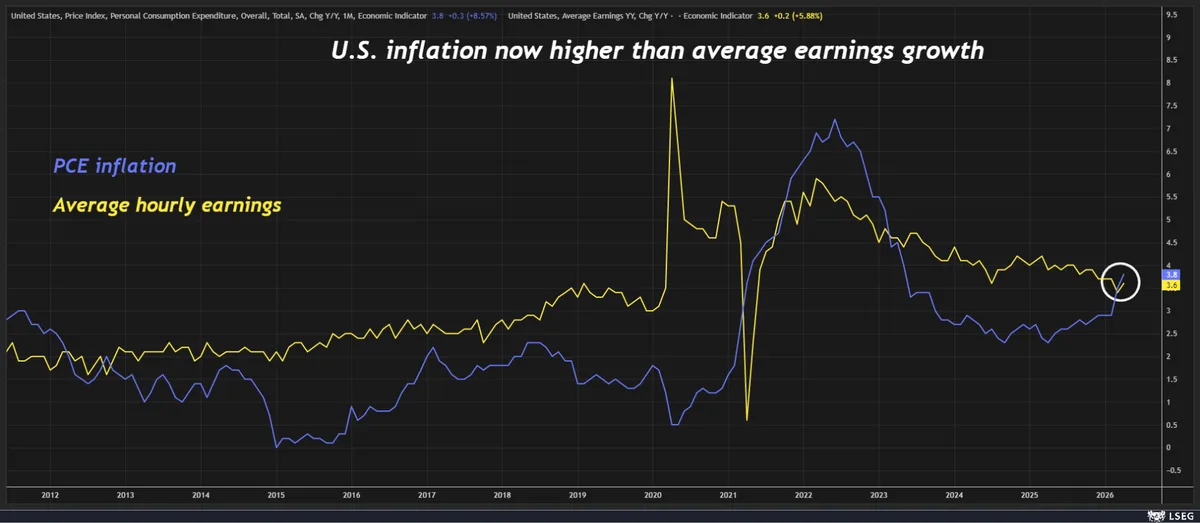
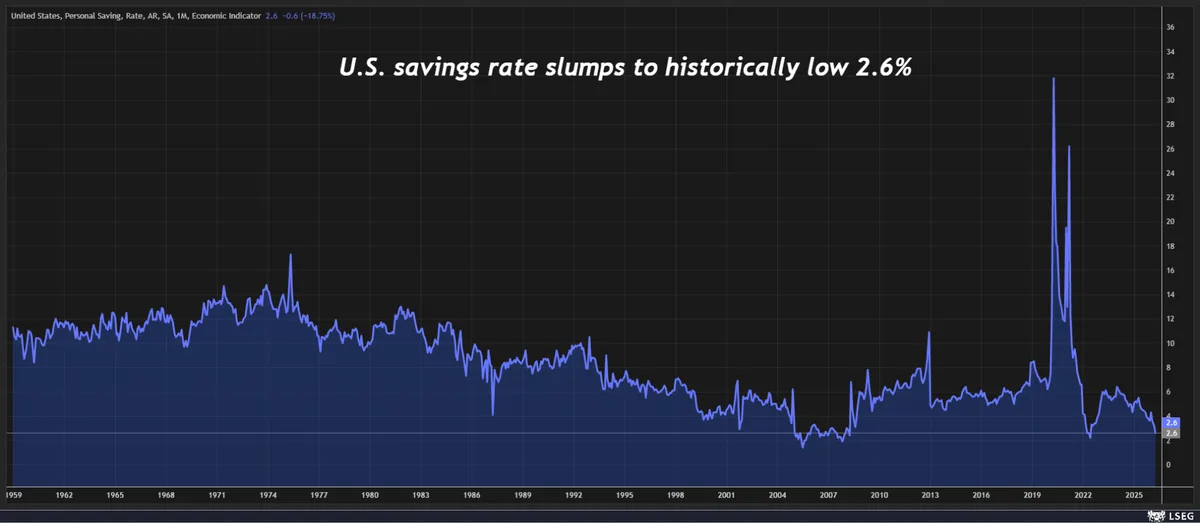
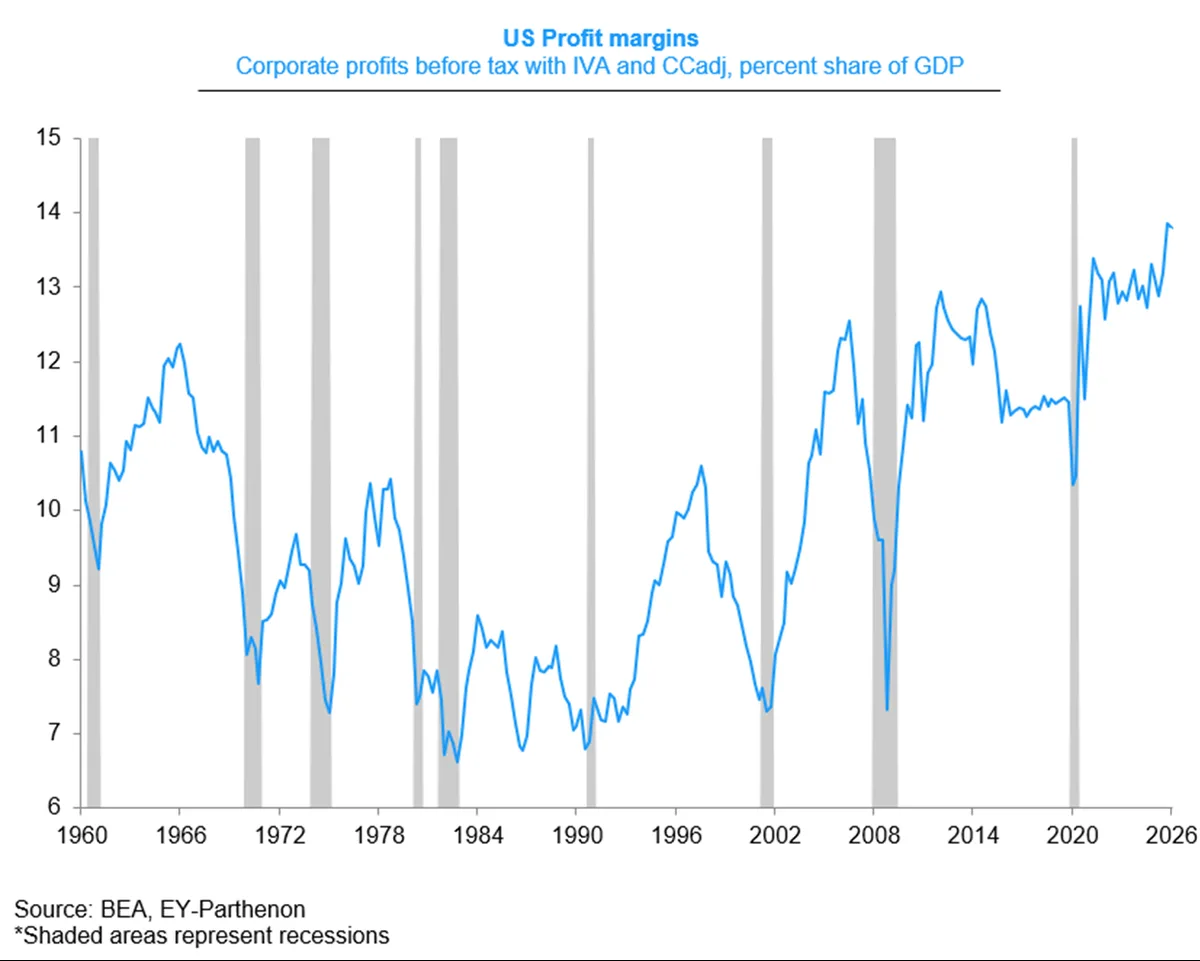
The US personal savings rate dropped to 2.6% in April 2026, its lowest level since 2008 except for June 2022, halving over the past year [1]. Meanwhile, US corporate profits as a share of output rose to 18.4% in the first quarter of 2026, marking the second-highest level since the 1940s [1]. Inflation has begun outpacing wage growth for the first time in three years, driven primarily by energy price pressures [1]. Consumer confidence has also fallen to record lows in recent months, reflecting growing economic anxiety among households [1].
A major factor behind rising consumer costs is a growing shortage of memory chips, driven by high demand from artificial intelligence (AI) data centers. An anonymous coalition of nine US trade groups explained, "Expanding artificial intelligence (AI) data centres consume an enormous share of available memory chip capacity," which is limiting supply for other sectors [2]. The chip shortage has led some manufacturers to prioritize AI-related chips, reducing production of chips used in everyday electronics. This shift is pushing device prices higher and disrupting supply chains across consumer electronics, automobiles, and medical devices [2].
The shortage could persist for years. SK hynix’s chair estimated that chip shortages might last until 2030 due to the long lead times needed to build new chip factories [2]. On June 3, 2026, the coalition of trade groups urged the US Treasury and Commerce Departments to expand domestic memory chip manufacturing capacity to help ease constraints [2].
Economist Phil Suttle said, "I don't think that these trends are economically or politically sustainable. How they get resolved is an open issue but, in my view, both profits and consumption have significant forward-looking downside risk" [1]. The pressing chip shortages combined with rising inflation are straining consumers who are saving less while corporate profits soar.
The US government is now considering policy responses to alleviate the chip supply crunch. The next key step will be monitoring the response to the June 2026 request for expanded memory chip capacity and assessing its impact on both prices and supply in coming quarters.