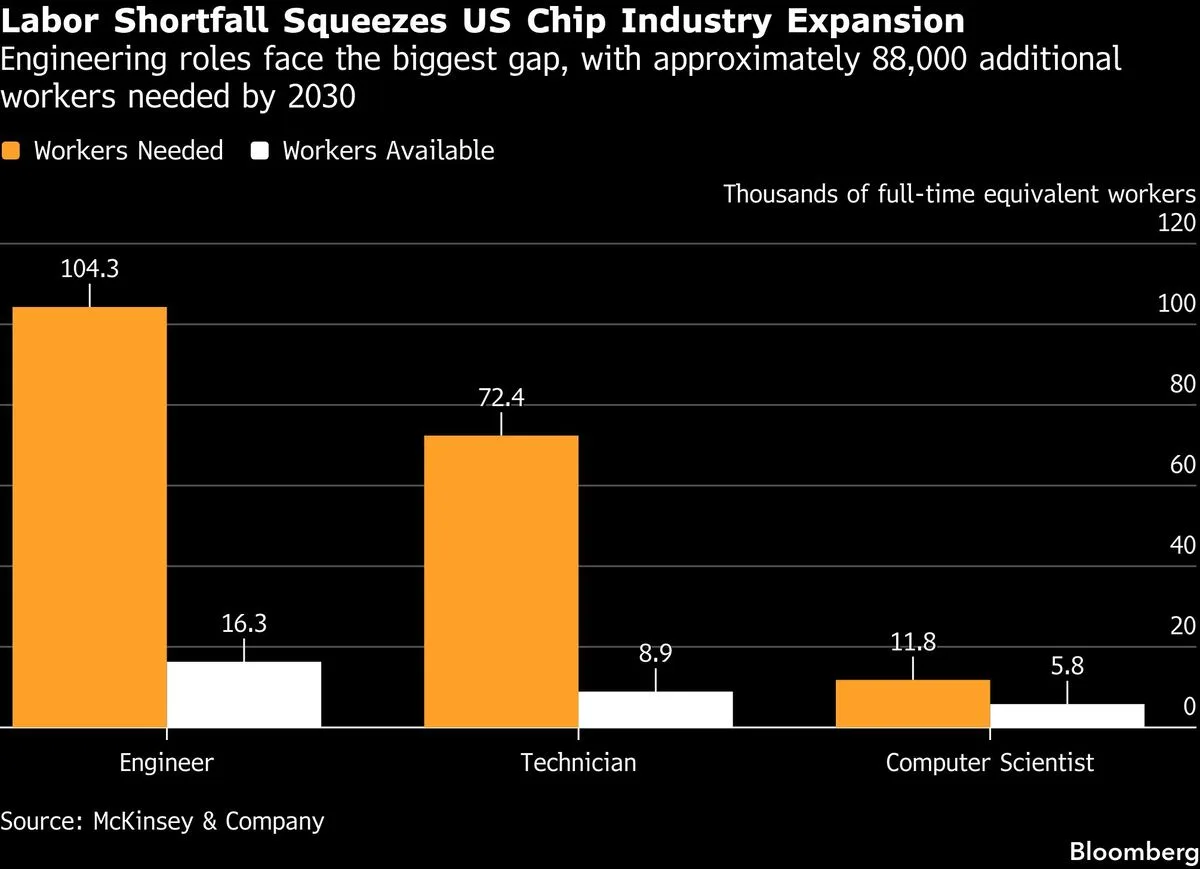
A report released on July 7 by McKinsey, SEMI, and the US National Science Foundation projects a shortage of up to 157,000 high-skilled full-time workers in the US semiconductor industry by 2030, threatening construction and production at new chip manufacturing plants [1, 2, 3].
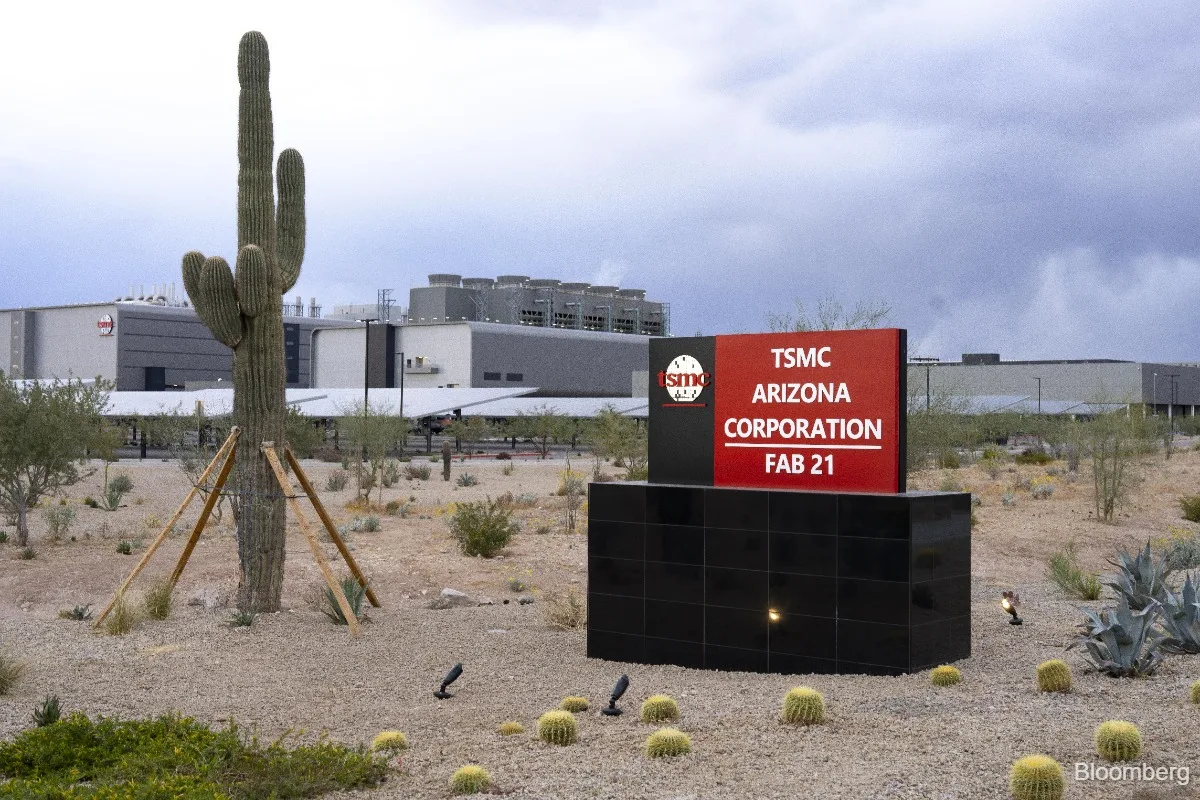
The states most affected will be Texas, California, Arizona, New York, and Ohio, where major semiconductor investments are planned. Taiwan Semiconductor Manufacturing Company (TSMC) aims to invest up to US$265 billion to build about a dozen facilities in Arizona. Micron Technology plans a US$100 billion investment in New York, Samsung Electronics is building a chip facility in Texas, and Intel’s US$28 billion Ohio plant is delayed and expected to face labor shortages as production ramps up [1, 2, 3, 4, 5, 6, 7, 8, 9, 10, 11, 12].
Industry leaders stress the gap in available talent is critical. McKinsey Partner Taylor Roundtree said, “The talent simply does not exist in sufficient supply. The entire industry must work together to address this” [3, 7]. Roundtree also noted, “The US does not currently have enough skilled workers. The industry and government are just waking up to how huge this talent gap is” [9].
Only about 3% of US engineering graduates choose semiconductor careers, with most preferring higher-paying software and AI fields. By 2030, 74% of semiconductor job vacancies will be in manufacturing roles and 60% in engineering, both facing severe hiring challenges [3, 4, 5, 6, 7, 8, 9, 10, 11, 12].
The semiconductor workforce shortage risks slowing projects supported by the US government’s 2022 Chips and Science Act, which aims to boost domestic chip production with funding including US$200 million for the National Network for Microelectronics Education through 2027. Despite these programs, further government support, expanded education efforts, and industry collaboration are urgently needed to fill the hardware and manufacturing talent pipeline [3, 4, 7, 9, 11, 12].
Rising costs for copper, steel, and cement also increase the expense of building new plants, adding pressure to the industry. Meanwhile, layoffs of more than 102,000 tech workers in other sectors this year complicate labor market dynamics [1, 2, 4, 6].
Some states like Arizona have begun encouraging semiconductor interest by letting students work with chip equipment and wear cleanroom suits to raise awareness and attract future workers [3, 4, 7, 9, 11]. The industry continues to call for government funding and early career exposure to help close the deepening talent gap [1, 3, 4, 7, 9, 11, 12].