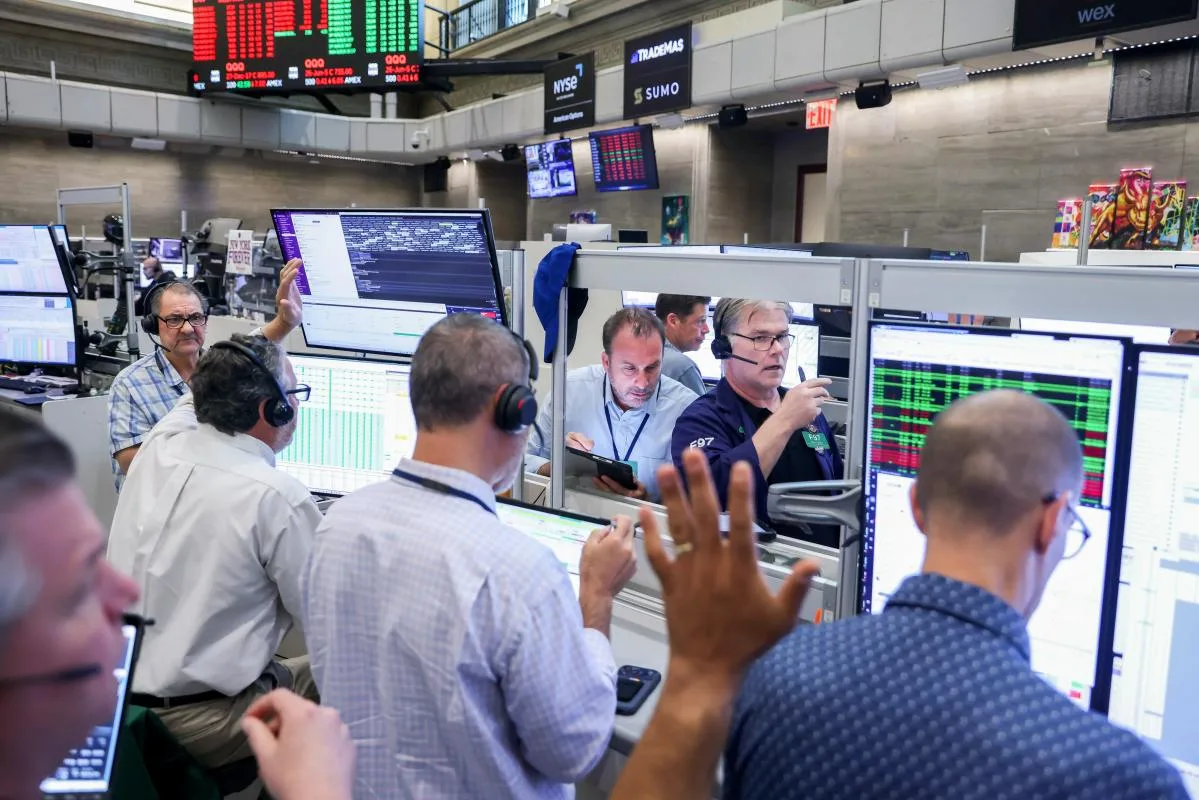
The Nasdaq Composite index plunged more than 4% on Friday, marking its largest one-day drop since April 2025 [1, 2, 3]. Major tech stocks led the decline with Intel dropping over 11%, Oracle down 9.5%, and Nvidia tumbling nearly 6% [3]. The selloff ended a nine-week winning streak for the S&P 500, which lost 2.6% [1, 2, 3]. The Dow Jones Industrial Average also slipped about 1.3% [1, 3].
Strong employment data released on Friday added to investor unease. The robust US jobs report raised expectations that the Federal Reserve will maintain higher interest rates for longer, or hike them further, contributing to the equity selloff [1, 2]. David Doyle, head of economics at Macquarie Group, said, "Friday's jobs report was potentially 'too good', especially against a backdrop of high inflation" [1].
Investors moved away from high-growth technology and AI-related stocks, seeking refuge in defensive sectors such as healthcare, utilities, and consumer staples [1]. The selloff reflected concerns that the recent surge in tech valuations, particularly driven by AI enthusiasm, may have stretched too far [1, 2]. Matt Maley, chief market strategist at Miller Tabak, warned, "For us, we worry that it is likely the start of a meaningful decline, even if it’s not the end of this bull market. Longer term, we believe that we’re in a major bubble that will end very badly eventually" [2].
Cryptocurrency markets also saw sharp losses, with Bitcoin falling below $60,000 for the first time since late 2024 amid broad risk-off sentiment [1, 2, 3]. Meanwhile, Brent crude oil prices jumped 3.5% to above $96 per barrel, driven by renewed Middle East tensions after Iran fired missiles at Israel [2]. Gold prices slipped to around $4,320 an ounce, and Treasury yields declined following the strong jobs data [2, 3].
US President Donald Trump criticized the market's negative reaction to the strong labor report. He said, "Too much emphasis is placed on inflation. I hope the market starts to learn that when you have good numbers the market should go up not down" [1].
Friday’s market action followed several key developments earlier that day including the release of the jobs report, the tech-led stock selloff, Bitcoin’s dip below $60,000, and the spike in crude oil prices after missile attacks in the Middle East [1, 2, 3]. Investors will be closely watching next week’s Federal Reserve statements for further guidance on interest rates.