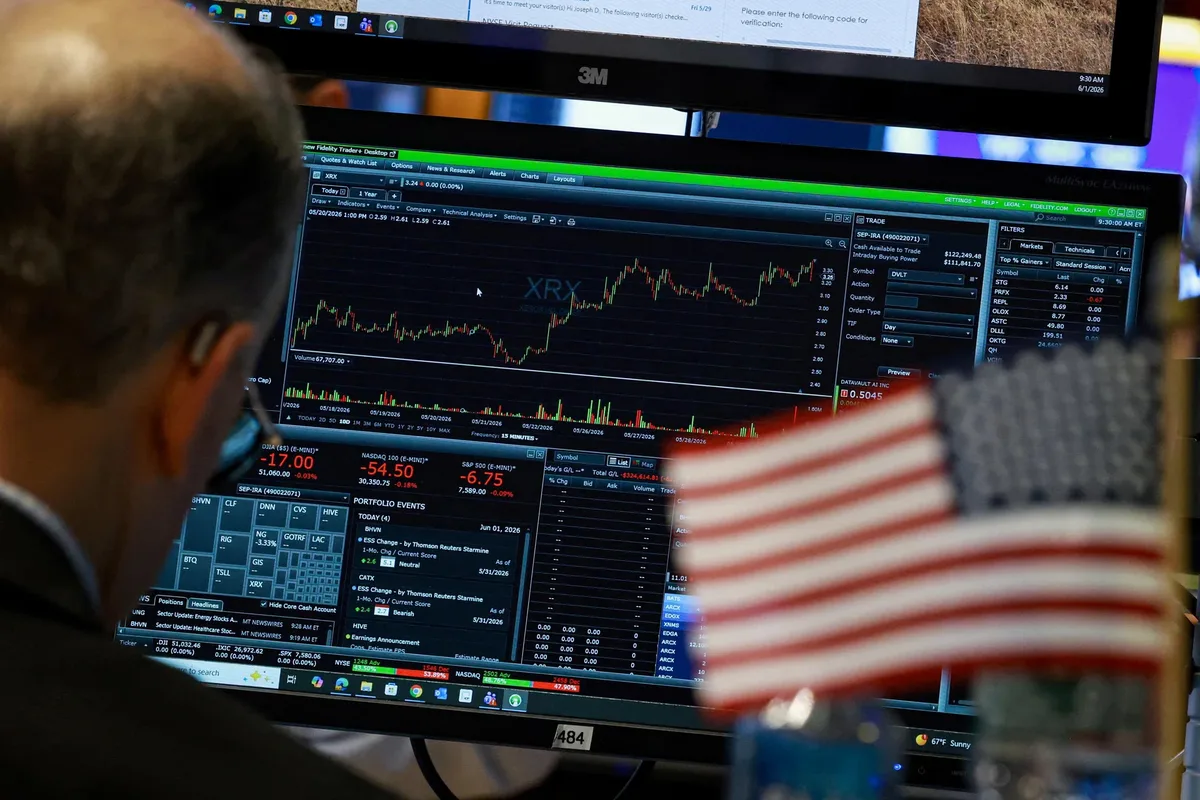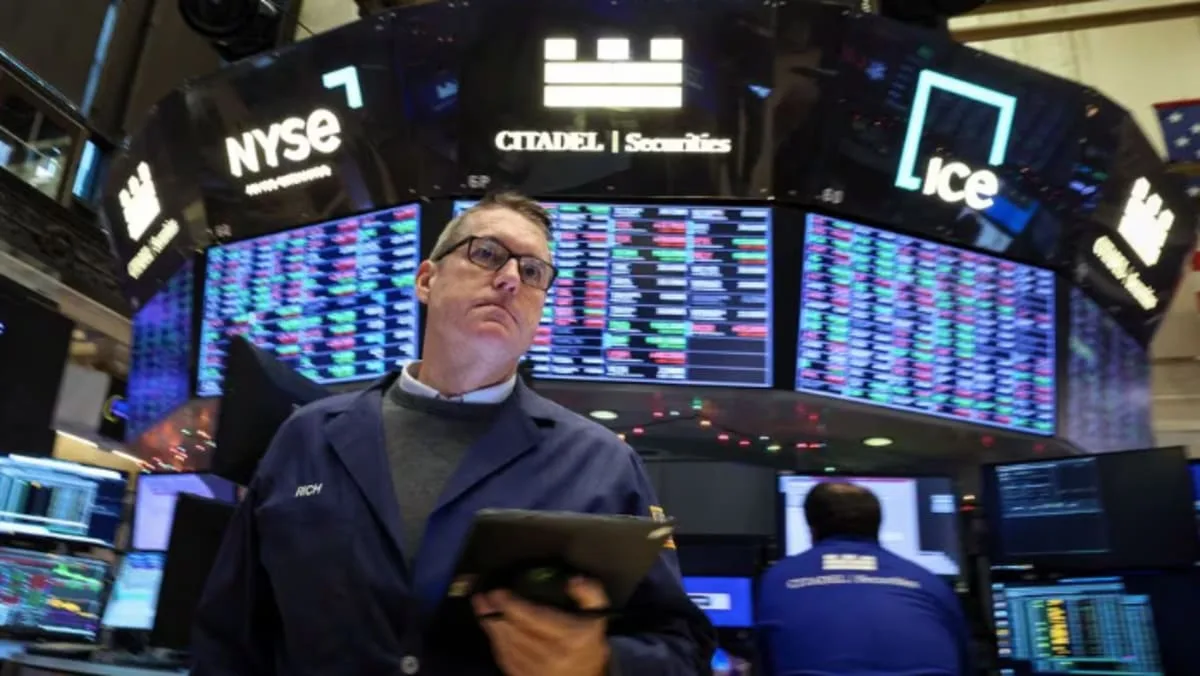
US stock markets closed slightly lower on July 1, with technology shares and chipmakers leading the declines. The Dow Jones Industrial Average slipped about 14 points, or 0.03%, to roughly 52,305. The S&P 500 dropped 16 points, or 0.22%, to 7,483, while the Nasdaq Composite fell 174 points, or 0.66%, to 26,040 [1, 2, 3, 4]. Chipmakers' stocks were hit hard, with their index dropping around 6.3%, dragging down the broader tech sector [1, 2, 3]. Meta Platforms was a notable exception, with shares rising 8.8% after reports it plans to sell excess AI computing capacity [1, 2, 3]. However, the company’s announcement also stoked concerns about AI hardware oversupply, leading some other AI-related tech stocks to retreat [1, 5].
US-Iran indirect talks concluded on July 1 without major progress towards peace. The talks followed an interim accord signed in June [1, 2, 3]. Investors remained cautious ahead of the July 4 holiday weekend due to the geopolitical tensions and upcoming economic data, with Tim Ghriskey of Ingalls & Snyder noting, "Investors remain cautious about talks between the US and Iran, especially with a long US holiday weekend coming up" [1].
Federal Reserve Chair Kevin Warsh reaffirmed the Fed’s commitment to a 2% inflation target and signaled no plans to loosen monetary policy despite political pressure. Warsh stated, "I will stick firmly to the US central bank’s 2 per cent inflation target and 'disappoint' anyone who expects loose monetary policy" [2].
Manufacturing activity slowed in June but remained solid [1, 3]. Meanwhile, oil prices rose sharply amid the Iran war and related geopolitical tensions [1, 2, 3].
On July 2, the US June nonfarm payrolls report revealed weak job growth, with only about 57,000 jobs added—well below the roughly 110,000 expected [5]. Despite this, the Dow surged nearly 595 points to a new closing high near 52,900, marking its longest winning streak in nearly two years [6, 5]. The S&P 500 closed nearly flat near 7,483, while the Nasdaq fell about 207 points, or 0.8%, to roughly 25,833 [6, 5]. Semiconductor stocks also slipped sharply, with the Philadelphia semiconductor index plunging 5.44% [5].
The disappointing jobs data tempered market expectations for Fed rate hikes. The odds of a September rate increase dropped from about 63% to roughly 51% [5]. Analyst Bret Kenwell of eToro observed, "A disappointing jobs report isn’t good news but it may give risk assets a lifeline: it reduces pressure on the Fed to be hawkish" [5]. Saxo Bank strategist Charu Chanana cautioned that "If the cost of large-scale AI use remains high, some companies may slow adoption," adding to uncertainty in tech sectors heavily invested in AI [5].
Investors will continue watching earnings, geopolitical developments, and upcoming economic reports closely after the Fourth of July market holiday closure on July 3. The labor market report’s subdued results will likely shape Fed policy expectations in the weeks ahead.