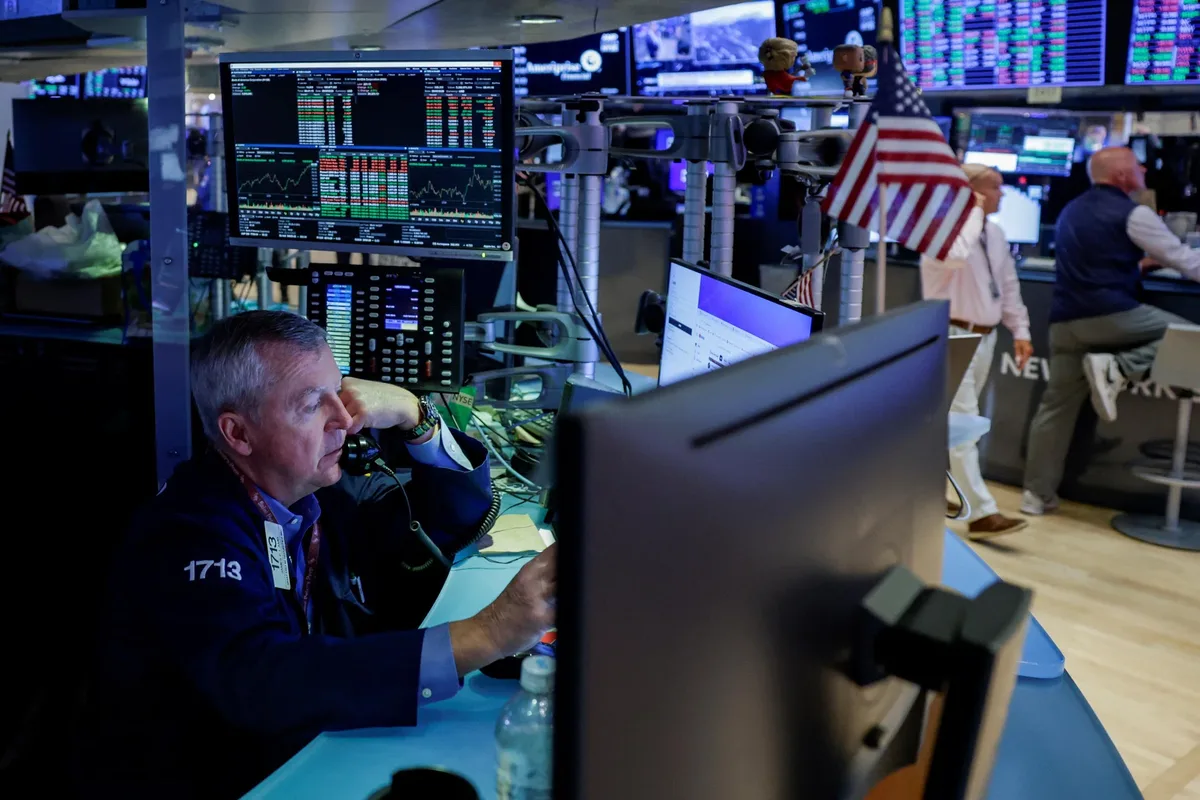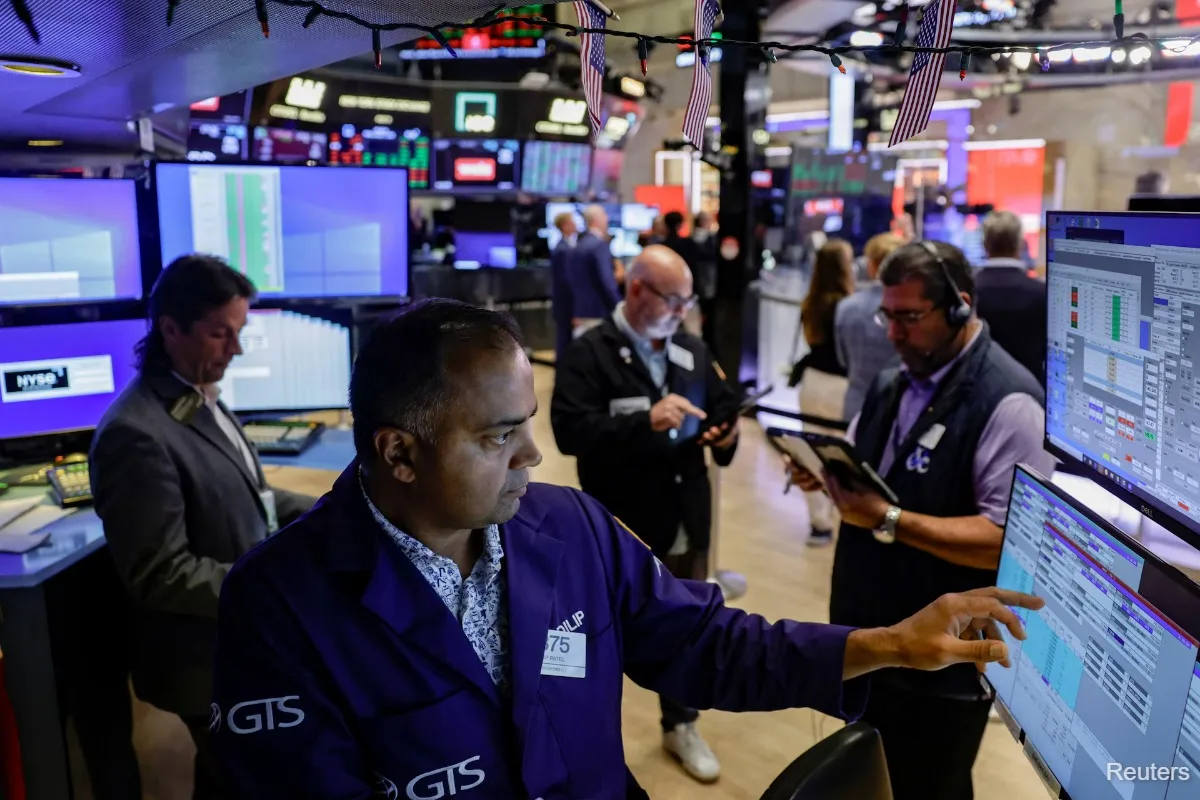
US stock markets opened higher on August 12, with the Dow Jones Industrial Average rising between 0.01% and 0.21%, depending on the source, to levels near 53,800–53,900 points [1, 2, 3]. The S&P 500 increased between 0.26% and 0.48%, closing near 7,748, while the Nasdaq Composite gained 0.54% to 0.89%, reaching approximately 26,588 to 26,680 at the open [1, 2, 3, 4].
Technology stocks linked to artificial intelligence infrastructure led the gains. CoreWeave shares surged around 18-20% after reporting quarterly revenue that nearly doubled compared to a year earlier, driving strong market interest [1, 3, 4]. Other AI-related companies, including Super Micro Computer, Dell Technologies, Micron Technology, Cisco Systems, and Nebius, also posted notable increases in share prices [1, 3, 4]. Super Micro Computer shares rose roughly 10-17% following earnings reports [3, 4].
July 2026 US consumer price index (CPI) inflation data released that day showed a 0.1% increase from June and a 3.4% rise year-on-year, matching market expectations [3, 4]. Core inflation, which excludes food and energy prices, rose 0.2% month-on-month and 2.5% annually, also in line with forecasts [3, 4].
These inflation figures contributed to market sentiment that the Federal Reserve is likely to hold interest rates steady at its September meeting, with around a 55-60% probability priced in [1, 4]. Luke Rahbari, CEO of Equity Armor Investments, said, "These backward-looking numbers kind of put the Fed in exactly the position they want to be. They don't have to do anything. It's the narrative they want, that we're seeing some cooling, but there's no collapse in the economy" [1].
Geopolitical tensions related to the Middle East conflict continued to influence energy prices and market uncertainties, though the effect appeared moderate [1, 3].
On August 13, markets closed mostly higher, with continued gains for the S&P 500 and Nasdaq amid persistent positive sentiment from the inflation data, while the Dow Jones edged slightly lower [4].