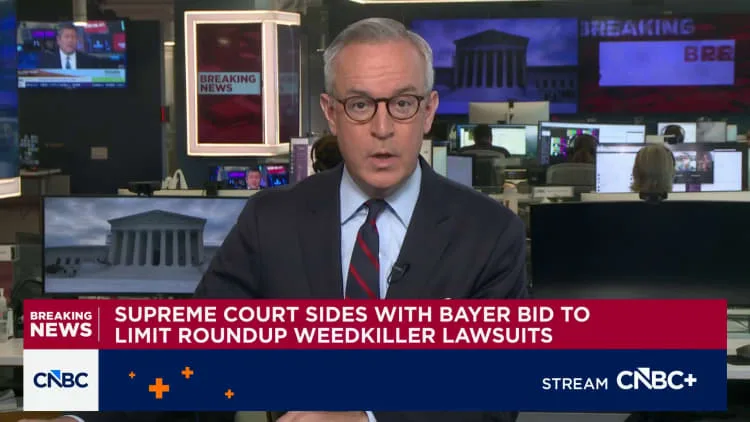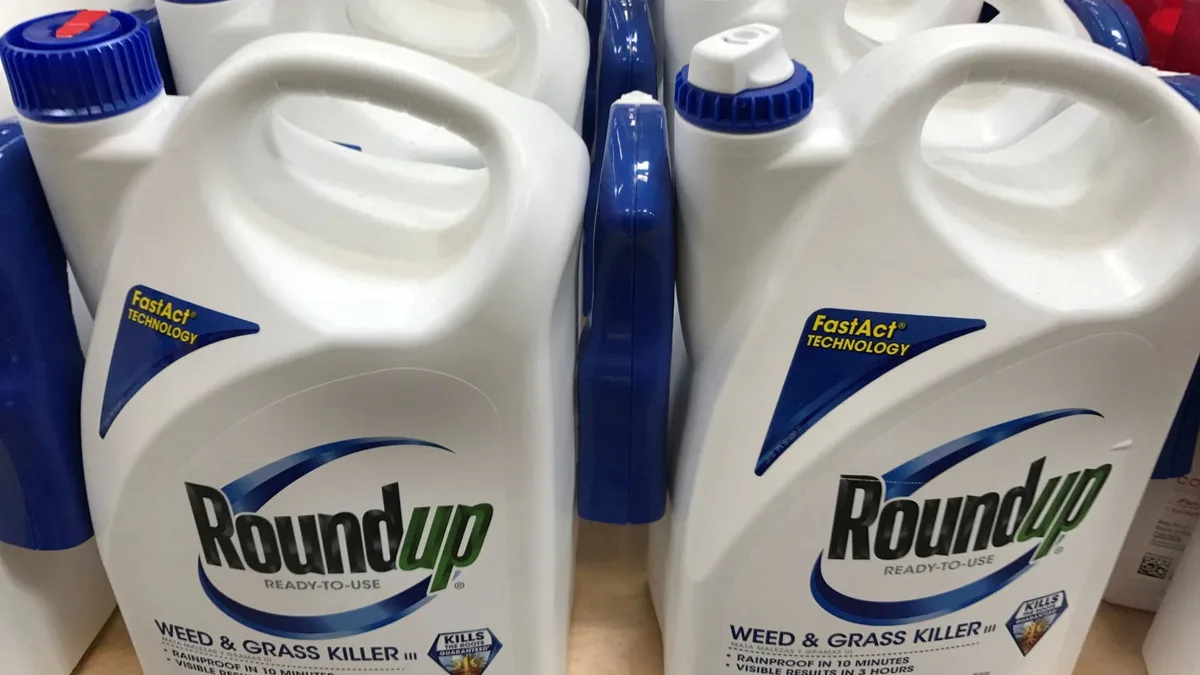
The US Supreme Court issued a 7-2 ruling on June 25 blocking failure-to-warn lawsuits against Bayer over cancer risks linked to its Roundup weedkiller. [1, 2, 3] The decision held that federal pesticide law, specifically the Federal Insecticide, Fungicide, and Rodenticide Act (FIFRA), preempts state claims seeking additional or different warning labels from those approved by the Environmental Protection Agency (EPA). [1, 2, 3]
Justice Brett Kavanaugh wrote the majority opinion, noting EPA's determination that glyphosate, the active ingredient in Roundup, is safe when used properly and does not require a cancer warning label. He wrote, "As demonstrated by that comprehensive regulatory regime, EPA possesses a variety of tools to learn of and address new safety information. And as a matter of law, state tort law may not impose labeling requirements 'in addition to' or 'different from' federal requirements imposed under FIFRA." [1, 2]
The lawsuit before the Supreme Court originated from John Durnell, who developed non-Hodgkin’s lymphoma and sued Monsanto, the original Roundup maker, in Missouri state court. A jury awarded Durnell more than $1 million in damages before the case reached the Supreme Court. [3]
Justice Ketanji Brown Jackson dissented, joined by Neil Gorsuch, arguing that Monsanto could have added warnings without violating federal law. [2] The EPA classifies glyphosate as "unlikely to be a human carcinogen," but this stands in contrast to the World Health Organization’s working group, which labeled it "probably carcinogenic." [3]
Bayer acquired Monsanto in 2018 and has faced nearly a decade of litigation over Roundup exposure. [1, 2, 3] Bayer said the ruling will lead to dismissal of existing failure-to-warn claims and block future similar lawsuits. CEO Bill Anderson called the decision "good for American farmers" and said it provides regulatory clarity "necessary for innovators like us to develop the agricultural tools that guarantee an affordable food supply." [1, 2]
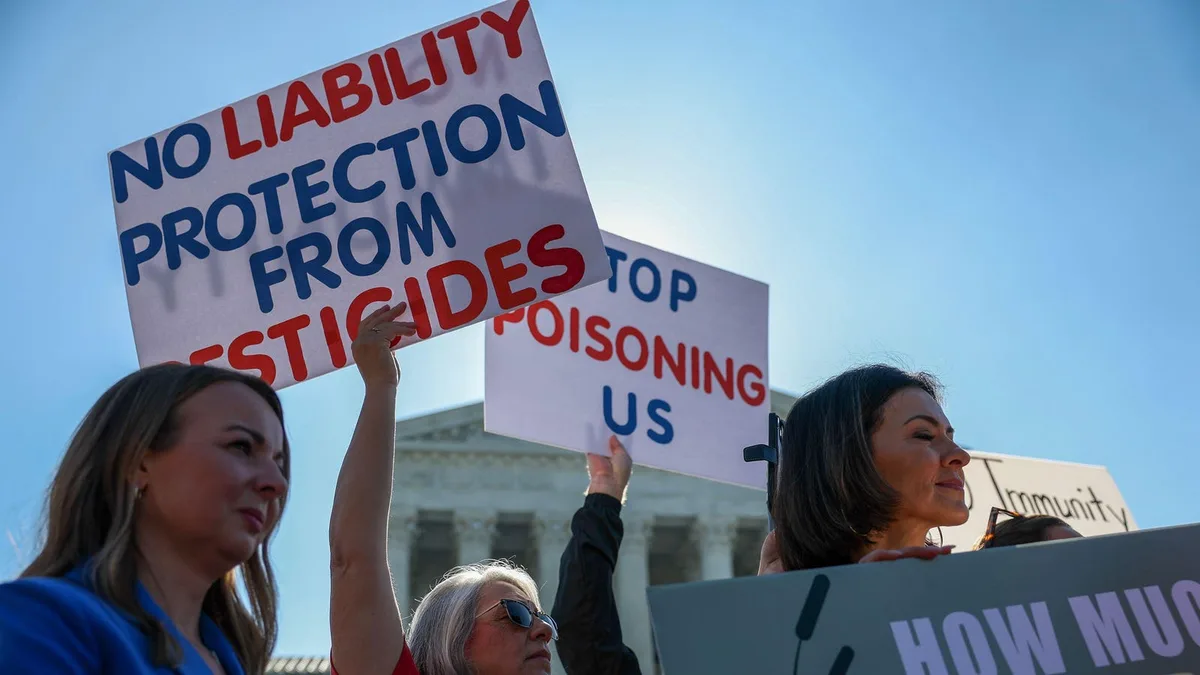
The ruling sparked backlash from groups including "Make America Healthy Again," who said it unfairly shuts the courthouse door on pesticide victims. [1, 2] Bayer’s shares rose more than 16% immediately after the ruling was announced. [3] Bayer intends to proceed with a proposed $7.25 billion class action settlement to resolve many remaining claims despite the Supreme Court decision. [2]
The Supreme Court ruling follows Bayer’s 2018 acquisition of Monsanto and marks a major legal victory for the company amid persistent Roundup litigation. [1, 2, 3]