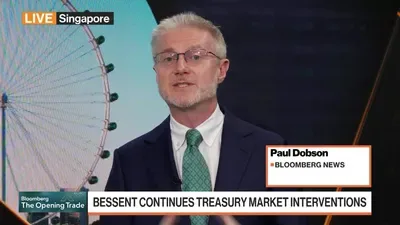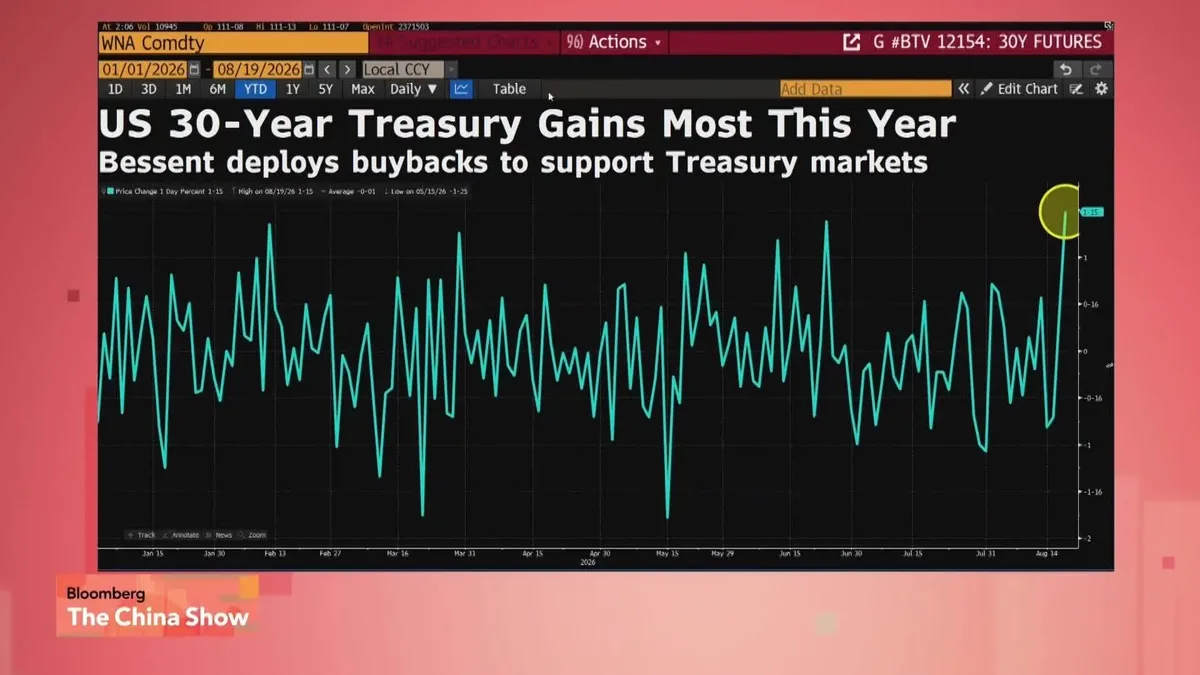
The US Treasury announced on August 19 it will at least double the size of liquidity support buyback operations for 10- to 30-year government bonds, starting September 9 and running through early November [1, 2, 3, 4]. The total repurchases could exceed $52 billion, more than $14 billion above prior planned maximums of $38 billion [4].
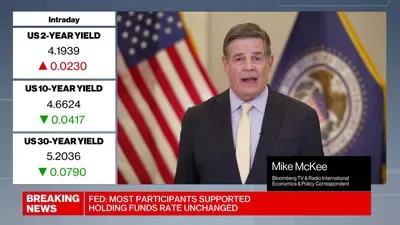
The move aims to provide greater liquidity and steady bond markets amid 30-year Treasury yields recently reaching their highest levels since 2007, at around 5.3% or higher, before falling about 9 to 10 basis points after the announcement to roughly 5.18-5.19% [1, 2, 5, 6, 4]. Treasury Secretary Scott Bessent indicated a willingness to use buybacks as a major tool to manage market dislocations [1, 4].
The buybacks may be funded by issuing short-term Treasury bills, shifting debt maturities in a fashion reminiscent of the "Operation Twist" interventions seen in previous decades [5, 6, 4, 7]. US public debt has now surpassed $40 trillion, growing by about a third in under five years [5, 8].
Despite the intervention, yields rebounded on August 20, continuing upward pressure on long-term borrowing costs [8]. Rising Treasury yields heighten borrowing costs for mortgages and government financing, injecting political risk ahead of November’s midterm elections [2, 5, 6, 4]. The dollar slid to a three-month low following the announcement, pressured by efforts to suppress yields [9, 7].
Some analysts warned the Treasury’s action could weaken confidence in the dollar and push investors toward other currencies. Gerald Gan, CIO at Reed Capital, said, "The dollar certainly is the biggest casualty. I would further diversify away from the dollar." Stephen Chiu, chief emerging markets FX strategist at Bloomberg Intelligence, said traders may see the buybacks as an attempt to suppress market concerns about US fiscal sustainability and Federal Reserve credibility [9, 10].
Contributing to the yield surge are inflation concerns, high government debt, corporate borrowing for AI investments, and geopolitical tensions such as the US-Iran conflict [2, 5, 6, 8]. Federal Reserve officials have taken a hawkish stance, with some favoring higher interest rates if inflation does not return to 2% [11, 7, 8].
John Briggs of Natixis North America said, "If yields go too far, Treasury will try and fight it — and now we know where some pain points are." Lawrence Gillum at LPL Financial called the buybacks "more of a band-aid than a panacea" but noted it signals the Treasury is paying attention [1, 5]. Matt Maley at Miller Tabak added, "There is no question that the Administration has become very concerned about the bond market once again."
The expanded buyback operations are scheduled from September 9 through November 4 [4].