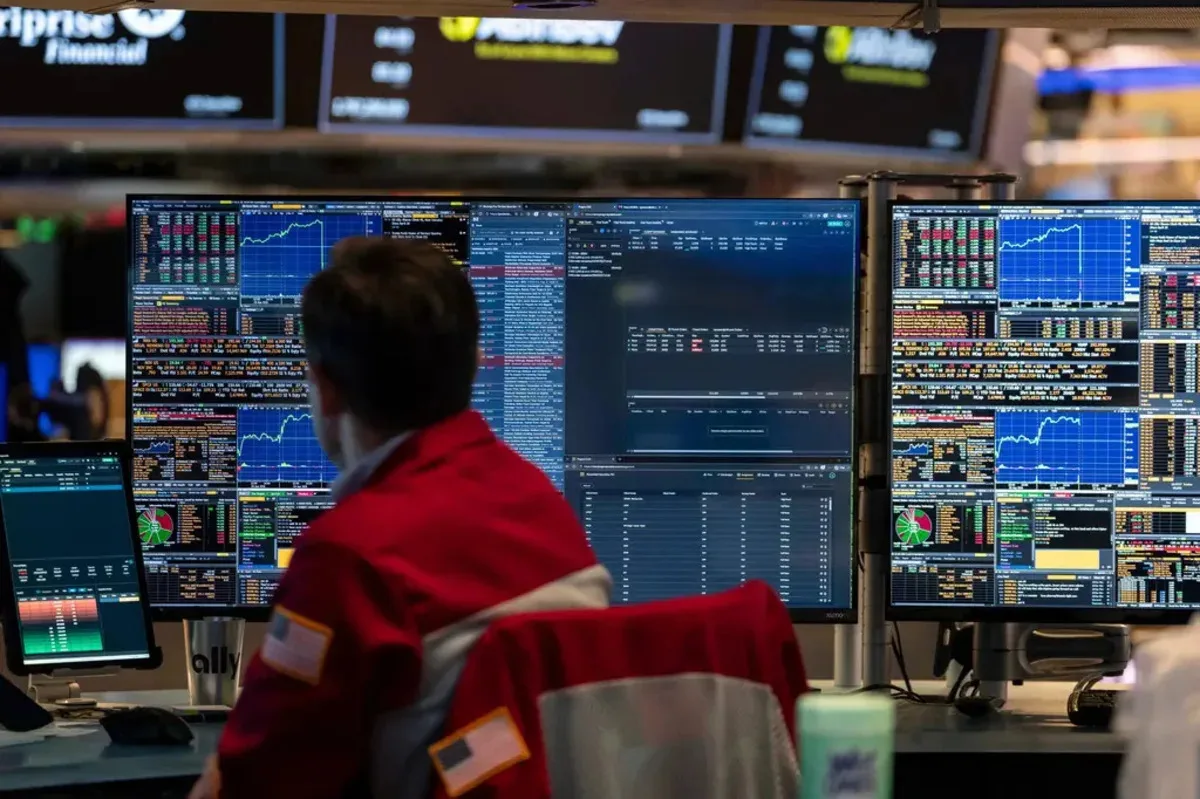
US stock indices recorded weekly declines ending August 21, 2026, with the Dow Jones down 0.85%, S&P 500 down 1.43%, Nasdaq down 2.05%, and the Philadelphia Semiconductor Index dropping 5.45% as elevated bond yields and oil prices weighed on market sentiment [1, 2, 3].
On August 19, bond yields fell, helping the Dow Jones gain 0.22% to close at 53,463.05, supported by a surge in Moderna shares that rose 177% after positive cancer vaccine trial results were announced, marking Moderna's largest single-day gain [4, 5, 3]. That day, the US Treasury expanded its long-term bond buyback program to try to ease borrowing costs and calm volatile yields [4, 6, 3]. However, UBS Americas CIO Ulrike Hoffmann-Burchardi cautioned the operation only reshapes bond maturities without reducing total debt or supply concerns, meaning market pressures persist [3].
Higher bond yields returned on August 20, pushing all three major indexes lower with the Dow Jones down 1.32%, S&P 500 down 0.87%, and Nasdaq down 1%, while oil prices and inflation worries added to selling pressure [6, 7]. Meanwhile, 68.95% of S&P 500 companies reporting Q2 earnings beat revenue expectations, and 86.72% beat earnings per share estimates, reflecting resilience in corporate fundamentals despite the market dip [1, 2]. Franklin Templeton’s financial team said the US economy remains strong and recession risks low, with AI advancing many industries [1].
On August 21, US stock indices showed mixed intraday moves but closed higher: Dow Jones rose 0.98% to 53,277.01, S&P 500 and Nasdaq both gained 0.43%. The Philadelphia Semiconductor Index, however, fell 0.51%, reflecting tech sector pressure amid earnings season and bond yield concerns [1, 2, 3, 8]. In Asia, the Singapore Straits Times Index rose 0.30%, led by gains in major banks despite global weakness [7]. Panmure Liberum strategist Joachim Klement noted easing of pressure from tech worries and rising yields supported Friday’s gains [7].
Investor caution remains amid geopolitical tensions in the Middle East, with an expected resolution in 1-2 months that could help stabilize inflation [1, 2]. The next key focus will be Nvidia's upcoming earnings report, seen as a bellwether for tech sector sentiment.