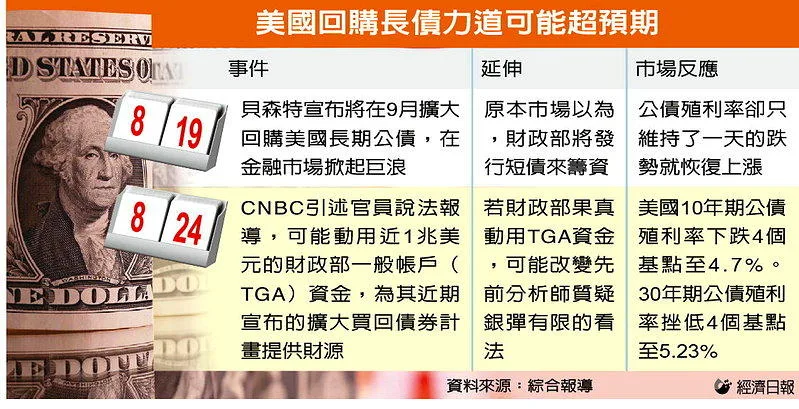
The US Treasury intends to use almost $1 trillion in the Treasury General Account (TGA) to support an expanded government debt buyback program, sources confirmed this week [1, 2, 3, 4, 5, 6]. Treasury Secretary Scott Bessent has raised the TGA balance to about $950 billion, enabling the operation [1, 2, 3, 4, 5, 6].
On August 17, the Treasury announced it would double the size of long-term off-the-run debt buybacks from $2 billion to at least $4 billion per operation, effectively raising the minimum buyback size from $20 billion to $40 billion [1, 2, 3, 4, 5, 6]. Bessent said the scale "could exceed the new minimum amount," signaling potentially larger purchases [1].
Using TGA funds will give the Treasury greater ability to influence long-term Treasury yields, according to market participants and sources [1, 3, 5]. After the buyback increase was announced, yields on 10-year and 30-year Treasury notes briefly fell by several basis points before bouncing back [3, 5].
Market observers generally believe the Treasury will finance the buybacks by issuing short-term Treasury bills, although this has not been officially confirmed [1, 2, 3, 4, 6]. Bessent described the operation as a "Treasury Twist," involving the sale of short-term debt to acquire long-term securities [5].
The Treasury has not disclosed the exact amount of TGA funds it will use or the timing of any official announcements [3, 5]. The TGA acts as the government’s main account at the Federal Reserve, holding tax receipts and emergency reserves [3, 5].
This announcement follows reports on August 24 that detailed plans for the Treasury to deploy the nearly $1 trillion TGA balance to back the larger buyback program [3, 4, 5, 6]. The next step is to monitor the Treasury’s formal communication on buyback amounts and schedules as the program scales up.