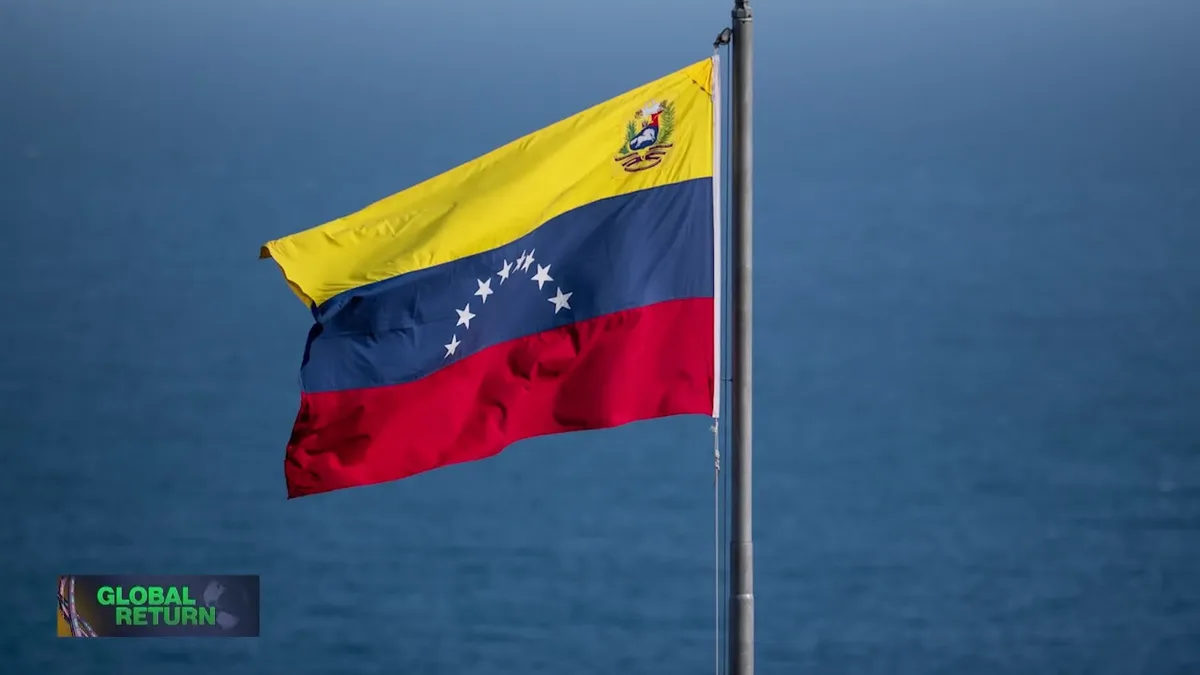
Venezuela announced on May 13 the start of a large-scale sovereign debt restructuring process covering defaulted bonds and loans totaling between $150 billion and $170 billion [1, 2, 3]. The government officially commenced the comprehensive restructuring amid ongoing political and economic challenges on May 14 [3].
The debt in question includes obligations by both the Venezuelan state and its oil company, PDVSA [3]. The restructuring aims to alleviate the country’s heavy debt burden to "put the economy at the service of the Venezuelan people and free the country from the burden of accumulated debt," the Venezuelan economics and finance ministry said [3]. They added, "Venezuela will fulfill its commitments sustainably and will do so under the conditions that the Venezuelan people deserve, building a solid path to recover well-being, justice, and social equality" [3].
The ministry emphasized that Venezuela "demonstrated solvency throughout the years, fully complying with all its international obligations," but said its capacity to pay was blocked "from 2017 onward as a result of financial sanctions" imposed by the Trump administration that severely restricted access to international financing and helped push the country into default [3].
According to a Bloomberg report on May 15, Venezuela has hired a financial adviser to help manage the restructuring process and negotiations [2].
The exact total debt amount cited varies by source. Bloomberg indicates around $170 billion, while CNBC sources estimate $150 billion [2, 3]. The restructuring is described as one of the largest sovereign debt efforts in recent years.
The next step will be negotiations with creditors facilitated by the financial adviser Venezuela has retained. The government seeks to reach agreements that will allow economic recovery benefiting its population. Further updates on creditor talks are expected in the coming weeks.