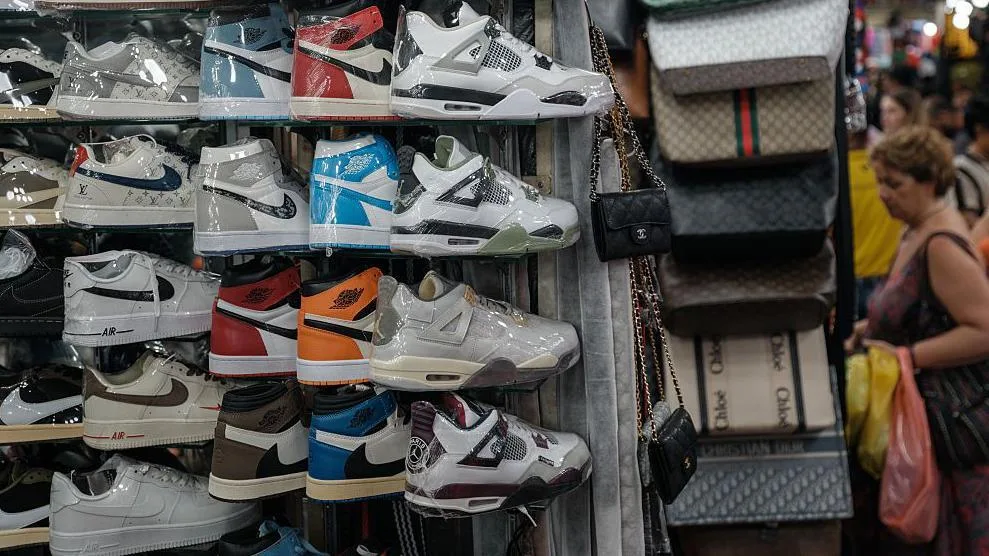
Vietnamese police raided two warehouses near Ho Chi Minh City earlier this year, seizing more than 23,000 pairs of counterfeit slippers branded with logos from Nike, Adidas, Crocs, and Gucci. The confiscated goods are valued at about 2 billion VND (approximately $76,000) [1, 2, 3]. At a flea market roughly 30 kilometers away in a popular tourist area, similar counterfeit slippers modeled after designs retailing for up to $900 overseas sell for just $30 to $57 per pair [1, 2, 3].
Vietnam is known globally as a major hub for cheap knockoffs of luxury items and hosts some of the largest fake designer markets worldwide [1, 2, 3]. On May 7, 2026, the Vietnamese government launched a nationwide crackdown targeting intellectual property rights violations, including counterfeit goods, online piracy, and trademark infringements [1, 2, 3]. Enforcement has recently grown stricter at key distribution centers like Saigon Square and Ben Thanh Market, major hubs for counterfeit sales [1, 2, 3].
In mid-May, authorities conducted multiple raids at these markets, confiscating counterfeit items and imposing fines exceeding $19,000 [2, 3]. Thanh Truc, a clothes vendor at Saigon Square, said, "Enforcement has become stricter" [1]. Another vendor noted that inspections often target higher-value items such as designer bags or luggage. Market inspectors sometimes arrive with camera crews and seize merchandise, though vendors typically resume selling counterfeit goods once scrutiny eases. Some shops reduce visible brand-logo items but keep stock hidden in the back [2].
Most counterfeit goods originate from China, where they are manufactured and imported wholesale into Vietnam for distribution [2, 3]. On June 10, police in Thanh Hoa Province dismantled a criminal group that produced and sold over 10,000 counterfeit pieces of jewelry mimicking brands like Bvlgari, Cartier, Louis Vuitton, and Tiffany, reportedly earning about $1.14 million in illegal proceeds [2, 3].
Local designer Thi Nguyen expressed support for the crackdown, saying the fake goods industry disrupts fair retail markets and harms skilled designers. She added, "Now, operating in a cleaner, more transparent, and fairer business environment, I feel more confident" [2]. However, some consumers remain dissatisfied. Huy, a purchaser from Da Nang, said arrests do not solve the problem and that he prefers counterfeit goods for their affordability and accessibility [2].
US pressure has played a major role in pushing Vietnam to step up enforcement. The US Trade Representative in April 2026 listed Vietnam as a "priority foreign country" for IP protection failures, a designation not applied to any country for 13 years. On May 31, the US initiated an investigation into Vietnam’s alleged unreasonable intellectual property practices harming US commercial interests [1, 2, 3].
Vietnamese authorities reported handling at least 1,400 intellectual property infringement cases in May, marking a 20% increase from the same period last year and deeming the enforcement escalation a success [2, 3].