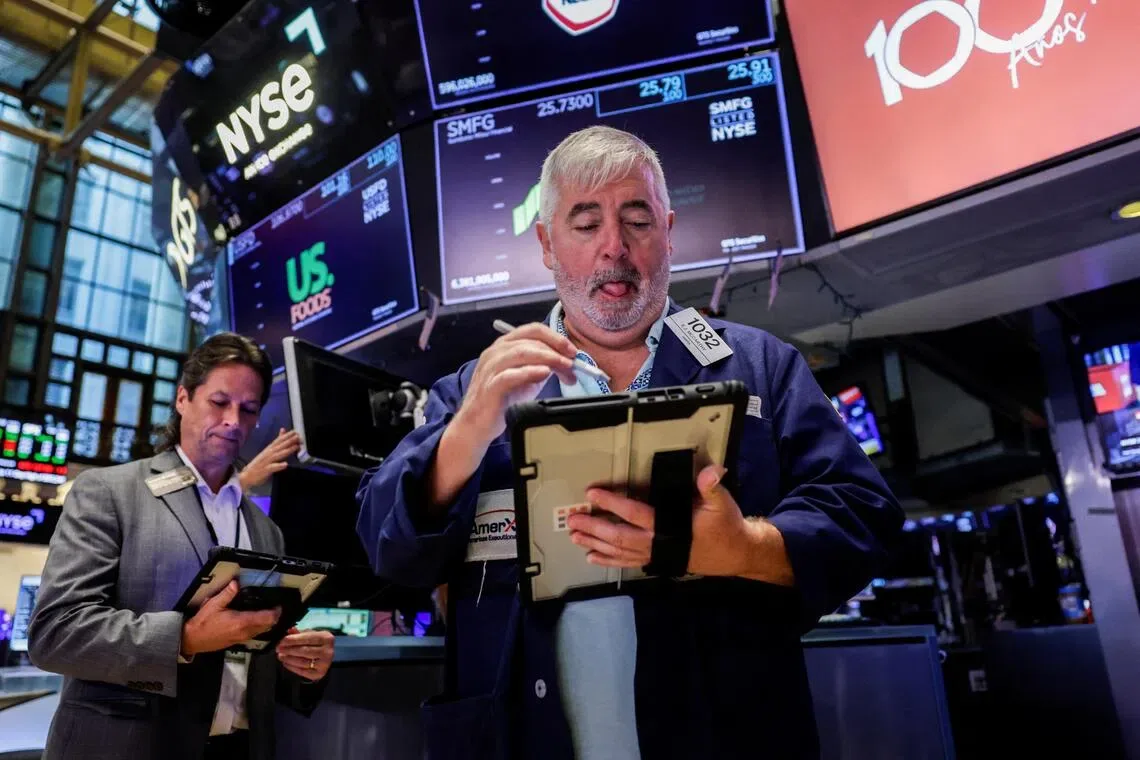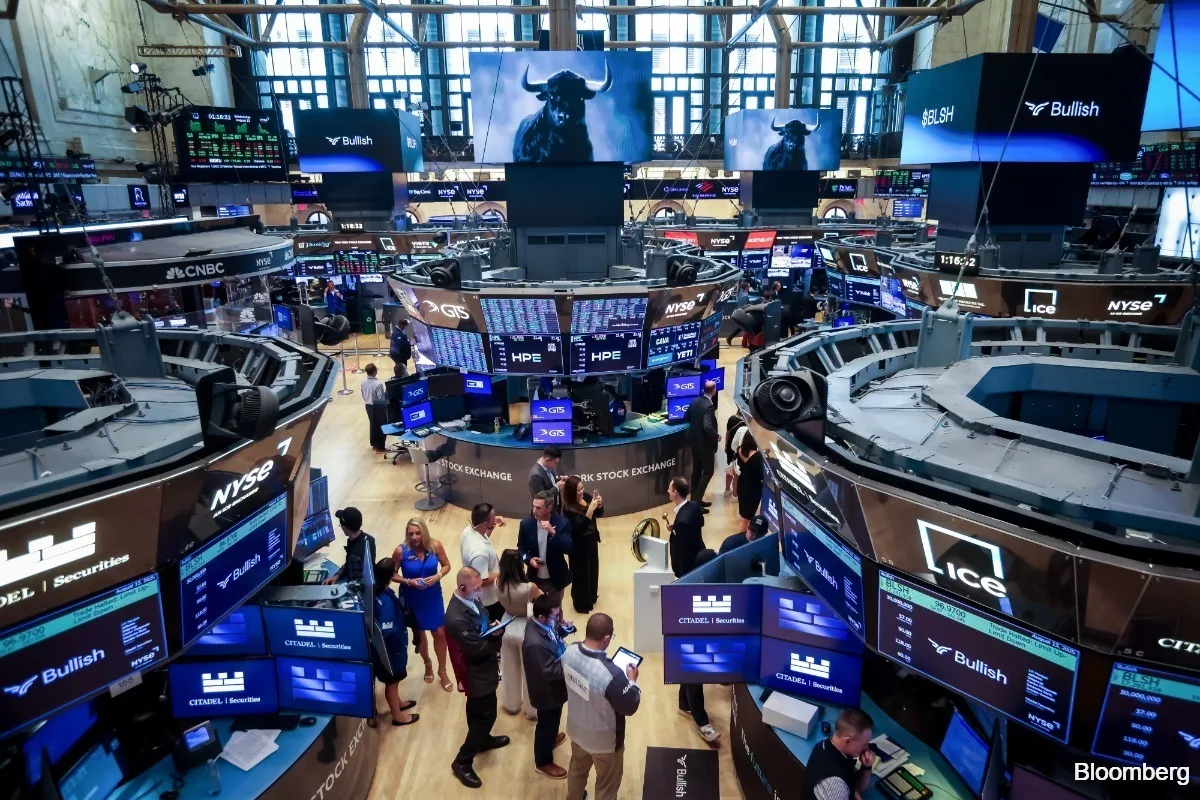
Wall Street's main indexes declined on August 10, with the S&P 500 down about 0.06-0.07%, the Nasdaq falling 0.23-0.32%, and the Dow Jones Industrial Average dropping 0.11-0.13% to approximately 53,964-53,976 points [1, 2, 3, 4]. Investor optimism waned after Iran renewed demands that the U.S. pay reparations for damages from strikes dating back more than five months, raising questions over a potential deal to reopen the strategically crucial Strait of Hormuz [1, 2, 3, 4]. The uncertainty around energy flows propelled U.S. crude oil prices up 5%, settling near $82.13 per barrel [2, 3, 4].
The effects of Middle East tensions rippled through the market: shares of Intel tumbled between 4.1% and 4.8% after the company announced plans for a $15 billion stock offering [1, 2, 3, 4]. Nvidia's shares declined 2.9% amid reports that Apollo Global, Blackstone, and other financiers are coordinating with Nvidia on a $500 billion funding package for AI infrastructure development [2, 3, 4].
Earlier in the week, the S&P 500 hit a record closing high on August 7, supported by a stronger-than-expected corporate earnings season in which 85.1% of the 436 reporting companies beat estimates, well above the historical average of 67% since 1994 [1]. Tom Hainlin, investment strategist at US Bank Wealth Management, said, "It’s record margins and record earnings. That’s just been the story of this market, and yet the overlay of the Iran conflict just pulls risk sentiment on and then pulls it off... So there’s clearly no transparency of the path to get back to where we were before the conflict started" [2].
U.S. President Donald Trump also called on Iran to compensate for casualties he linked to wars, attacks, and protests tied to the ongoing crisis [2, 3, 4]. Meanwhile, bets on a Federal Reserve interest rate hike in September were trimmed, with the CME FedWatch tool pricing the probability at 44%, down from higher levels following weaker-than-expected July jobs data [1]. Bob Edwards, chief investment officer at Edwards Asset Management, noted, "A benign CPI report and no September rate hike would give this market permission to run faster" [1].