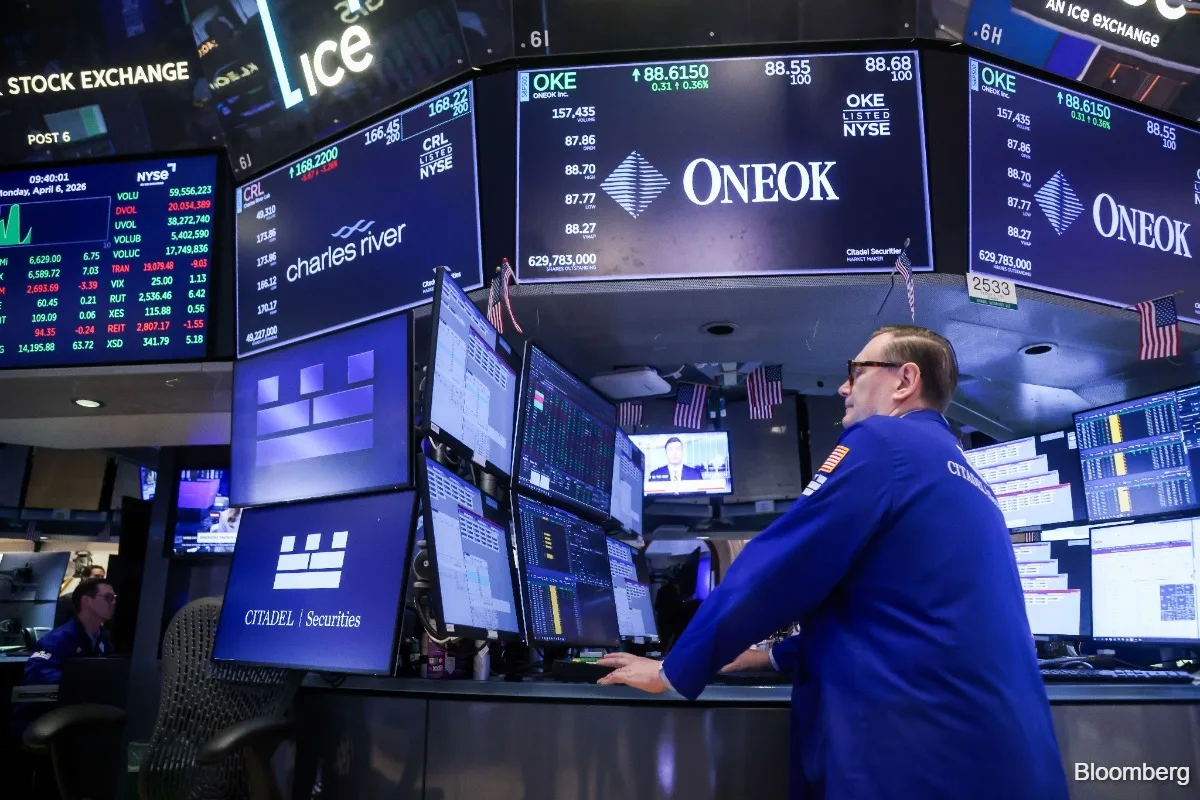
Wall Street's main indices opened higher on August 13, fueled by a drop in crude oil prices and softer-than-expected US July producer price inflation (PPI) data. The Dow Jones Industrial Average rose 58.3 points, or 0.11%, to 53,828.55 points at the open, while the S&P 500 gained 14.7 points, or 0.19%, to 7,763.18. The Nasdaq Composite added 42.9 points, or 0.16%, reaching 26,631.34 points [1, 2, 3].
The US July PPI rose 4.7% year-on-year, below market expectations and signaling easing inflation pressures. Core PPI, which excludes volatile food and energy costs, increased by only 0.2% month-on-month in July, also below forecasts of 0.3% [3, 4]. The Russell 2000 small-cap index hit a record intraday high of 3,067 points amid gains in smaller stocks [4].
Crude oil prices fell about 2% on August 13, with Brent crude near $86.98 per barrel and WTI at around $81.14, adding to the bullish market sentiment [4].
On August 14, Wall Street opened mixed. The Dow showed slight losses, down about 21 points to roughly 53,819 by 10:05 a.m. ET. Meanwhile, the S&P 500 and Nasdaq posted modest gains, with the S&P up 8.7 points to 7,807.65 and the Nasdaq rising 17.8 points to 26,822.61 [5].
Investors balanced relief from easing inflation with concerns over recent US retail sales data and escalating geopolitical tensions in the Middle East. Attacks on ships near the Strait of Hormuz and US threats of a naval blockade against Iran disrupted trade and transit, stoking uncertainty [5]. Energy stocks rose around 1.6% in response, while miners and industrial shares each gained roughly 0.5% [5].
Applied Materials shares fell sharply despite beating revenue estimates of $10.25 billion for the fiscal fourth quarter and an adjusted EPS forecast of $4.02. The stock declined as results failed to meet elevated short-term expectations [5, 6, 3].
Market strategist Bob Lang noted, "It's good to see an expansion in the markets here with broadening out, not just hiding out in hyperscalers like Microsoft and Nvidia." He added that a potential Federal Reserve rate hike at the next meeting "is not going to be a horrible thing" and would reflect confidence in improved inflation trends [5].
Edward Jones strategist Weilmeier described July's inflation data as signaling a mild dovish tone, but said the figures were insufficient to prompt a major policy shift by the Federal Reserve [4].