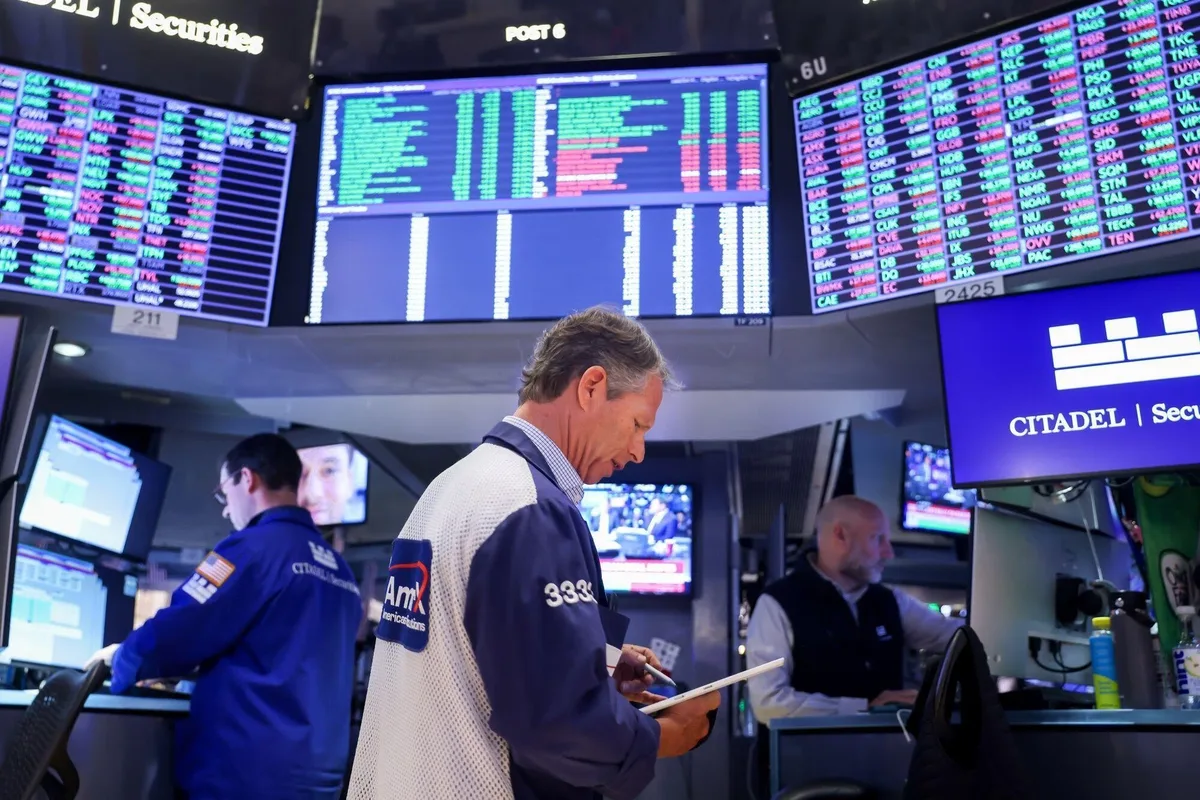
Wall Street's main indices opened lower on May 21 following a Reuters report that Iran's Supreme Leader Ayatollah Mojtaba Khamenei ordered Iran's near-weapons-grade uranium stock not to be sent abroad, dampening hopes for progress in US-Iran nuclear talks [1, 2, 3, 4, 5]. The Dow Jones Industrial Average fell 25.5 points, or 0.05%, to 49,983.8 at open. The S&P 500 dropped 22.2 points, or 0.3%, to 7,410.78. The Nasdaq Composite declined 126.7 points, or 0.48%, to 26,143.62 at the open of US trading [1, 2, 3].
The uranium shipment ban heightened geopolitical tensions, which triggered a surge in oil prices. Brent crude rose sharply, initially climbing over 4% in the wake of the announcement, although prices later fell about 2% by the end of the trading day amid uncertainty and fluctuating market reactions [5]. Brent crude closed at 102.58 USD per barrel, while WTI crude ended at 96.35 USD per barrel on May 21 [5].
US President Donald Trump issued a warning, saying, "我們絕對不會允許伊朗擁有這批高度濃縮鈾。我們會拿到它。我們不需要它,也不想要它,拿到之後我們很可能會直接銷毀它,但我們絕對不准他們擁有," signaling a threat of military action if no peace agreement is reached [4, 5]. Later in the session, some US indices showed mixed movement: the Dow was slightly up while the S&P 500 and Nasdaq declined further [4].
Meanwhile, the Taiwan stock market experienced a strong rally on the same day. The Taiwan Stock Exchange surged over 1,500 points, with American Depositary Receipts (ADRs) of major companies such as TSMC, Hon Hai, and ASE Technology closing higher despite losses in the US markets [3, 4].
The uranium export ban by Iran came amid stalled nuclear negotiations, creating increased uncertainty in global markets and commodity prices [1, 2, 3, 4, 5]. The next key market movement will be influenced by any US-Iran dialogue updates or further geopolitical developments in the coming days.