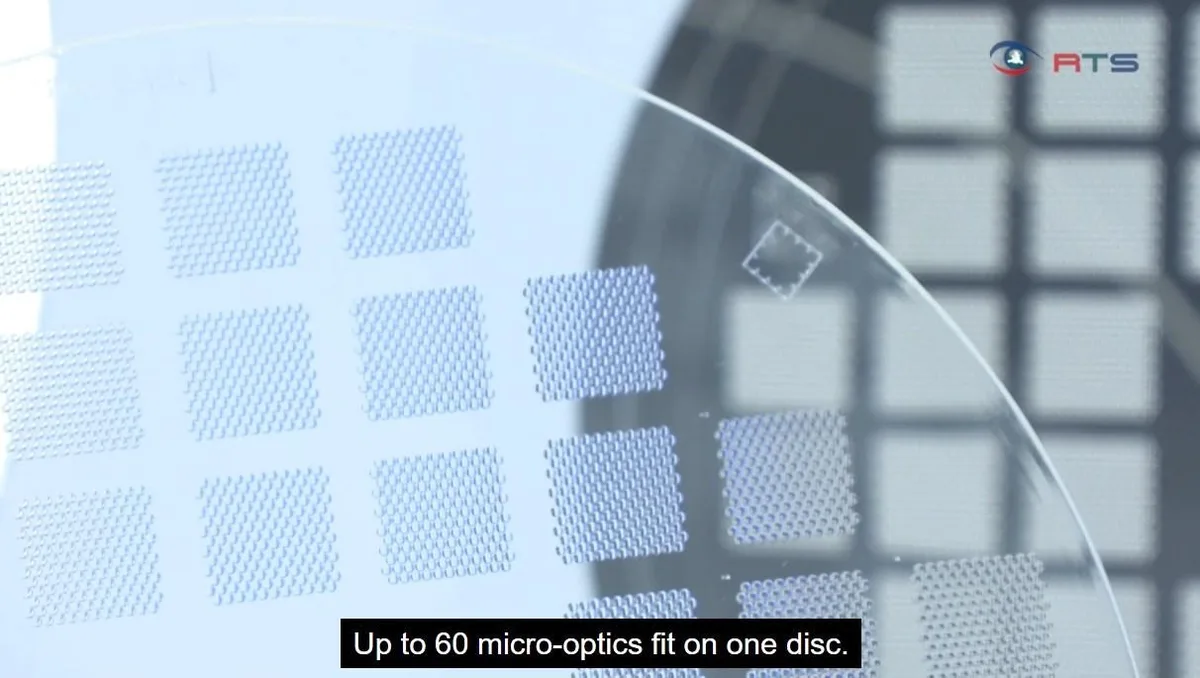
Sony's factory in Thalgau, Austria, currently its last PlayStation disc manufacturing plant, is shifting focus to produce optical microlenses [1, 2, 3]. The plant now makes around 600,000 discs daily, half of which are PlayStation game discs, but Sony plans to reduce disc production to roughly 10% of that volume by 2028 [2, 3, 1].
The factory's 300 employees will remain but be retrained to manufacture the new optical components. Dietmar Tanzer said, "The company’s Thalgau plant produces 600,000 discs every day, half of which are for PlayStation. But since it’ll only be making 10 percent of that volume in 2028, it’s planning to retrain all 300 employees to work on optical microlenses instead" [2].
Sony has invested about €30 million (around $34 million) to convert the factory for this new purpose [1, 2, 3]. Optical microlenses have applications in VR and AR headsets, camera sensors, fiber optics, medical devices, and automotive lighting [1, 2, 3].
Sony’s disc production has been declining for years. The company closed its New Jersey plant in 2011 and the Terre Haute, Indiana plant in 2022, moving production to Thalgau [1, 2, 3]. Since 1983, Sony DADC, the disc division, produced over 26.4 billion discs, including 23 billion made at Terre Haute [2, 3].
As early as 2027, Sony could begin mass production of optical microlenses at Thalgau [2, 3]. In July 2026, Sony announced the shift to digital-only PlayStation games starting in January 2028, corresponding with the reduced disc output and factory repurposing [3].
By 2028, physical PlayStation disc production at Thalgau will be about 10% of today’s levels, marking the end of an era as Sony fully embraces digital game distribution [1, 2, 3].