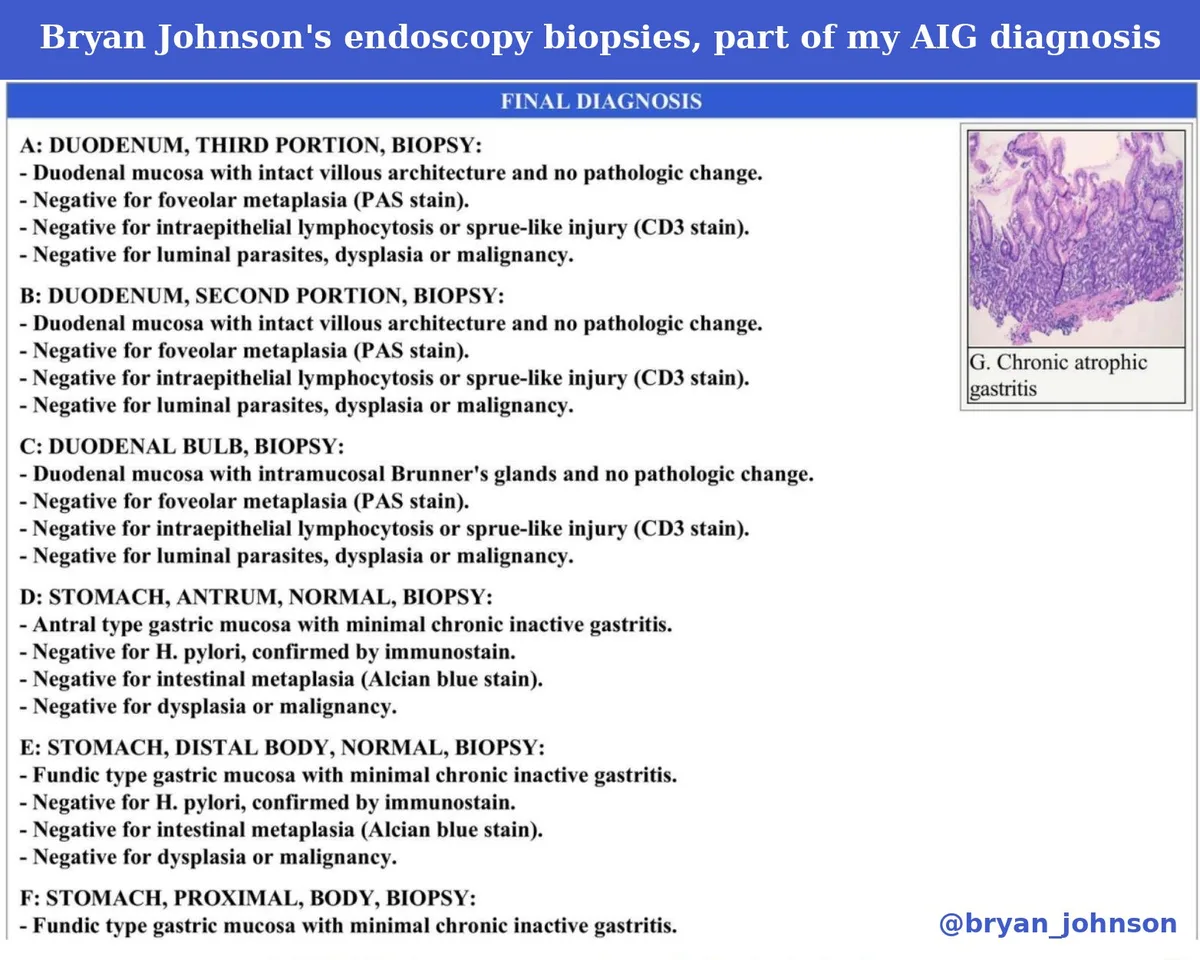
Bryan Johnson was diagnosed with autoimmune gastritis (AIG) in May 2026, a chronic autoimmune disease where the immune system attacks acid-producing cells in the stomach lining [1]. Johnson, 48, had suffered from low ferritin levels, a key indicator of iron storage deficiency, for 11 years without improvement despite supplements and dietary changes [1, 2]. He described his condition bluntly: "My stomach is eating itself" [1].
AIG results in damage to the stomach lining that can cause nutritional deficiencies such as iron and vitamin B12 deficiency, anemia, and increases the long-term risk of stomach cancer [1, 2]. Johnson also has a history of hypothyroidism diagnosed at age 21, linking multiple autoimmune conditions in his case [1, 2]. During the years his autoimmune conditions developed, Johnson gained about 40 pounds and experienced chronic depression [1, 2].
Johnson estimates that 2-5% of people may have autoimmune gastritis, though many remain undiagnosed for years due to its varied symptoms and lack of routine testing [1, 2]. The disease is often only discovered after irreversible stomach damage has occurred [1, 3, 2]. Lori Taylor, 60, was diagnosed with AIG in 2018 after experiencing symptoms since 2015, including iron deficiency, hair loss, brain fog, and difficulty writing (dysgraphia) [3]. She said, "It was like my brain was wiped clean" and struggled with low energy, describing how she "was talking myself out of doing anything that really required energy" [3].
A 2024 study linked AIG to deficiencies of vitamin B12, iron, vitamin C, and calcium [3]. These nutritional gaps highlight the disease's impact beyond stomach tissue.
Johnson said he is determined to find a solution, stating, "I’m going to try to solve it. Will share all." [1]. The coming months may bring updates as he pursues treatment and research for this under-recognized autoimmune condition.