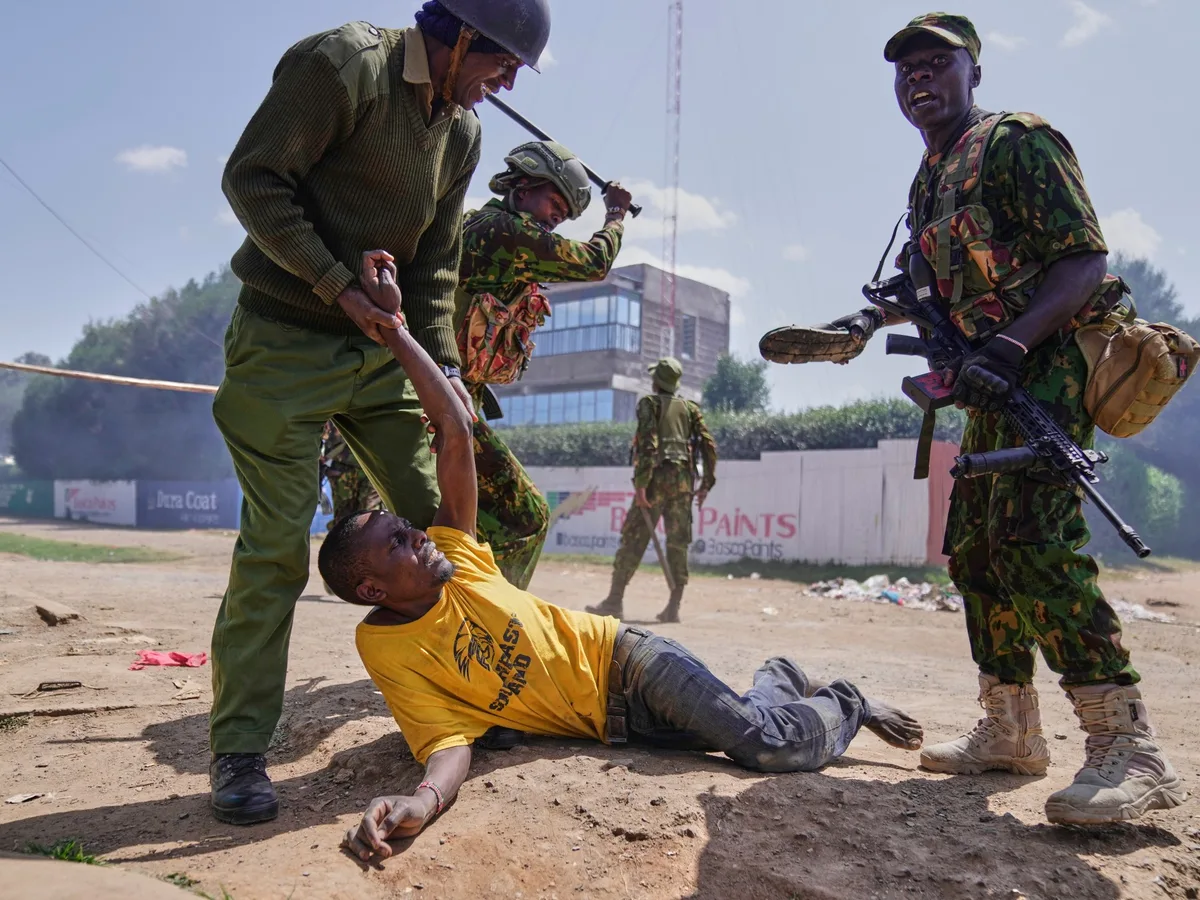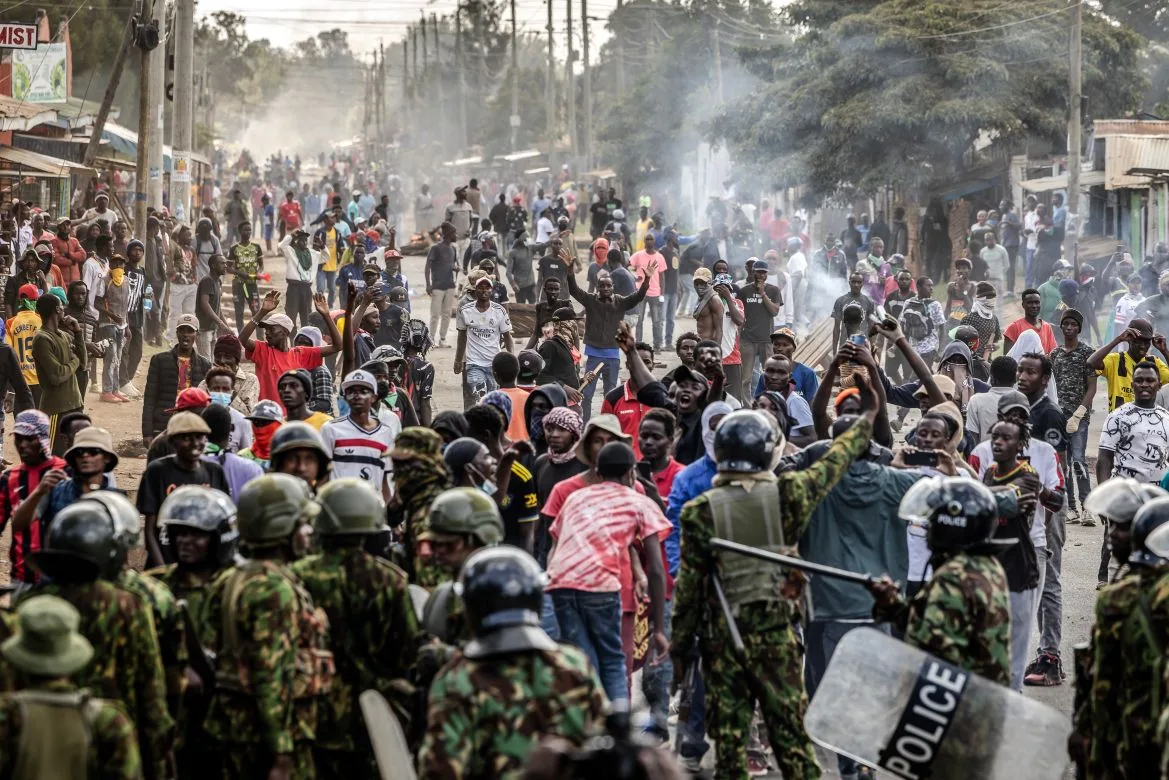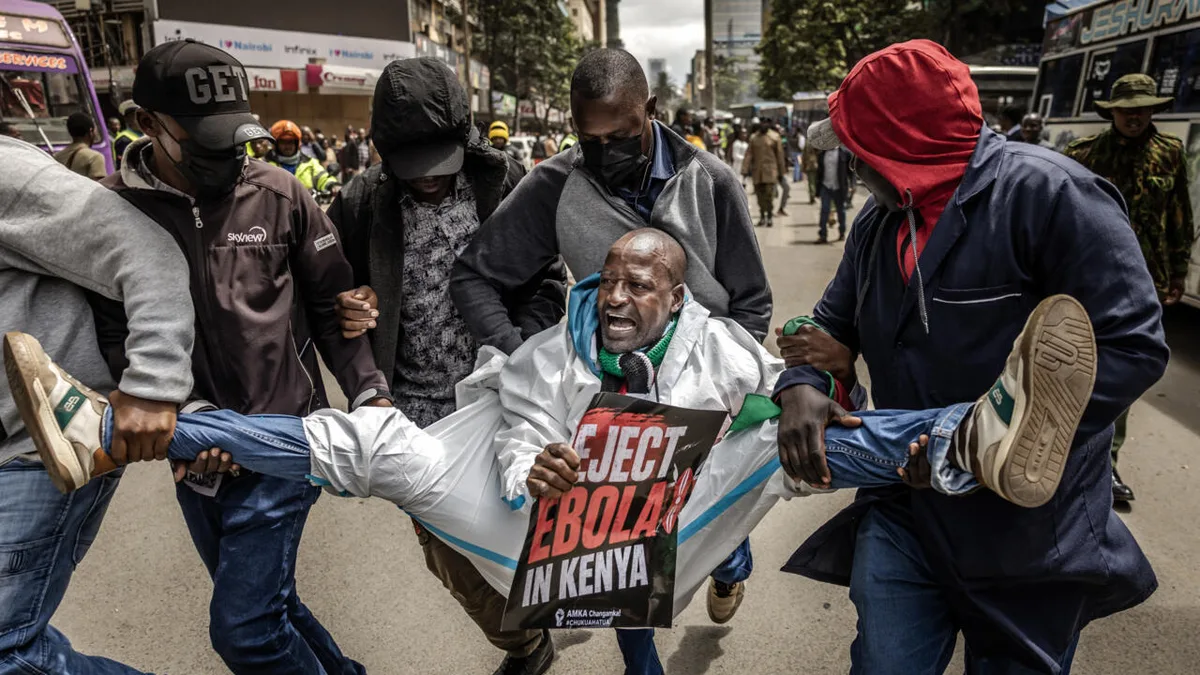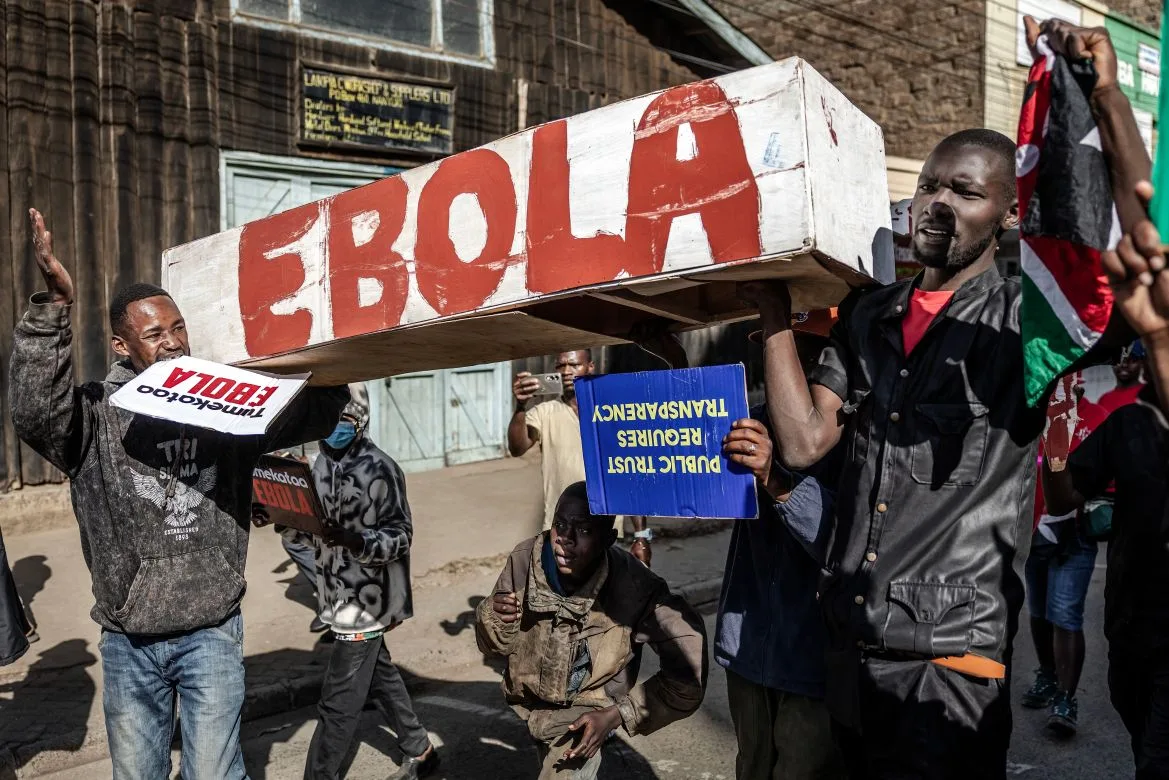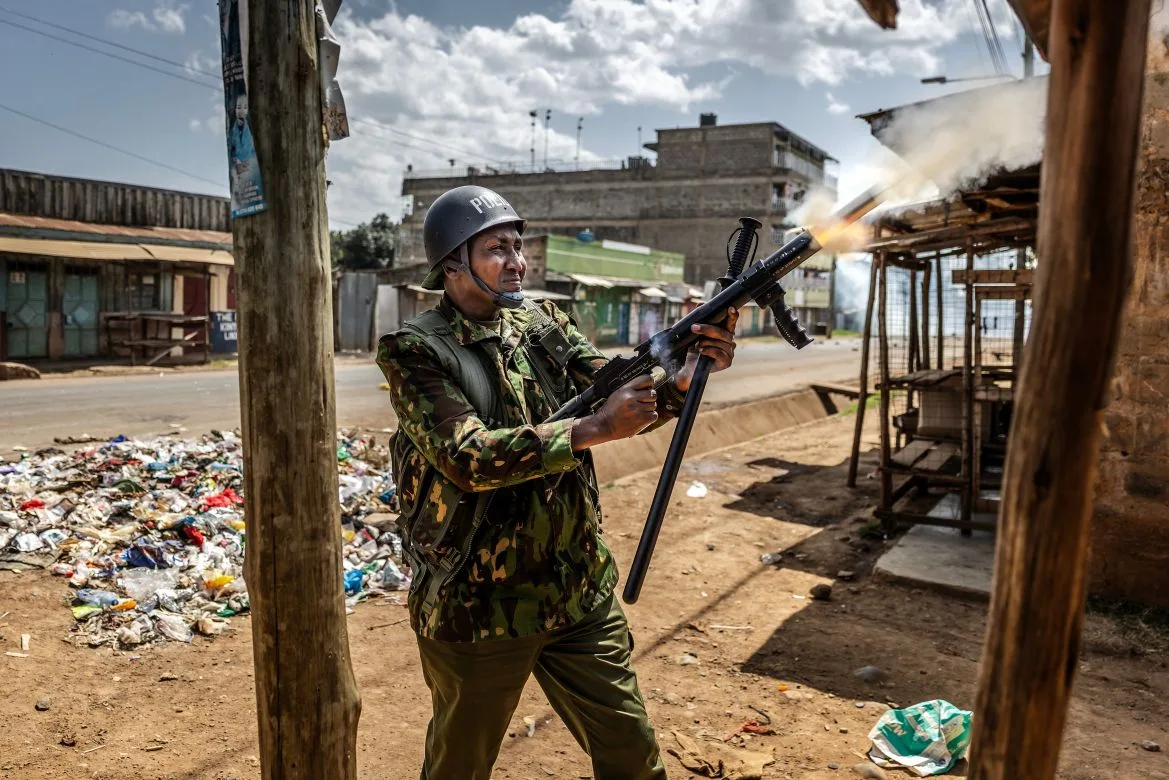
At least one person was killed and dozens arrested in violent protests against the construction of a US Ebola quarantine centre at Laikipia Air Base in Nanyuki, Kenya, on August 30, 2026 [1, 2]. The facility is intended to isolate Americans evacuated from the Ebola outbreak in the Democratic Republic of Congo (DRC) and is planned to have 50 isolation beds staffed by US personnel [1, 3].
Locals strongly oppose the quarantine centre, as Kenya has never recorded a case of Ebola, raising fears of bringing potential carriers into the country. Protester Priscilla Waimani said, "Laikipia isn't a dumping site... I'm not happy about the US decision that they're going to build a quarantine in our country" [1].
The protests included stone-throwing, setting fires, and triggered a forceful police response using tear gas, water cannons, and gunfire [1, 3]. Police, including plainclothes armed officers, arrested dozens of demonstrators [1]. This followed earlier protests on June 1 when two people were reportedly killed under unclear circumstances [1].
Despite a temporary pause ordered by Kenya’s High Court, construction of the quarantine centre proceeded amid the unrest [1, 3]. The Kenyan government, led by President William Ruto, defended the project, citing decades of health partnerships with the US. Officials said the American people and government have been close partners on health issues for nearly 25 to 30 years [1].
The United States has pledged $13.5 million to support Kenya’s Ebola preparedness efforts as part of this collaboration [1, 3]. The quarantine centre nearing completion is part of broader efforts to contain the Ebola outbreak in the region, though it remains controversial among local residents.
Security and health authorities continue to monitor the situation closely as construction advances, with no official suspension expected despite ongoing protests.