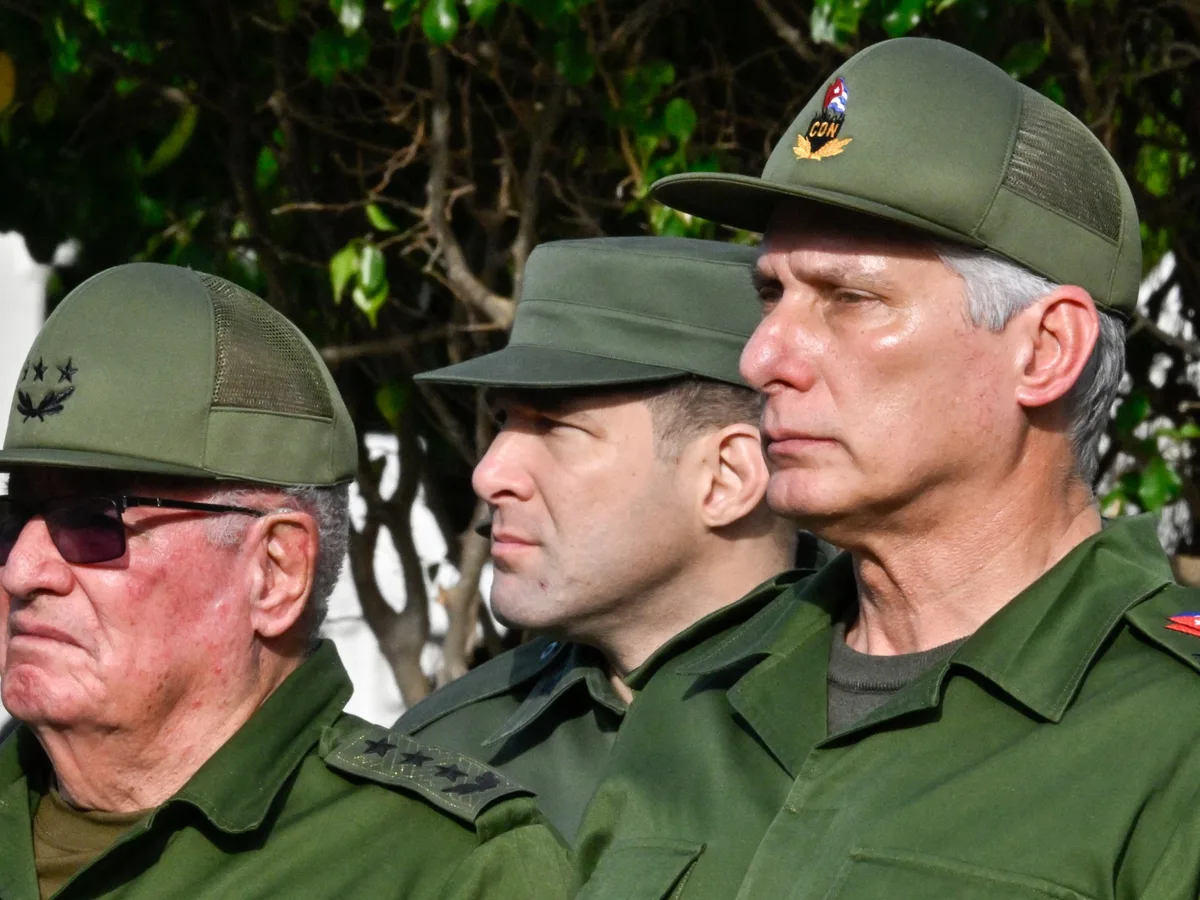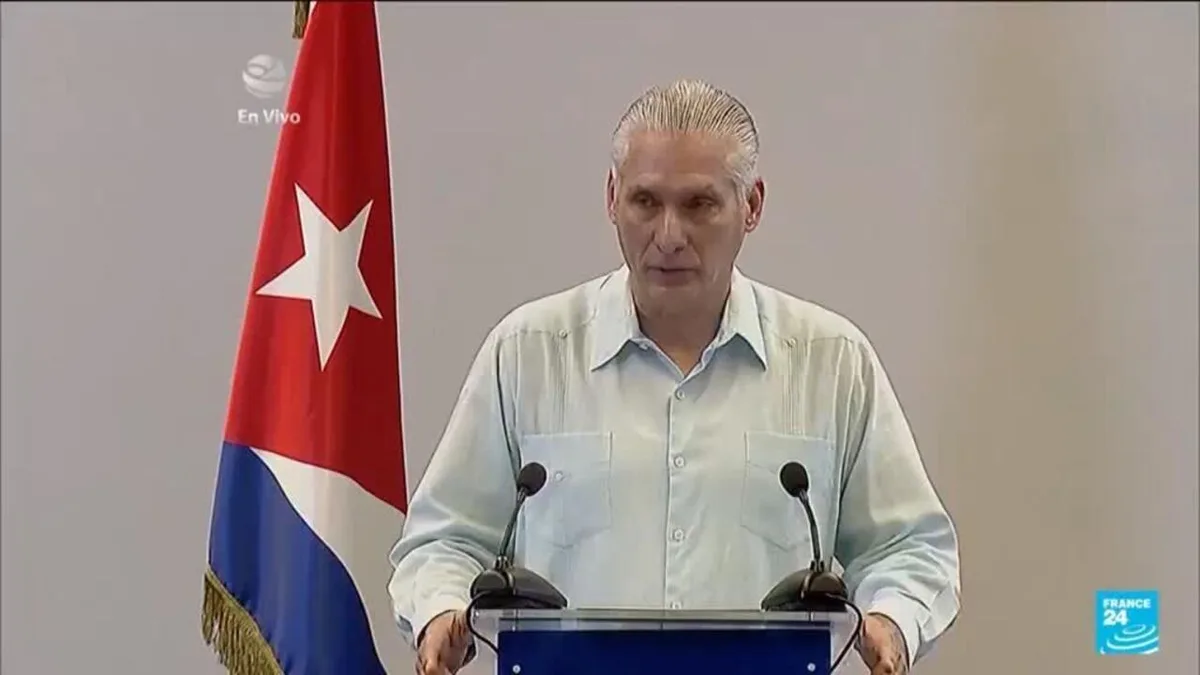
Cuba's President Miguel Diaz-Canel stated on May 18 that Cuba has the "absolute and legitimate right" to defend itself against US military aggression. He warned that any US attack would cause a "bloodbath with incalculable consequences" [1, 2]. Diaz-Canel described US threats as an international crime and said "The threat itself already constitutes an international crime" [1].
On May 16, Cuba's Ambassador to Washington, Lianys Torres Rivera, said the country is preparing to defend itself but does not intend to take offensive action against the US. "We don’t want that," she said, emphasizing Cuba’s defensive stance [3]. Cuba’s embassy in the US also released a statement affirming Cuba’s right to self-defense under international law and the UN Charter, calling accusations from US critics falsehoods [4].
The tensions come amid reports by US news outlet Axios on May 17, citing unverified classified US intelligence, claiming Cuba acquired more than 300 military drones. The report said Cuba possibly planned attacks on US targets including Guantanamo Bay and Florida [1, 4, 2]. Cuba strongly denied these allegations, calling them fabricated and part of a ‘‘fraudulent case to justify economic and military aggression’’ by the US government [4, 2]. Foreign Minister Bruno Rodriguez said the US builds "day after day, a fraudulent case to justify the ruthless economic war...and eventual military aggression" [4].
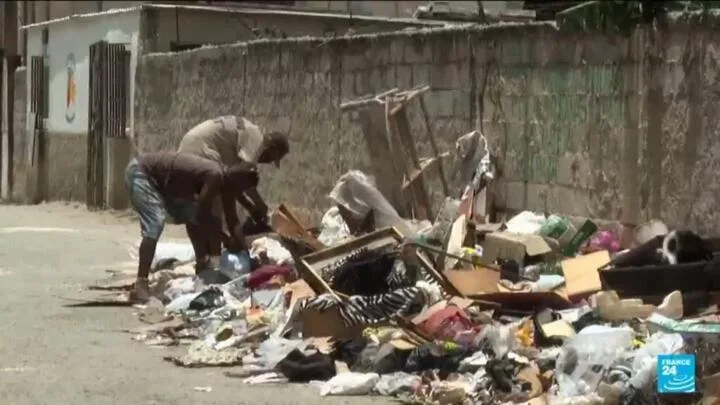
Cuba faces severe fuel shortages and blackouts due to a longstanding US blockade and ongoing economic pressure [1, 3, 2]. The US continues to impose sanctions on Cuba, including targeting its intelligence directorate, despite the 1960s-era trade embargo [1].
The escalation follows a sequence of statements and reports over the past week. On May 16, Ambassador Torres Rivera spoke on Cuba’s defensive posture [3]. Axios published the drone allegations on May 17 [1, 4, 2]. On May 18, Diaz-Canel issued his strong warning as the Cuban embassy rebuffed US media claims [1, 4, 2].
Cuba’s government rejected the drone allegations as a pretext for continued US pressure. Meanwhile, the US government has not officially confirmed the intelligence cited by Axios. The coming days may see further diplomatic exchanges or sanctions decisions amid the standoff.