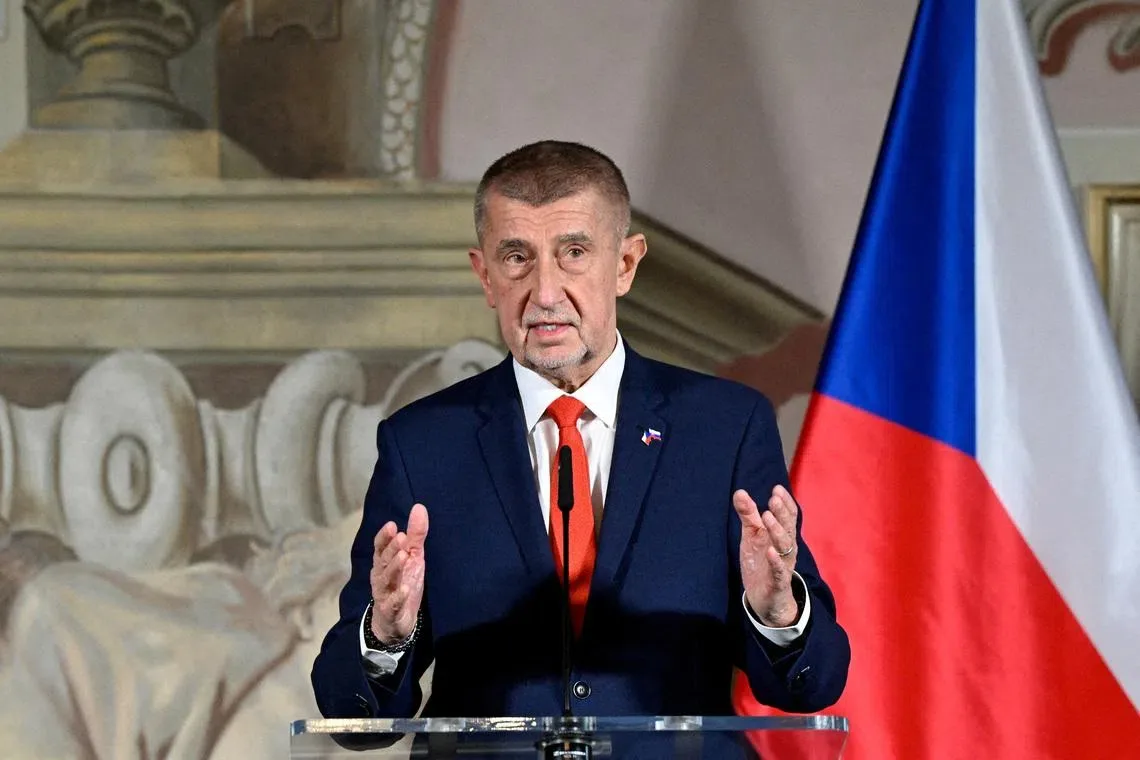
The Czech Republic is expected to fall short of NATO’s target to spend 2% of its GDP on defense in 2026. Prime Minister Andrej Babis stated that despite budget shortfalls caused by overspending under previous governments, "We will do our best" to meet the goal [1, 2, 3, 4].
Babis told the Financial Times on May 31 that NATO allies should focus more on building actual military capabilities rather than simply meeting spending targets, which he said could be manipulated. He commented, "北约盟友应更多关注实实在在的国防能力建设,而非单纯追求军费支出指标" [1, 2, 4].
President Petr Pavel has voiced concerns that the current defense budget does not adequately address rising security threats or Czech commitments within NATO. Pavel and Babis have publicly disagreed over the 2026 defense spending plan, with Pavel warning that the budget falls short of what is needed [1, 4].
At the June 2025 NATO summit in The Hague, member states agreed on a new defense spending target of 5% of GDP by 2035. This includes 3.5% for core military spending and 1.5% for infrastructure and cybersecurity. Prague has committed to meeting the 3.5% core military spending goal by 2035 [1, 2, 4].
U.S. Defense Secretary Pete Hegseth said at the Shangri-La Dialogue on May 30, 2026, that the era of the United States subsidizing the defense of wealthy NATO countries is over, stressing, "We need partners, not protectorates" [1, 2, 4]. The U.S. is reportedly planning to reduce the military resources it makes available to NATO allies in a major crisis [1, 4].
Babis has identified himself as a supporter of then-U.S. President Donald Trump, believing this backing could benefit the Czech Republic despite criticism over defense spending levels [3].
President Pavel signed the Czech defense budget into law in March 2026 but warned that spending remains insufficient to meet increasing security challenges [1, 4]. The government is preparing for gradual increases to align with NATO's longer-term commitments.
The Czech government faces a deadline later this year to finalize its 2026 defense budget as calls grow for increased spending to meet alliance obligations and adapt to shifting global security dynamics.