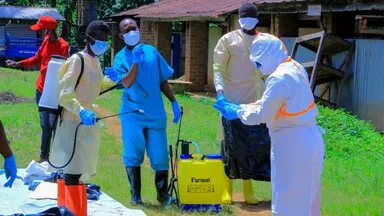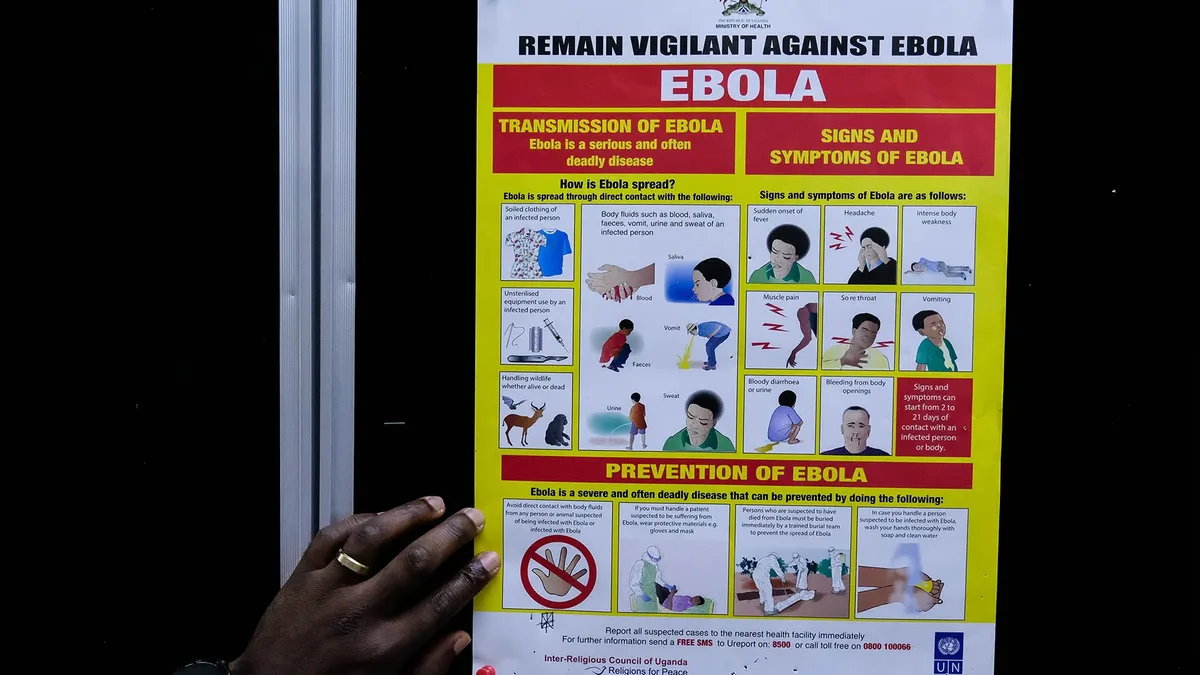
An Ebola outbreak caused by the Bundibugyo strain is ongoing in eastern Democratic Republic of Congo and Uganda, with 134 confirmed cases and 18 deaths reported so far [1]. The outbreak was first declared on May 15, 2026, and has seen over 1,000 suspected cases in Congo alone [1].
The affected areas in Congo include the three eastern provinces of Ituri, North Kivu, and South Kivu, where the majority of cases have been recorded [1]. The virus is spreading across the border into Uganda as well [2, 1].
Countries including Canada, the United States, Rwanda, and Uganda have implemented travel restrictions and border controls targeting travelers from Congo, Uganda, and South Sudan in response to the outbreak [1]. However, these measures are creating challenges for aid workers trying to reach the worst-affected communities. Bloomberg reported on May 30 that travel bans and border closures are hindering humanitarian response efforts [2].
WHO Director General Tedros Adhanom Ghebreyesus cautioned against imposed travel restrictions, stating on May 31 that such moves could discourage transparency in case reporting [1]. He emphasized the role of local communities in controlling the outbreak, saying, "We are not here to tell people what to do. We are here to listen. Communities understand their own challenges and their own solutions. Our role is to support you in implementing those solutions, together." [1]
Currently, there is no approved vaccine or treatment available for the Bundibugyo strain of Ebola, complicating containment and care efforts [1]. WHO stresses local engagement and solidarity as critical components in controlling the epidemic [1].
The outbreak and response situation remain dynamic as authorities and aid groups work amid logistical and health challenges in eastern Congo and neighboring Uganda.