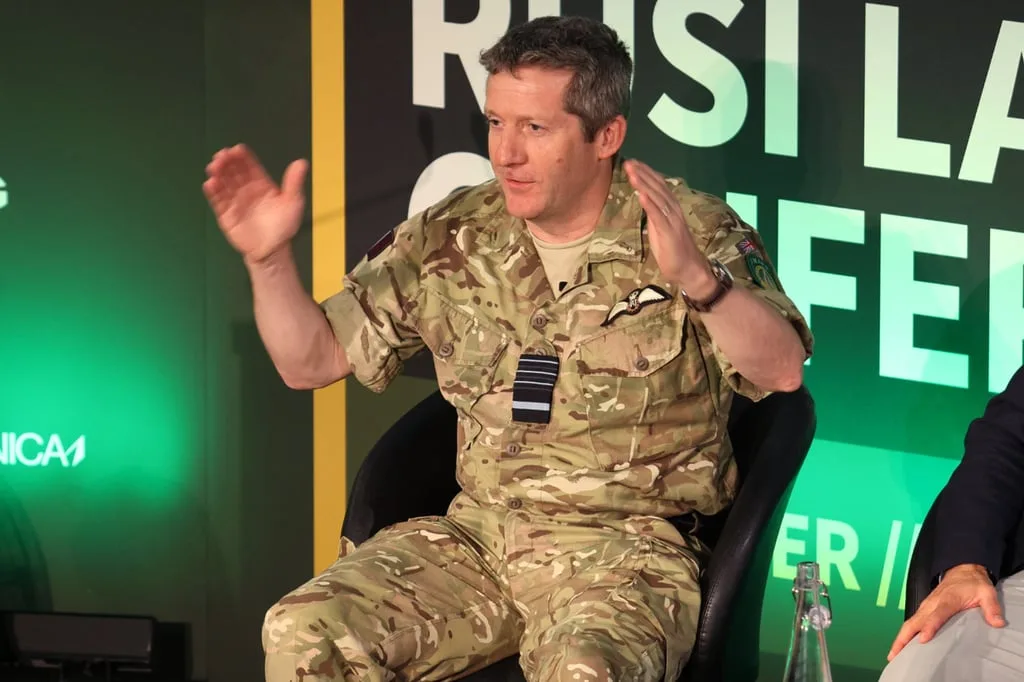
European NATO allies have mostly replaced the assets the United States recently cut from its rescue plans in case of war in Europe, Deputy Supreme Allied Commander Europe Sir John Stringer said in interviews last month and earlier this week [1, 2, 3].
Stringer said, "European allies have definitely stepped up in terms of backfilling the adjustment in the US forces in Europe. This is a demonstration of a stronger Europe in a stronger NATO" [1]. He added that where Europe could not provide equivalent forces, they seek to match the effect with different or alternative capabilities [1, 4, 3].
According to Stringer, burden-sharing and burden-shifting within NATO "is now being done in a sensible, proportionate way, absolutely driven by military logic" [3]. European allies have steadily increased their contributions amid a long-standing need to rebalance defense responsibilities across the alliance [1, 3].
The US announced massive cuts to the troops it would send to Europe in case of war or crisis earlier this year, prompting NATO to request European countries to disclose additional available forces as part of plans to maintain credible deterrence [1, 4, 3]. Former US President Donald Trump criticized European allies for spending too little on defense, calling the US defense burden "one-sided" and "ridiculous" [3].
All NATO members, including Britain, have committed to spending 3.5% of their GDP on defense by 2035 to sustain credible deterrence capabilities [1].
A NATO summit is planned next week in Ankara to address the US force cuts and European defense commitments [1, 4]. This meeting will review the new force posture and further defense spending plans.
The ongoing adjustments reflect NATO’s efforts to ensure effective collective defense amid evolving security demands in Europe.