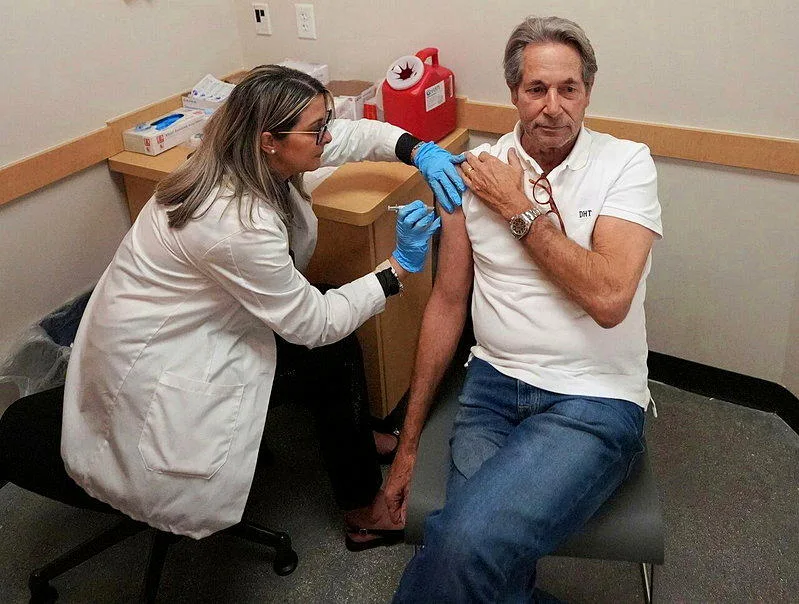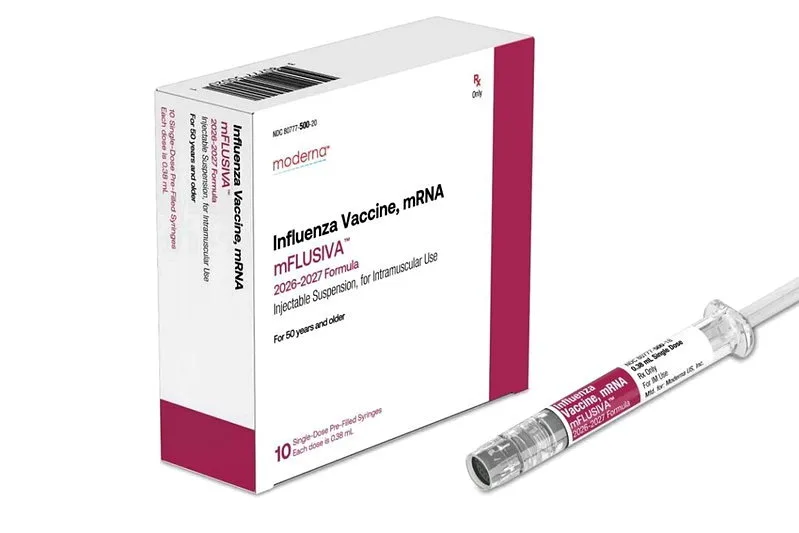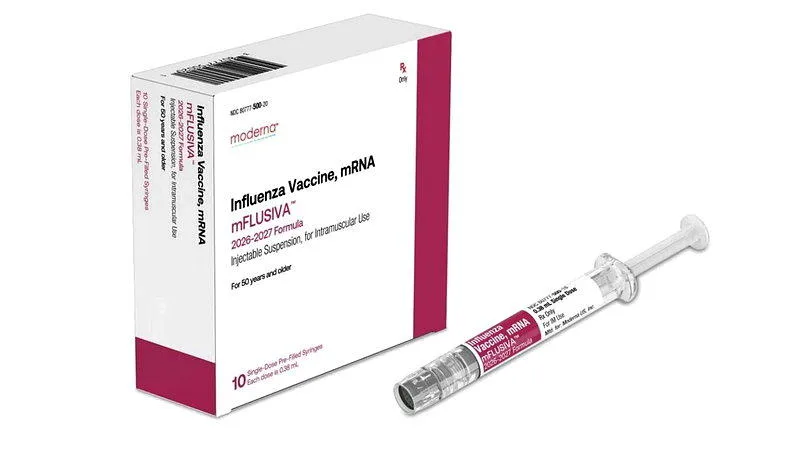
The U.S. Food and Drug Administration approved Moderna’s mRNA-based flu vaccine, mFlusiva, for adults aged 50 and older on August 5, 2026. It is the first mRNA flu vaccine authorized in the United States [1, 2, 3, 4].
Moderna won full FDA approval for adults 50 to 64 following a large clinical trial with about 40,000 to 44,000 participants. For those 65 and older, the vaccine received accelerated approval based on smaller studies involving roughly 3,000 older adults. These studies demonstrated strong immune responses compared to current high-dose flu vaccines [1, 5, 3, 4].
The clinical trial showed mFlusiva reduced flu cases by about 26 to 27 percent versus standard flu vaccines in older adults. Moderna’s CEO Stephane Bancel said, "Flu remains a significant public health challenge, and mFLUSIVA provides an important new option for America’s seniors" [1, 2, 5, 3, 6, 4].
The vaccine caused more mild to moderate side effects than existing flu shots, including injection site pain, fatigue, headache, fever, and muscle aches. However, no major safety concerns were reported [1, 5, 3, 4]. The mRNA platform could allow faster manufacturing and rapid updates of vaccine variants to better match circulating flu strains [1, 3, 6, 4].
Earlier in 2026, an FDA official initially blocked Moderna’s application over concerns about trial design. Moderna publicly challenged the decision, which was later reversed, clearing the path for approval. The FDA advisory committee had unanimously recommended the vaccine’s authorization in late June 2026 [1, 2, 5, 4].
During the 2024-2025 U.S. flu season, 51 million Americans contracted flu, causing about 710,000 hospitalizations and 45,000 deaths. Adults 65 and older accounted for 57% of hospitalizations and 71% of deaths, underscoring the need for improved vaccines in this group [4].
Dr. Marc Siegel, Fox News senior medical analyst, noted the vaccine is "not a universal vaccine, but is geared for rapid turnaround once the yearly strains have been identified. It’s similar to the COVID vaccine and was found to be 25% to 30% more effective than the current flu vaccine. It’s geared to protect the elderly" [4].
Moderna expects mFlusiva to be available to eligible adults across the US for the 2026-2027 respiratory virus season [1, 3].