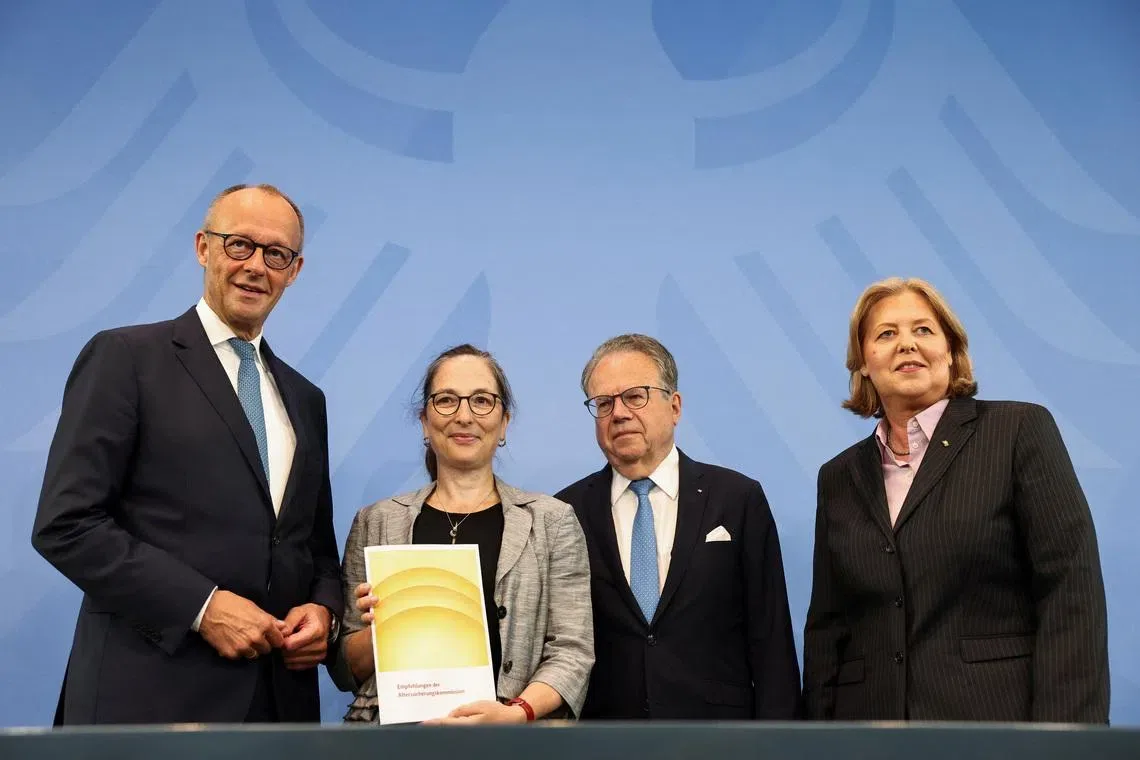
Germany’s pension commission, appointed by Chancellor Friedrich Merz, presented a reform plan on June 23 calling for the statutory retirement age to rise gradually to about 70 years by the early 2090s, linked to increases in life expectancy [1, 2, 3]. The current retirement age is set to reach 67 years by the early 2030s under existing law [1, 4, 2].
The reform would abolish early retirement at age 63 without pension deductions, a rule critics say mainly benefits higher-income men with stable employment, while opponents argue it hurts low-income and physically demanding workers [2, 5, 3]. The plan also proposes extending mandatory pension contributions to the self-employed and parliamentarians, and eliminating mini-jobs exempt from pension contributions [4, 6, 7, 2, 5].
A major feature is the introduction of a Swedish-style funded pension scheme. Employers and employees would contribute about 2% of total wages to a state-managed fund investing in capital markets. "Incorporating capital markets into the statutory pension scheme may be key to its long-term sustainability and stability," Merz said [1, 4, 2, 5].
Merz emphasized the urgency of the reforms, stating, "All elements of this reform package must be implemented swiftly, failure is not an option," and assuring that "No citizen needs to worry" [2, 5].
Germany faces one of the world’s fastest aging populations, with 23% aged 65 or older in 2024, up from 15% in 1991. Average life expectancy is 78.5 years for men and 83.2 for women [2, 5, 3]. The retirement age increase will be phased in gradually starting around 2032, not immediate [1, 2, 3].
The reform report includes 33 proposals covering pension system overhaul and financial sustainability [2, 5]. The government aims to debate and potentially pass the reform law before the parliamentary summer recess in July 2026 [1, 2, 3].