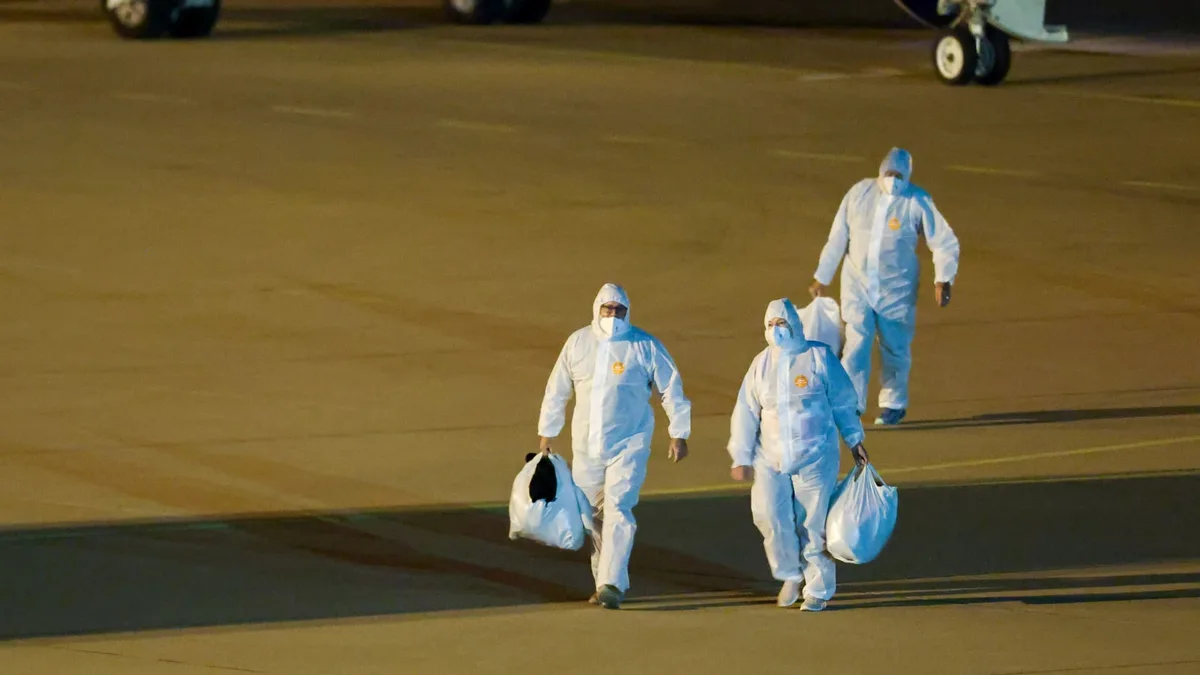
A hantavirus outbreak linked to a cruise ship has resulted in at least 11 confirmed cases worldwide, including 3 deaths, the World Health Organization reported on May 12, 2026 [1]. Of those cases, 9 have been confirmed by WHO. In the United States, no positive cases have been found, but 18 passengers are currently under observation in specialized medical units in Nebraska and Atlanta [1].
The outbreak involves the Andes strain of hantavirus, which experts say does not spread easily between people, thereby posing a low risk of widespread community transmission [1]. "We are not expecting a large number of infections and they will likely remain limited to passengers who were exposed aboard the ship, especially now that we have containment measures in place," said Dr. Nicole Iovine from the University of Florida [1]. Public health officials emphasize hantavirus requires close contact for transmission, further reducing the likelihood of a pandemic [2].
However, the outbreak's setting on a cruise ship is unusual for hantavirus, which typically occurs in rural areas. Some experts warn this closed environment may allow faster spread than seen before [2]. An open letter from a group of doctors and scientists urged the WHO to adopt a precaution-first approach, citing uncertainties about possible airborne transmission. "The costs of implementing these protections early are modest. The costs of delaying them during a high-consequence outbreak may be profound," the letter said [2].
Lawrence Gostin of Georgetown University said, "I'm not expecting any significant risk to the American public. But if this is a stress test, we failed this. Just imagine if this were actually a highly transmissible agent" [1]. Experts agree the hantavirus outbreak is not a pandemic threat like Covid-19 but highlights vulnerabilities in US public health systems [1].
Moderna announced early research into a potential vaccine to protect against hantavirus, which boosted its share price by 12% in May 2026 [1]. The hantavirus incubation period is long, meaning more cases could emerge over the coming weeks [1]. Health authorities continue to closely monitor exposed individuals and maintain containment protocols.