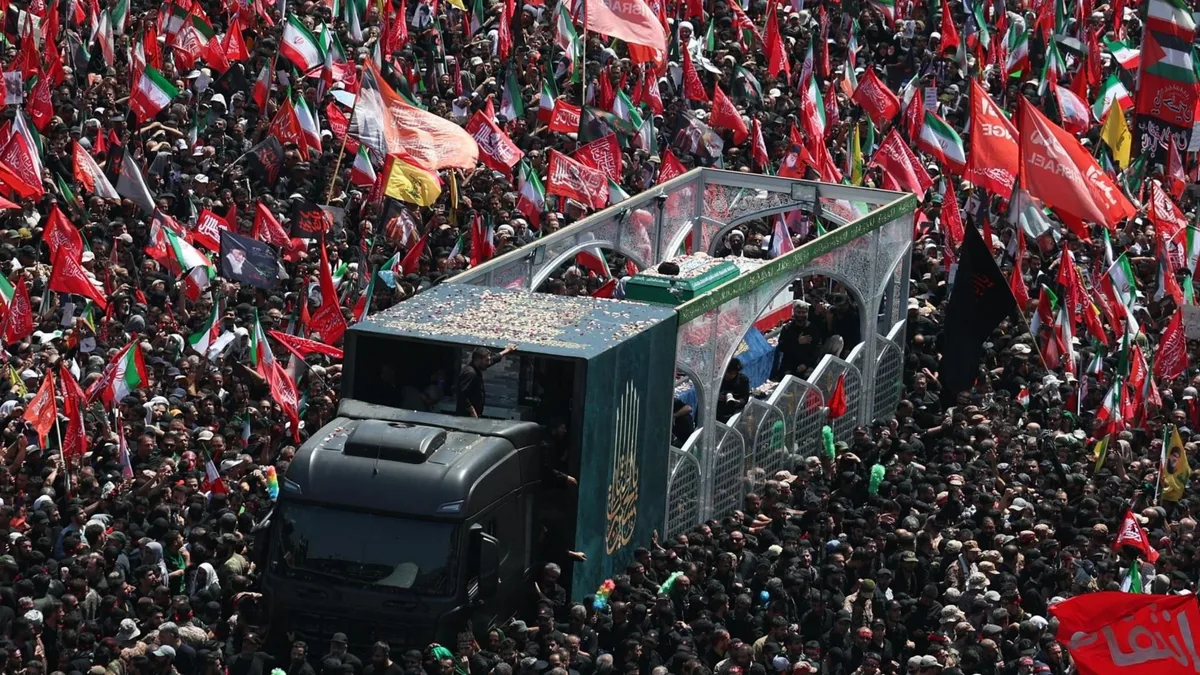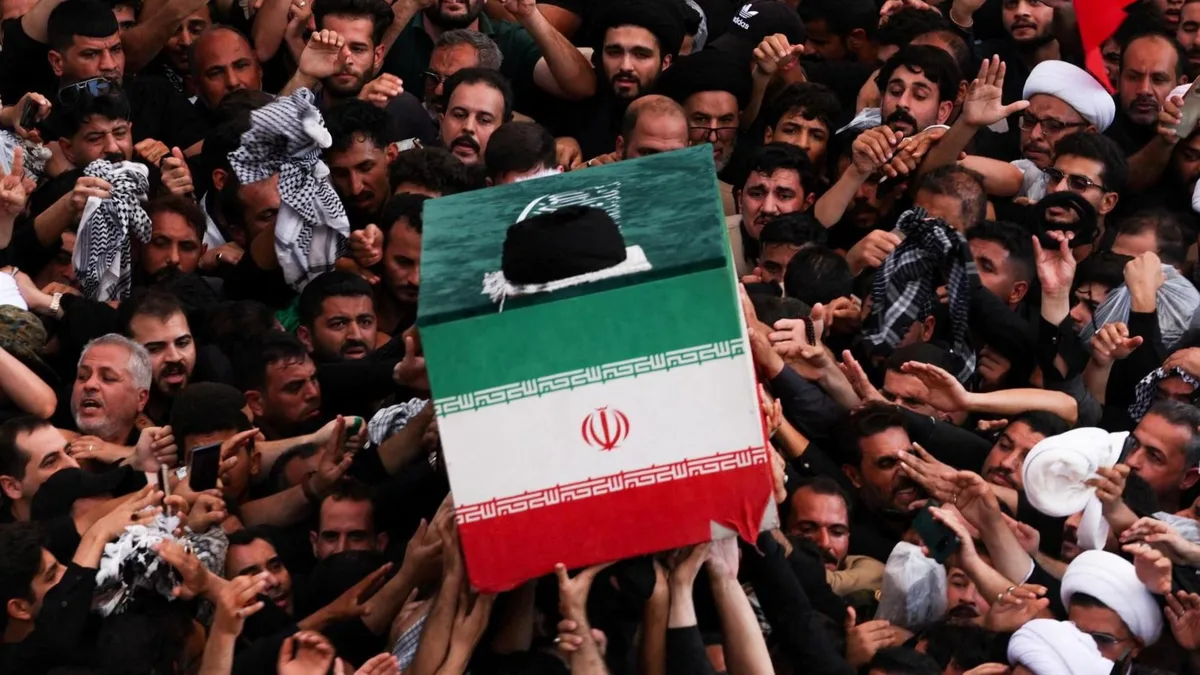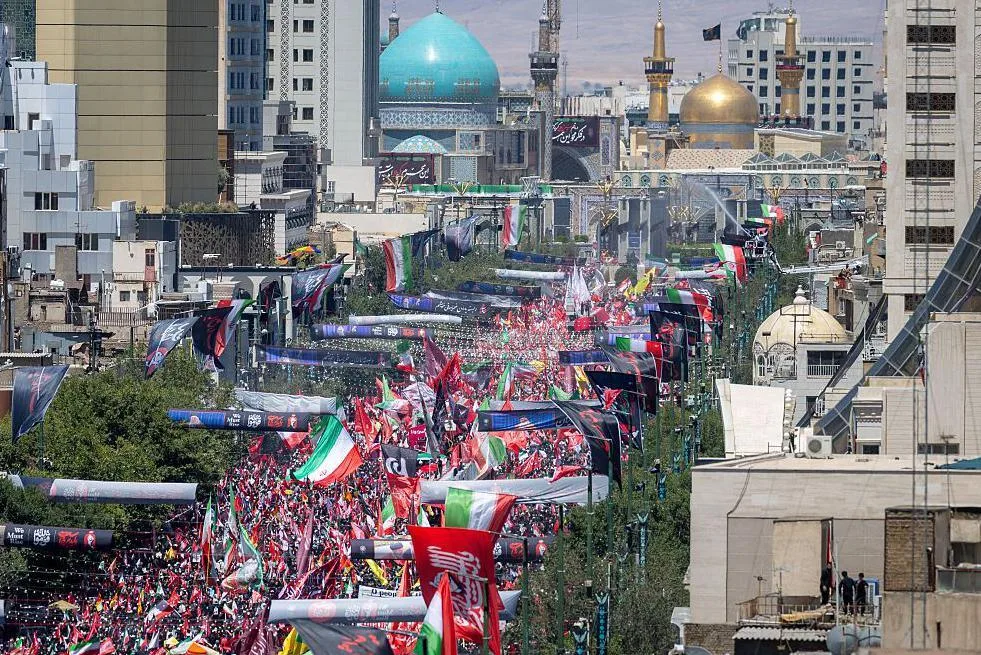
Iran held the burial of its slain Supreme Leader Ayatollah Ali Khamenei on July 9, 2026, at the Shrine of Imam Reza in Mashhad, the country’s holiest Shia site, marking the end of six days of nationwide mourning and funeral processions [1, 2, 3, 4, 5, 6, 7, 8, 9]. Khamenei was killed four months earlier, on February 28, 2026, in a US-Israeli air strike targeting his Tehran residence that also killed several family members, including his infant granddaughter, son-in-law, daughter, and the wife of his son Mojtaba Khamenei [1, 2, 3, 4, 6, 7, 9].
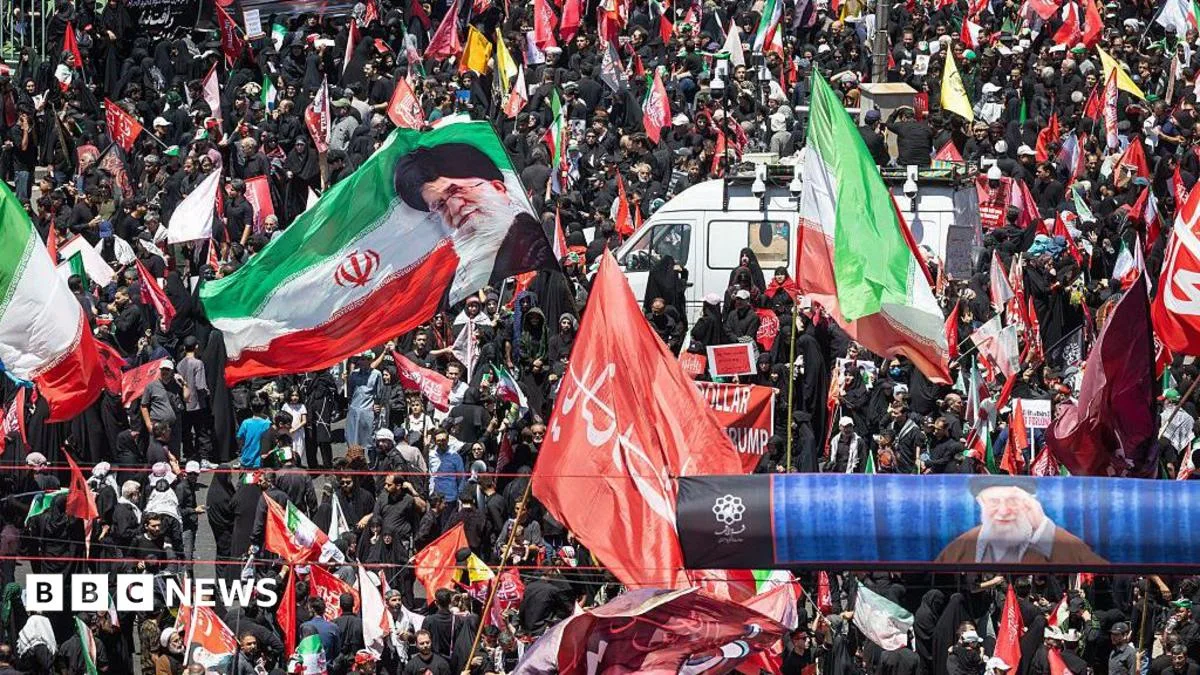
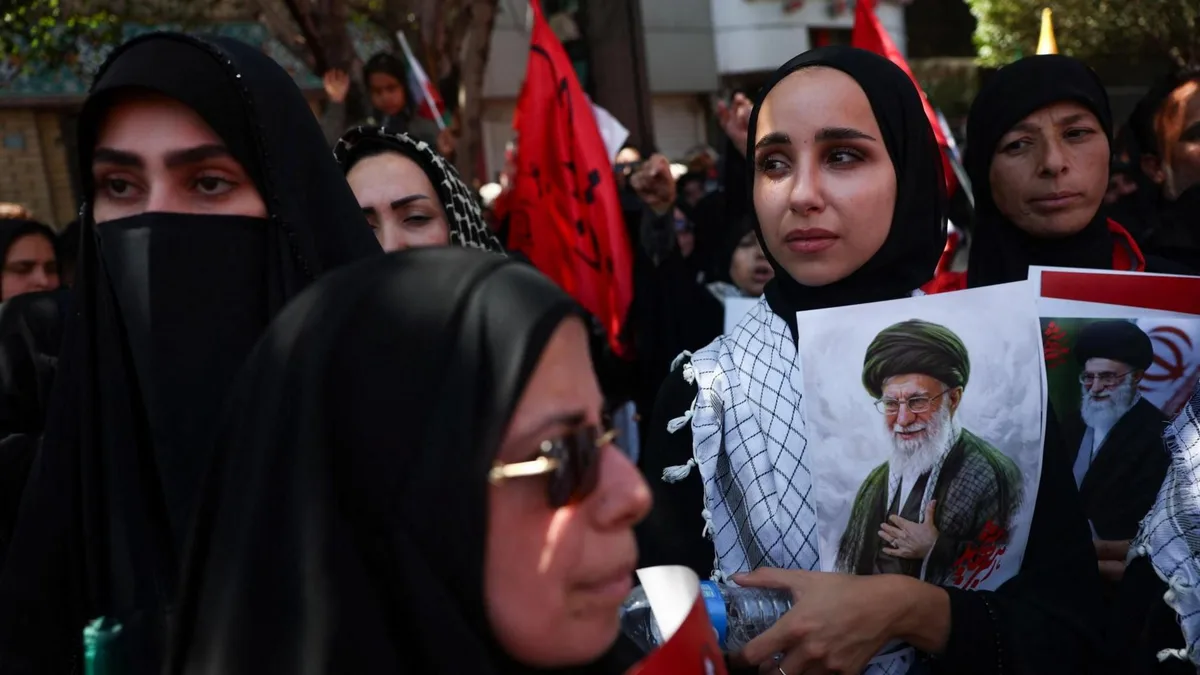
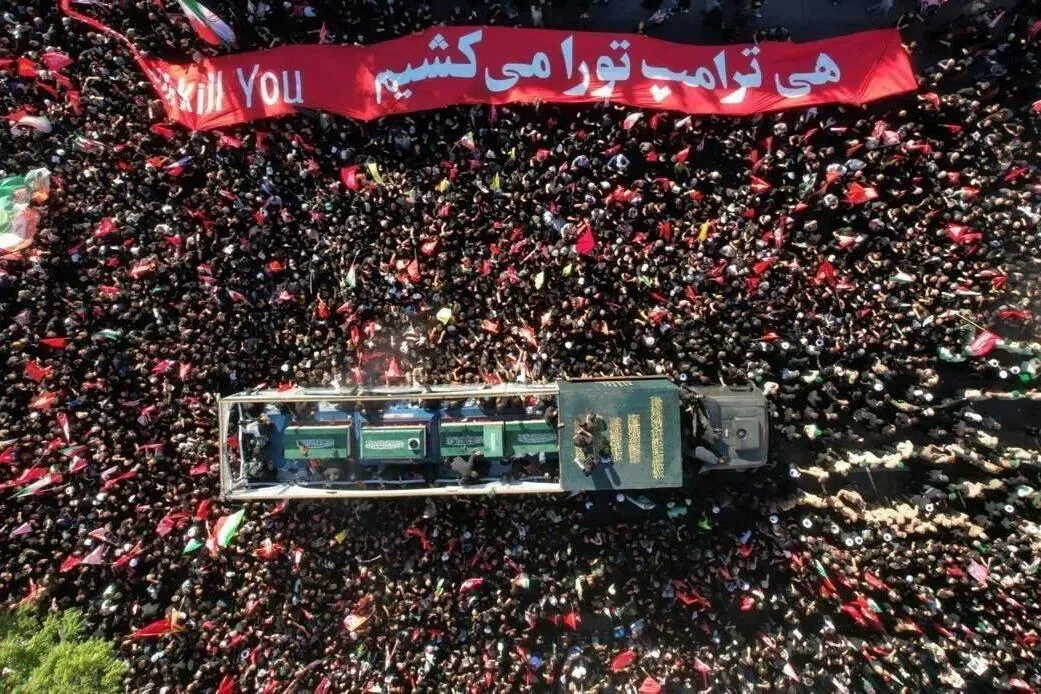
Massive crowds attended the funeral and preceding ceremonies held across five Iranian cities and in the Iraqi holy cities of Najaf and Karbala. Reports indicate millions gathered at events, with at least 2.3 million at the Najaf procession alone and an estimated 15 million expected for the Mashhad burial [1, 2, 5, 6, 7]. Iranian officials urged public participation to demonstrate regime unity despite escalating regional tensions [2, 5, 6].
Mourners chanted slogans calling for revenge against US President Donald Trump and Israeli Prime Minister Benjamin Netanyahu, whom they blamed for ordering the strike. “The loss of the leader is heavier than losing our parents. Only the death of Trump and Netanyahu will soothe our pain,” said Hoda, a 35-year-old housewife [1]. Others swore vengeance, shouting, “I swear by the blood of the Supreme Leader, Trump, we will kill you!” [2].
Khamenei’s eldest son, Mojtaba, was declared Supreme Leader shortly after the assassination but has not made public appearances since. He suffered severe injuries in the strike and has communicated only through written statements, reportedly avoiding public view due to security concerns [1, 2, 3, 5, 6, 7, 9].
Khamenei ruled Iran for nearly 37 years and was only the second Iranian leader ever buried in Mashhad, after Nader Shah in 1747 [9].
The burial coincided with a sharp spike in US-Iran hostilities that resumed despite a ceasefire memorandum signed mid-June 2026 and effective June 17. Missile strikes and explosions were reported across southern Iran, the Persian Gulf, Iraq, Bahrain, and Qatar, including multiple blasts near the Bushehr nuclear power plant [3, 6, 8, 10, 9].
The six-day mourning period and funeral processions—from July 3 through July 8—culminated in the burial late on July 9, attended by millions demonstrating support amid conflict and regional instability [1, 2, 5, 6, 7, 9].