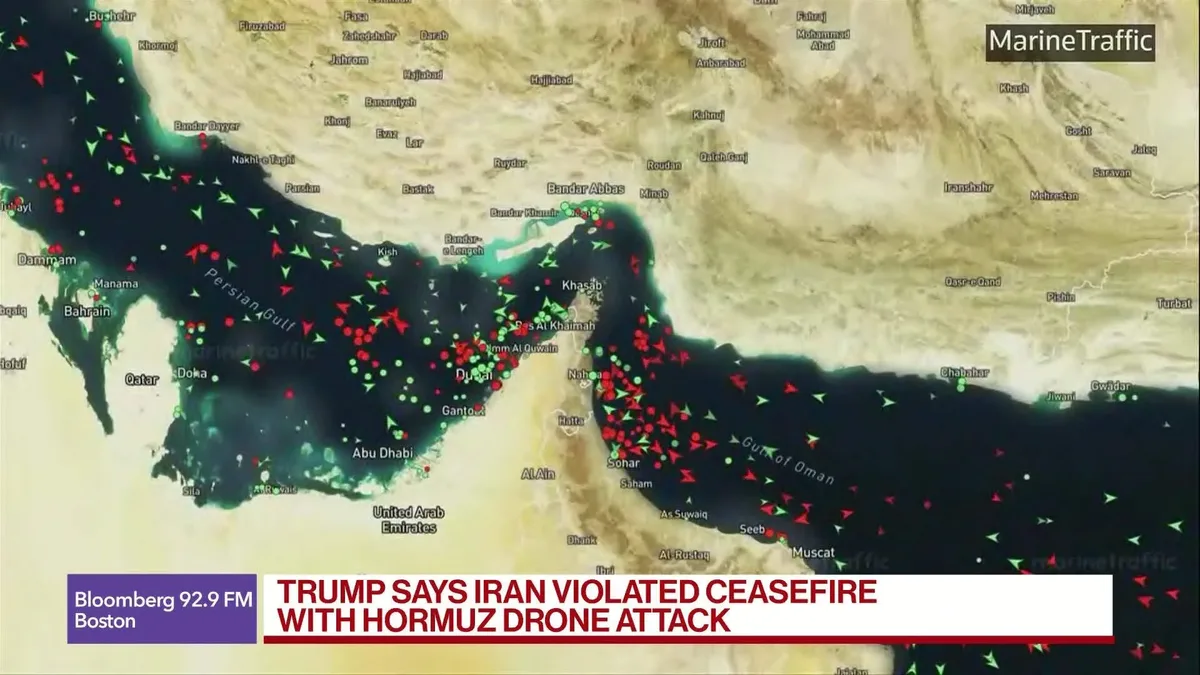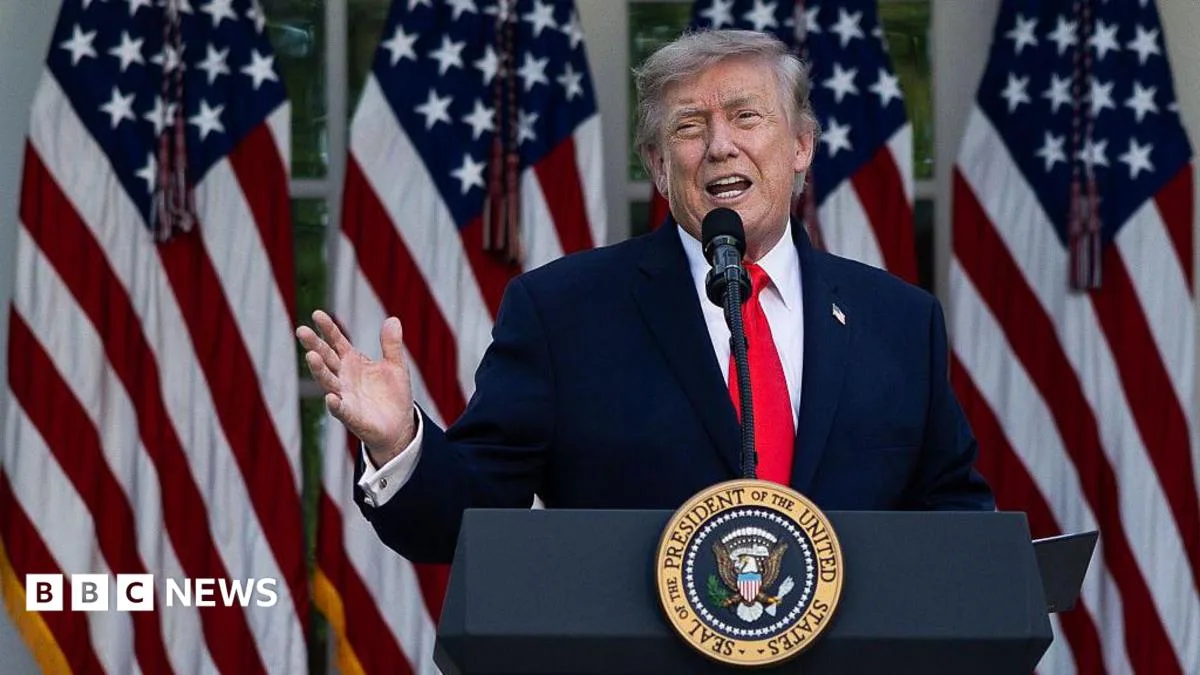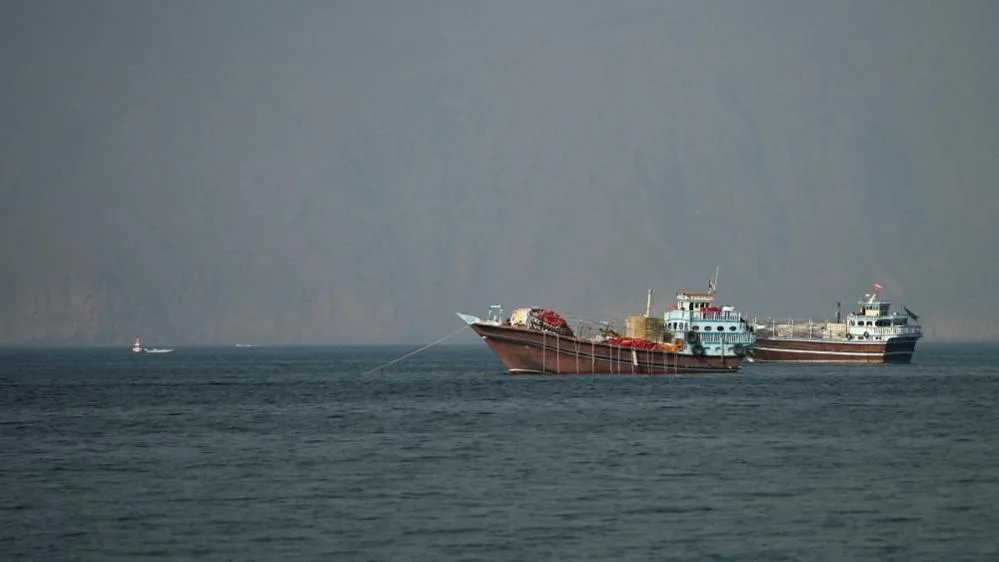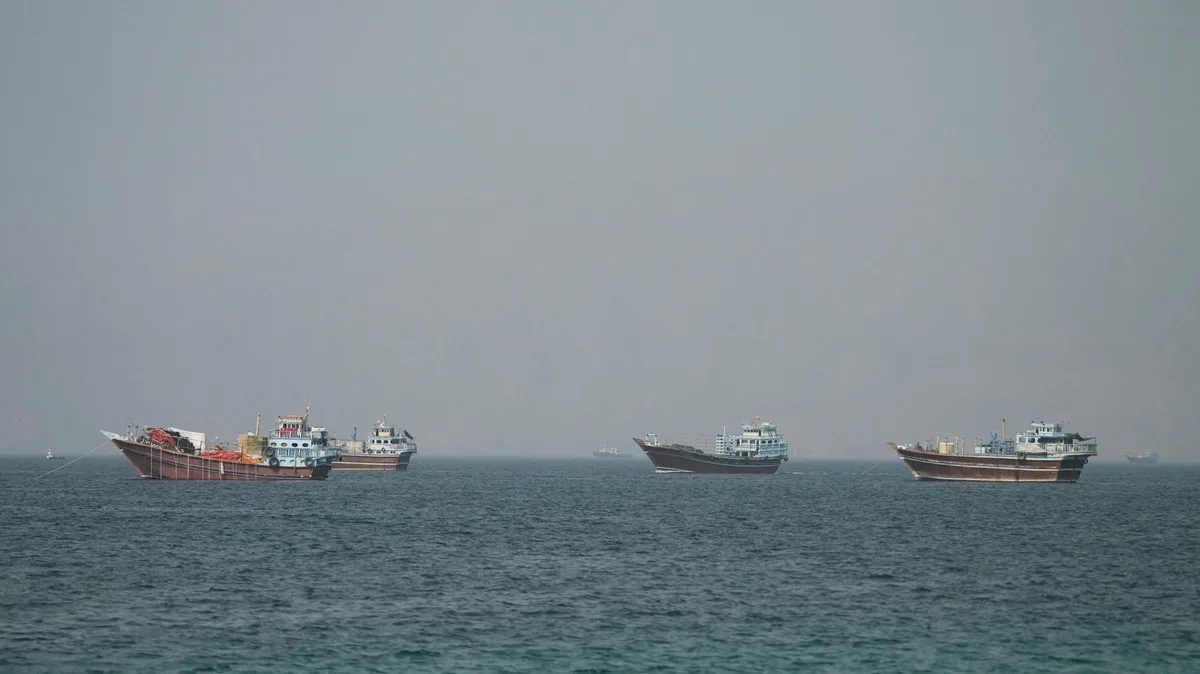
On June 25, 2026, the Singapore-flagged cargo ship Ever Lovely was struck by a projectile in the Strait of Hormuz, 7.5 nautical miles southeast of Oman’s Dahit port, while following a UKMTO-recommended shipping route near the coast of Oman [1, 2, 3, 4]. US President Donald Trump said Iran fired at least four drones at ships transiting the strait, with one drone hitting the Ever Lovely’s upper deck and causing damage [5, 1, 2, 6, 7, 8, 4]. Trump asserted that US forces shot down three of the drones aimed at the cargo vessel [1, 2, 6, 7, 8, 4].
The attack caused no casualties or injuries to crew members onboard the Ever Lovely, which was able to continue its journey after sustaining damage [1, 2, 3, 4]. Trump called the incident a “foolish violation of our Ceasefire Agreement,” referring to the ceasefire between the US and Iran that has been in effect since April 8, 2026 [5, 1, 2, 6, 7, 8, 4].
In response, US military forces launched strikes on June 26 targeting Iranian missile and drone storage facilities, coastal radar sites, and a pier near Sirik, Iran [3, 9, 10]. The UN’s International Maritime Organization paused a planned evacuation of over 11,000 sailors stranded in the Gulf due to rising tensions [1, 2, 4]. UN IMO chief Arsenio Dominguez said evacuation would resume once further confirmations were received [1].
Iran’s Islamic Revolutionary Guard Corps had warned vessels to coordinate with Iran when crossing the Strait of Hormuz, calling unauthorized passage dangerous and unacceptable before the attack, but Iran has not claimed responsibility for the drone strike [1, 4]. Following the incident, a missile warning alert was mistakenly triggered in Dubai due to a technical glitch, adding to regional alarm [6, 7].
The Ever Lovely had been stranded in the Gulf for more than 100 days after loading cargo in Iraq prior to the attack [4]. US-Iran negotiators continue discussions on a 60-day interim peace deal designed to ensure safe passage in the Strait of Hormuz [6, 7, 4].