Iran's Islamic Revolutionary Guard Corps launched missile and drone attacks on US bases in Jordan, Bahrain, and Kuwait on June 10, responding to earlier US strikes near the Strait of Hormuz [1, 2, 3, 4, 5]. The attacks included strikes on 18 targets across the three countries, including four sites at the Al-Azraq airbase in Jordan and drone strikes on the US Fifth Fleet headquarters in Bahrain [2, 4, 5, 6, 7, 8].
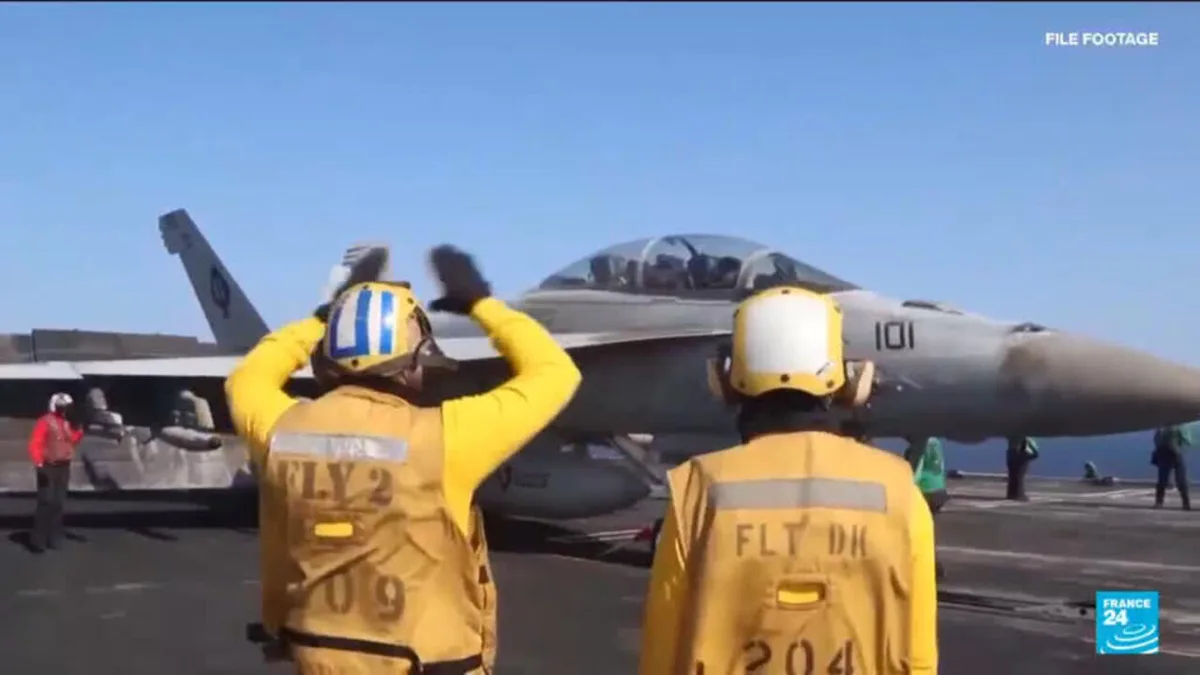
The US had conducted multiple raids overnight June 9-10 near the Strait of Hormuz targeting Iranian air defenses, ground control stations, and surveillance radar sites. These were carried out following the downing of a US Apache helicopter in the area, whose two crew were rescued in stable condition after colliding with an Iranian drone [1, 2, 4, 5, 8]. Nearly 20 Iranian targets were hit in these US strikes [2].
Jordan's armed forces intercepted between five and twenty missiles fired toward the Al-Azraq base, shooting them down before they reached the facility. Missile debris fell on Jordanian territory, but there were no injuries or reported damage, according to Jordanian authorities [2, 5, 9]. Reports differ on the exact missile count, with Jordan stating five intercepted hits while others report up to 20 missiles shot down [2, 9].
Bahraini defense forces intercepted several Iranian missiles and drones attacking their territory as well. An 11-year-old girl was injured and minor damage to homes and vehicles was reported from these strikes [5, 9, 6]. Iran's drone strike on the US Fifth Fleet base in Bahrain occurred around 2:30 a.m. local time on June 10 [6, 7, 8].
Iran claimed it had fully closed the Strait of Hormuz and warned ships to avoid the area amid rising tensions, although this could not be independently confirmed [4]. Explosions caused damage to telecommunications and water infrastructure in southern Iran near Jask, Sirik, and Qeshm during the US strikes. About 20,000 people were temporarily cut off from water supplies before service was restored, according to a local water authority [4, 5, 10, 8].
Iranian Foreign Minister Abbas Araghchi condemned the US attacks, saying, "No attack will go unanswered. Despite its defeats on the battlefield, the U.S. opted to test our determination" [1]. An Iranian Foreign Ministry spokesman criticized the US for targeting civilian infrastructure vital to life [10]. US Central Command confirmed its actions were completed after hours of operations and said forces remained ready to defend against further Iranian aggression [1, 2, 5, 9, 8].
The exchanges mark a sharp escalation two months after a ceasefire agreement was declared but remains "practically meaningless" due to recent strikes on both sides, according to Iranian officials [1, 2, 9]. The US and Iran appear locked in ongoing military confrontation around the Strait of Hormuz, a critical maritime chokepoint.
US officials declined to specify next actions but emphasized readiness, while Iran’s Revolutionary Guard vowed further retaliation for any US aggression. The situation remains tense with international shipping warned to avoid the Strait of Hormuz as the deadline for further updates approaches.