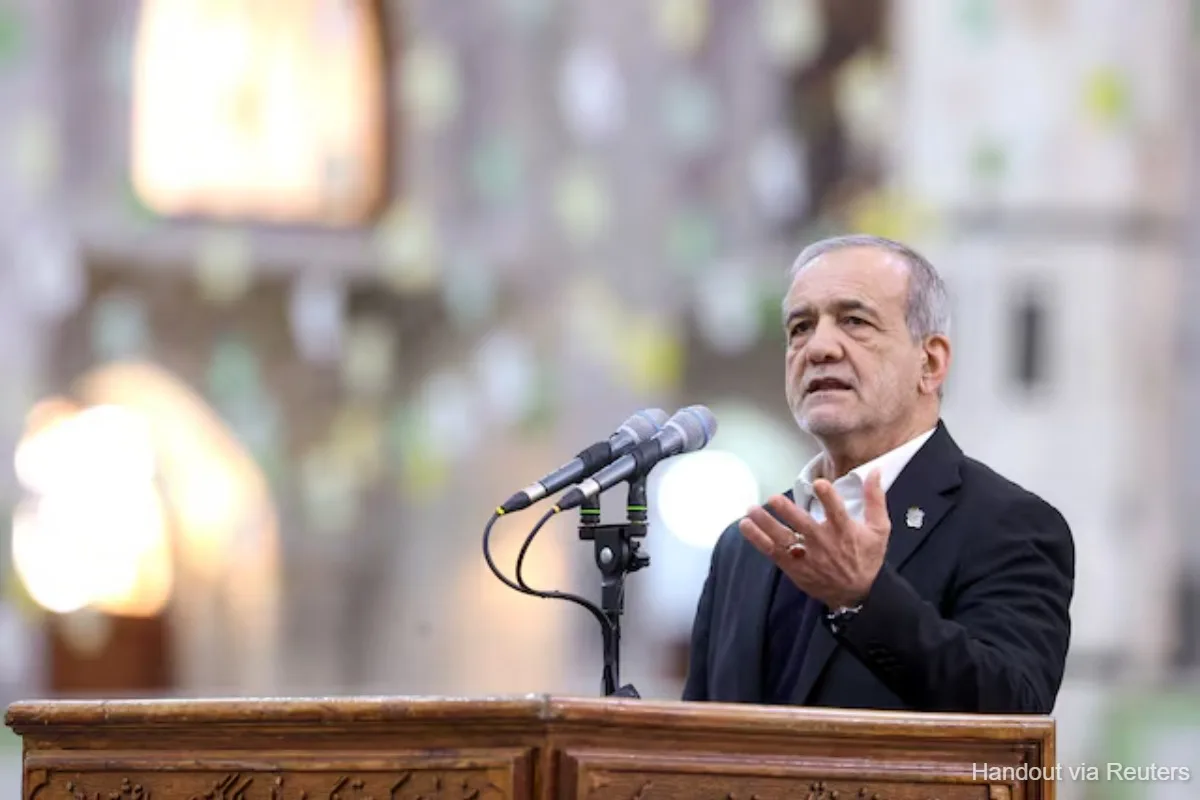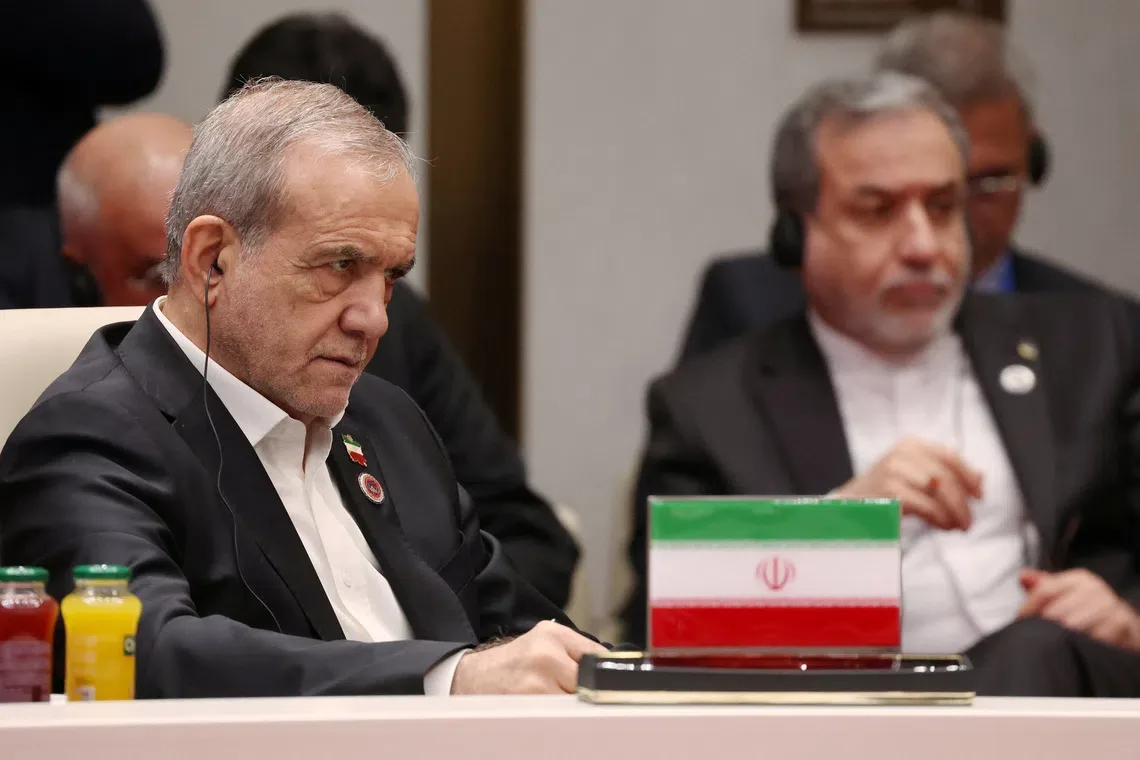
Iran’s President Masoud Pezeshkian stated at the Shanghai Cooperation Organisation (SCO) summit in Bishkek on September 1, 2026, that Iran will immediately respond if the United States returns to its commitments under the June memorandum of understanding (MoU) aimed at ending hostilities between the two countries [1, 2, 3]. Pezeshkian said, "I am stating clearly that if the U.S. returns to its commitments under the Memorandum of Understanding, the Islamic Republic of Iran will immediately reciprocate" [1].
The MoU signed in June 2026 sought to end hostilities that began in late February 2026, following US and Israeli strikes on Iran that marked the conflict’s outbreak [1, 2, 4]. It included provisions for a ceasefire, reopening the strategic Strait of Hormuz to shipping, lifting US sanctions and waivers on Iranian oil exports, and starting talks on reconstruction [4, 5, 6]. However, the ceasefire rapidly unraveled amid mutual accusations of violations, leading to resumed fighting in mid to late August 2026 [1, 2, 3, 4].
Iran effectively closed the Strait of Hormuz amid the tensions but stated it would reopen the waterway if the US honored the MoU [1, 2, 3]. Iranian Foreign Minister Abbas Araghchi called on the US to return to its commitments to restore the situation, saying, "The United States must return to its commitments and to what their president signed. In that case, everything can be put back on the right track" [2]. Pezeshkian accused the US of failing to honor the agreement less than two weeks after signing, with persistent excessive demands that fueled the renewed hostilities [4].
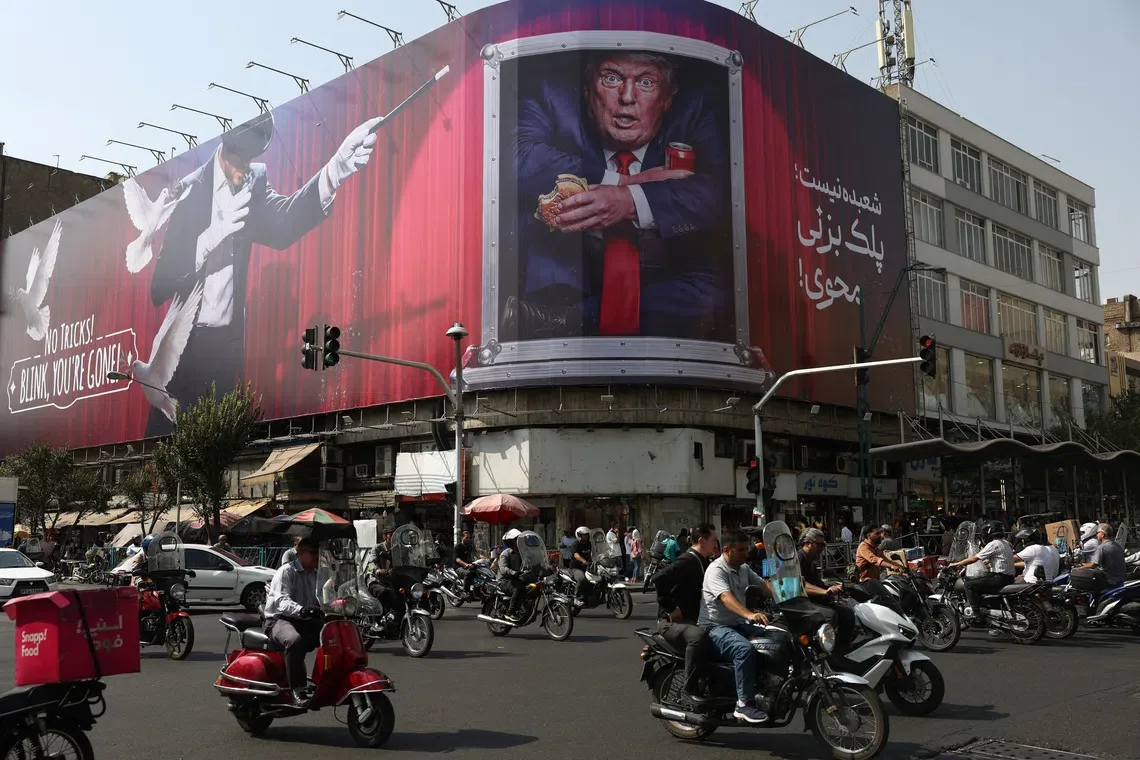
The conflict reignited in late August with US strikes on Iran’s Larak Island, followed by Iranian missile attacks on US air bases in Jordan [1, 3, 4]. US President Donald Trump acknowledged there would be a response to the Iranian attacks but downplayed the situation, saying the strikes did not signal a return to full-scale war [1, 3].
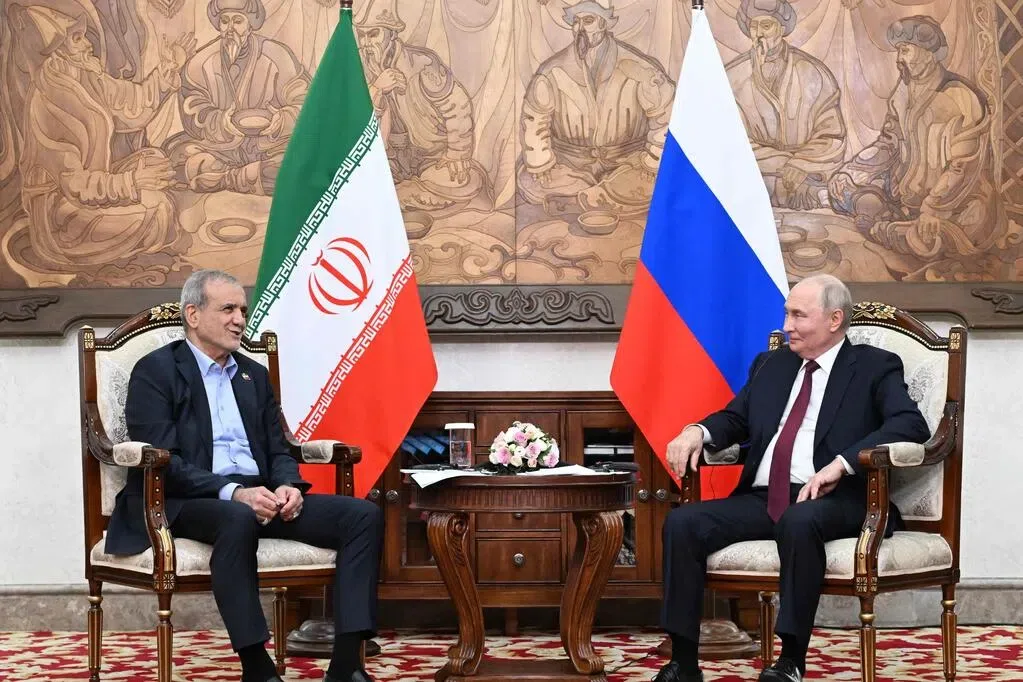
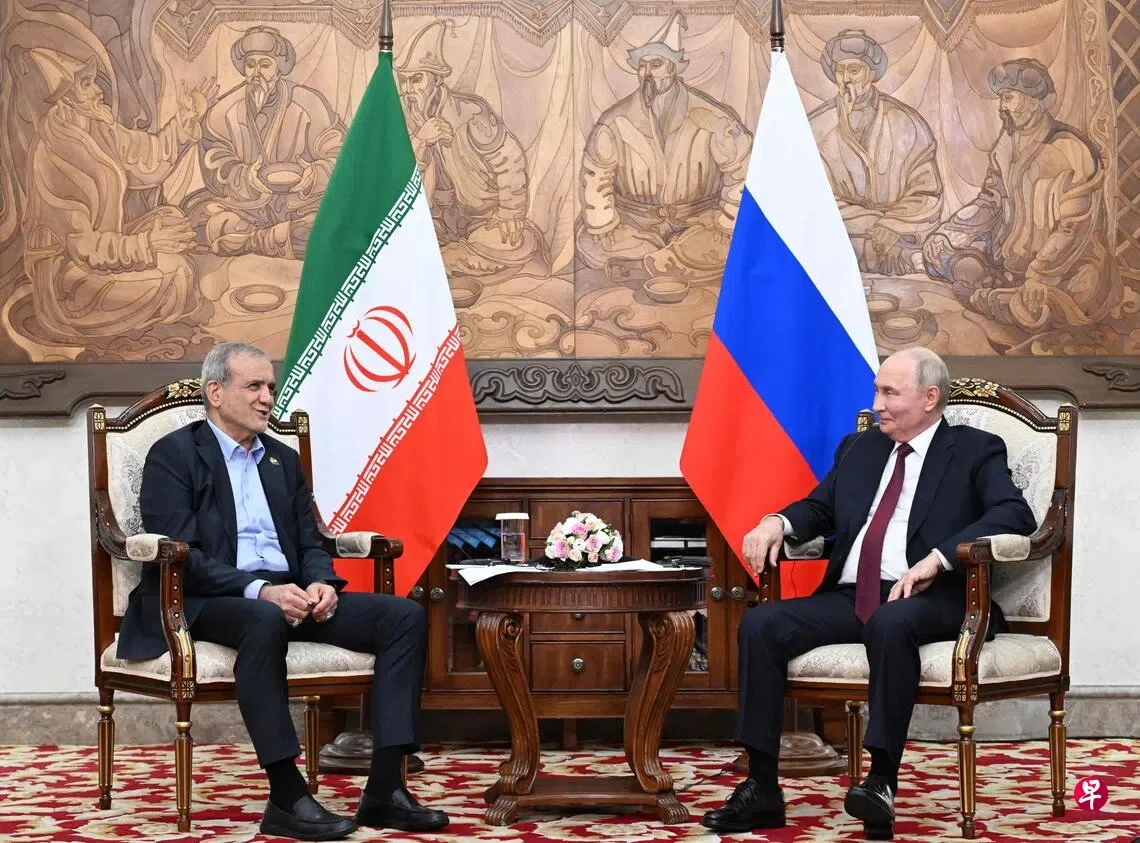
At the SCO summit attended by leaders including Russia’s Vladimir Putin, China’s Xi Jinping, and India’s Narendra Modi in Bishkek, Kyrgyzstan, Pezeshkian thanked Putin for Moscow’s support. He said Moscow and Tehran would work together to resist US unilateralism and sanctions [1, 2, 7, 8]. The SCO now comprises 10 members and 15 dialogue partners, focusing on regional security as a counterbalance to Western influence [2, 5].
The June MoU called for a 60-day ceasefire negotiation period, which collapsed within months as hostilities resumed [1, 4, 5]. Pezeshkian’s latest remarks signal Iran’s openness to de-escalation if the US returns to the terms agreed in June. The SCO summit continues through September 2, with further talks expected among attending leaders [1, 2].