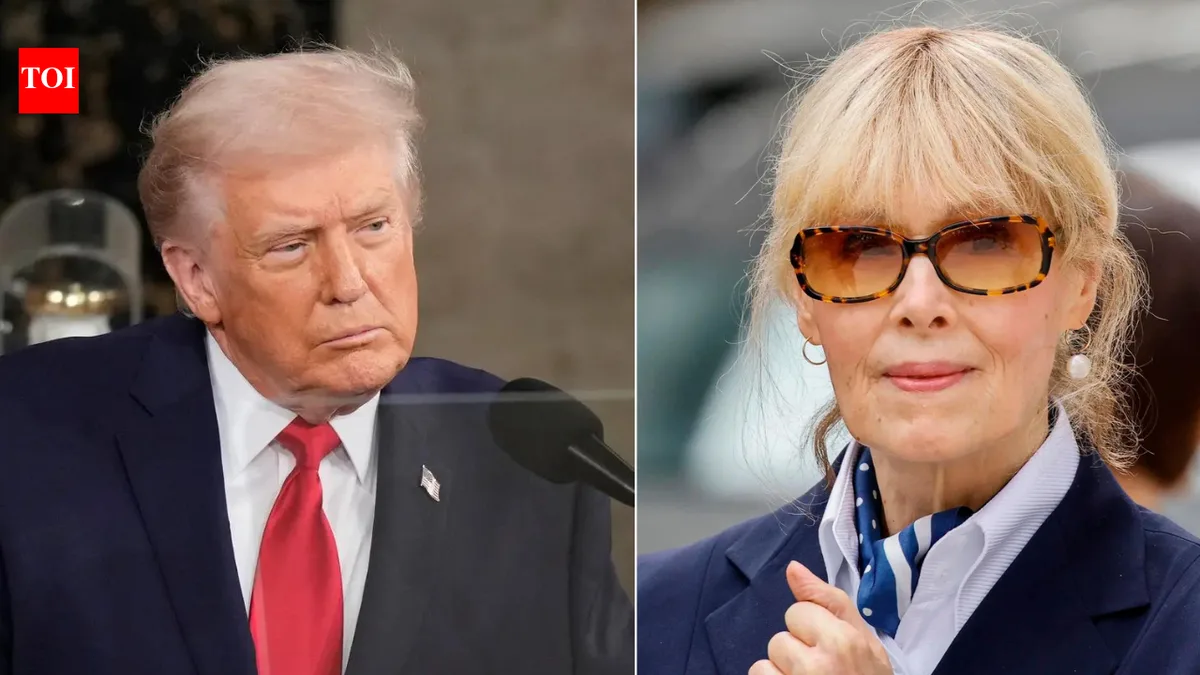
A US District Judge Lewis Kaplan on July 4, 2026, denied Donald Trump’s motion to delay payment of nearly $5.8 million to E Jean Carroll, ordering the funds be paid by the following Tuesday or through further legal proceedings [1, 2].
The judgment stems from a New York jury's ruling that found Trump liable for sexually abusing Carroll in 1996 and defaming her in 2019, awarding her $5 million in damages, which with accrued interest grew to about $5.8 million [1, 3, 2]. Trump deposited the $5 million judgment into an escrow account but sought to postpone releasing the funds to Carroll [1, 3, 2].
Trump’s former lead counsel, Justin Smith, was confirmed as a federal judge in June 2026, and new lead counsel Josh Halpern requested more time to familiarize himself with the case. Trump's legal team filed a late June/early July motion asking for an extension to delay payment until Halpern was prepared and while a petition for rehearing was pending before the Supreme Court [1, 3, 2].
Trump’s lawyers argued that under an agreement clause, payment could not be made while the Supreme Court’s rehearing petition remained unresolved. They said, "Collection cannot begin while proceedings remain pending before the Supreme Court, which is currently the case" [3]. Trump’s rehearing petition, filed around July 6-7, asked the court to reconsider its June 29 denial to hear his appeal [1, 3].
Carroll’s attorney, Roberta Kaplan, sharply criticized the request as a delay tactic. She called it "little more than yet another play for time" and said, "We can only assume that Defendant is seeking … to buy time so he can try to concoct some new basis to put off paying Plaintiff presumably in connection with his forthcoming petition and motion for a rehearing" [1, 2].
In a separate case in January 2024, a Manhattan jury ordered Trump to pay Carroll $83.3 million for defamation related to statements denying the sexual abuse allegation [1, 3].
The judge’s denial means Trump’s legal team must either make the payment to Carroll by July 7 or present further motions for relief. Meanwhile, the Supreme Court’s consideration of the rehearing petition remains pending [1, 2].