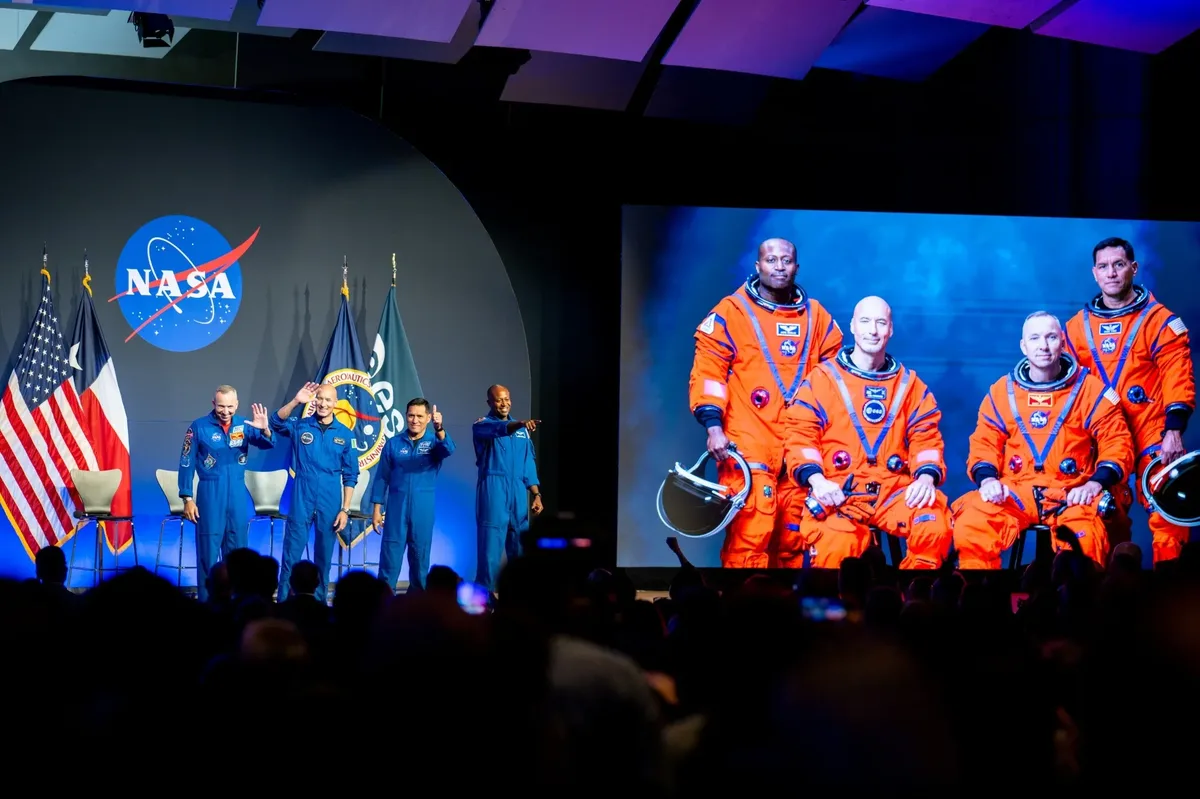
NASA named the four astronauts for the Artemis III mission, scheduled for launch in mid-2027, to test docking and rendezvous operations among NASA’s Orion spacecraft, SpaceX Starship, and Blue Origin Blue Moon landers in low Earth orbit [1, 2, 3, 4]. The mission will not land astronauts on the Moon but will serve as a critical demonstration before future lunar surface missions [4].
The crew includes three U.S. astronauts: Randy Bresnik, 58, a retired Marine Corps colonel and test pilot commanding his fourth spaceflight; Frank Rubio, 50, who holds the U.S. record for longest continuous spaceflight at 371 days; and Andre Douglas, 40, an engineer on his first flight [3, 4]. Italian astronaut Luca Parmitano, 49, will serve as pilot. Parmitano is an ESA astronaut flying his third mission and the first ESA crew member assigned to Artemis [3, 4]. ESA’s European Service Module powers the Orion spacecraft [3, 4].
Jeremy Parsons, NASA Artemis program manager, said, "Artemis III is an incredibly exciting, complicated, and highly coordinated multi-launch campaign. It's going to happen in a short period of time with three of the world's most powerful rockets" [2]. Josef Aschbacher, ESA director general, commented, "Luca’s assignment as pilot reflects the depth of European expertise in human spaceflight and draws on his extensive operational experience in high-pressure situations. Europeans can take pride in being part of this exciting journey. Europe’s enduring role at the very heart of the Artemis program" [4].
Backup crew member NASA astronaut Bob Hines was also announced [4]. The Artemis III mission marks a shift from landing to orbital testing of spacecraft docking to validate hardware and procedures involving NASA’s Orion, SpaceX’s Starship, and Blue Origin’s Blue Moon [2, 3, 4].
The official crew announcement occurred on June 9, 2026, at a ceremony in Houston [1, 2, 3, 4]. The mission is planned for mid-2027, with no exact launch date given yet [3, 4].