A poll conducted by Hebrew University of Jerusalem and the Agam Institute surveyed 3,644 Israelis from June 17 to 20 on perceptions of the recent Middle East conflict and the US-Iran agreement [1, 2, 3, 4, 5, 6, 7]. The results show 92.1% believe Iran won or benefited most from the conflict and the subsequent deal with the US [1, 2, 3, 4, 6, 7]. Even among supporters of Prime Minister Netanyahu’s right-wing bloc, over 90% shared this view [1, 2, 3, 4, 6, 7].
The poll also found that 82.9% of respondents believe Israel’s long-term security has been weakened by the conflict [1, 2, 3, 4, 6, 7]. Opposition to the US-Iran deal is strong as well, with 63.2% of Israelis opposing and only 12.1% supporting the agreement [1, 2, 3, 4, 5, 6].
Public confidence in Netanyahu has fallen sharply. His support rate dropped from 40.5% in early March to 29.4% in June [1, 2, 3, 4, 5, 6, 7]. Moreover, 72.5% of respondents do not believe Netanyahu’s claims about military achievements in the conflict, while 56.4% rate his handling of the campaign as "failed" or "poor" [1, 2, 3, 4, 5, 6, 7].
Despite risks of further conflict with the US, 48.2% support renewed large-scale military action against Hezbollah in Lebanon, while 21% oppose it [1, 2, 3, 4, 5, 6].
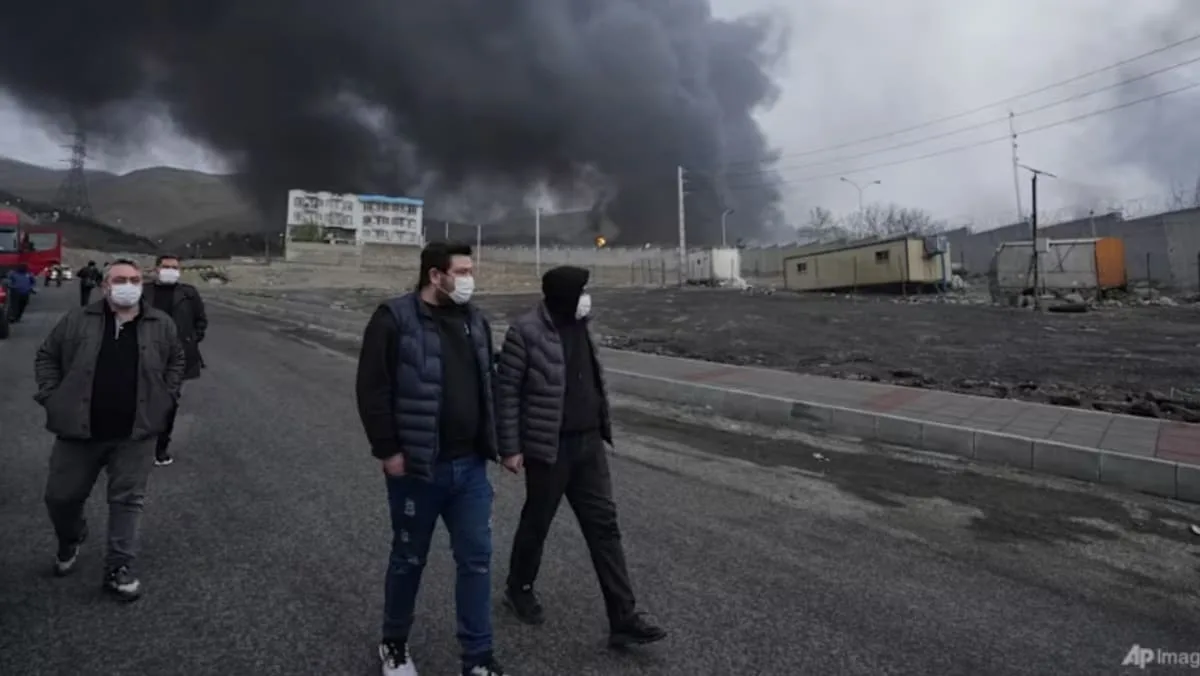
The conflict lasted about 100 days and caused significant instability in the Middle East and global energy markets [8, 9, 10]. Iran preserved its regime and nuclear program despite heavy losses, with around 1,700 Iranian civilian deaths reported [8, 9, 10]. Through the US-Iran agreement, Iran secured economic benefits including release of frozen assets and a $300 billion reconstruction fund [8, 9, 10]. It also gained strategic leverage by controlling the Strait of Hormuz and threatening new shipping tolls [8, 9, 10].
Experts criticized the outcome. Former Israeli intelligence officer Danny Citrinowicz said, "This marks the collapse of Israel’s entire past strategy against Iran" [8]. Former US ambassador Robert S. Ford asked, "When did the US troop deployments fall to bargaining with Iranians?" [8]. MIT professor Caitlin Talmadge noted, "US accepted the agreement not due to new military advantage, but because the war was out of control and escalation was undesired" [8]. SIPRI director Karim Haggag warned, "Middle East wars often increase radicalization; after this conflict, the region will become more unsafe" [8].
Following renewed clashes between Israeli troops and Hezbollah, a ceasefire in southern Lebanon was agreed on June 19 [3, 4]. Negotiations continued in Switzerland on June 21 to convert the US-Iran deal into a permanent agreement [3, 4, 6].