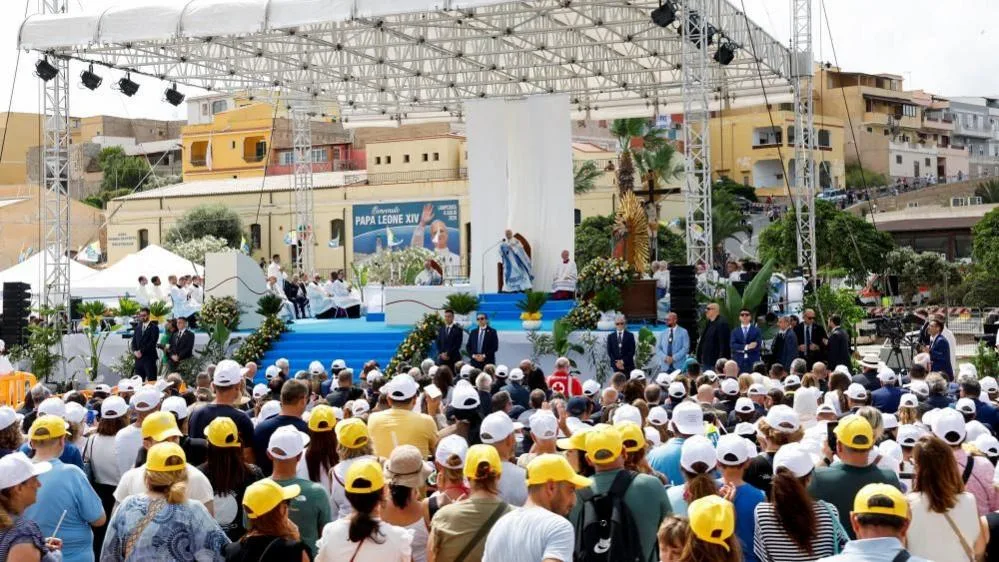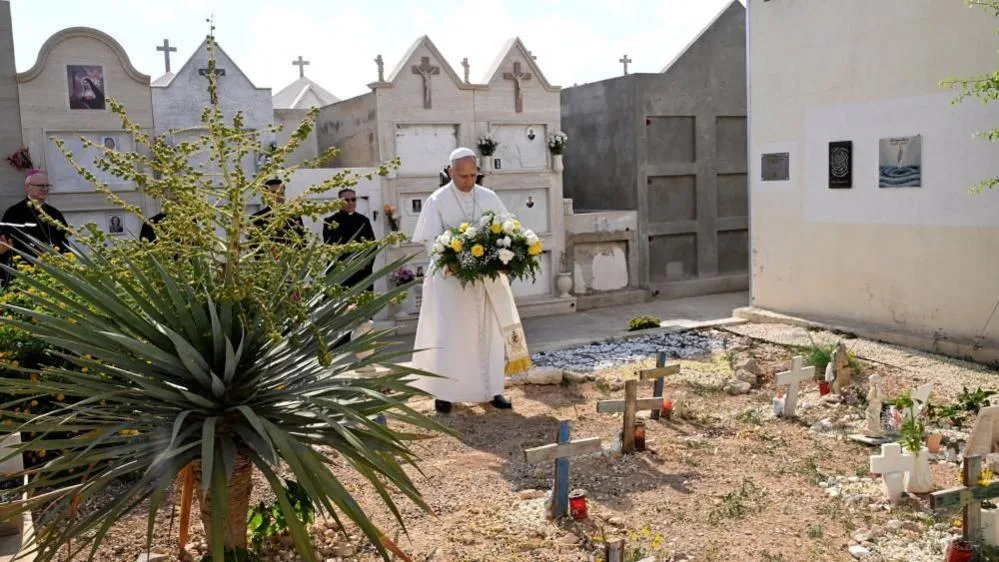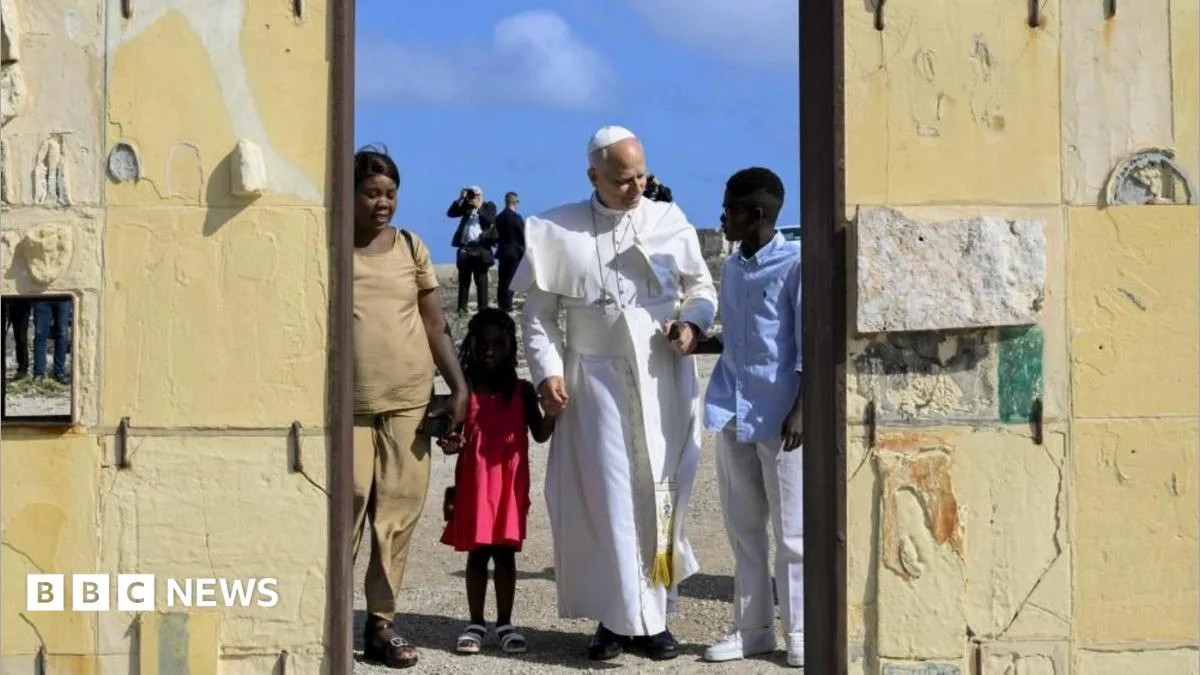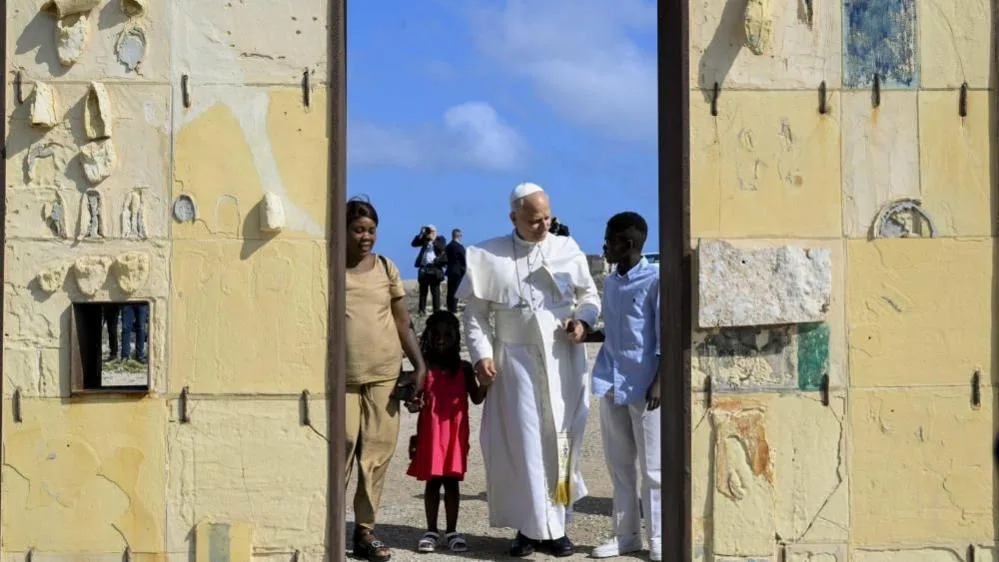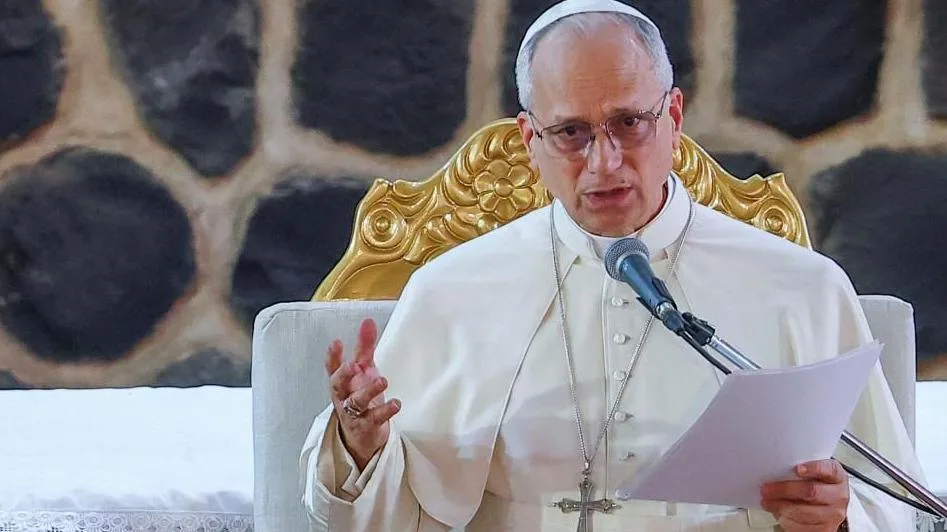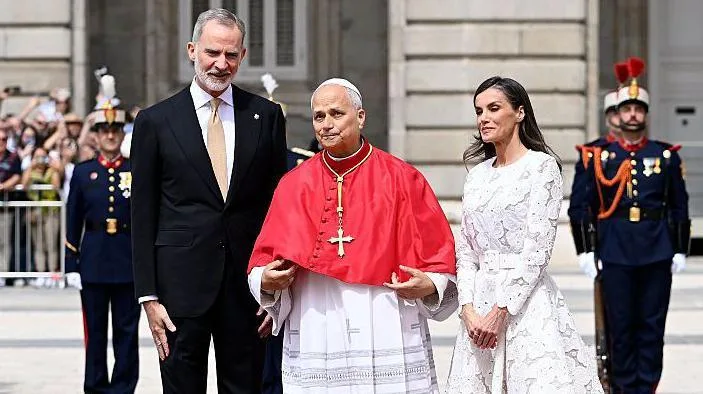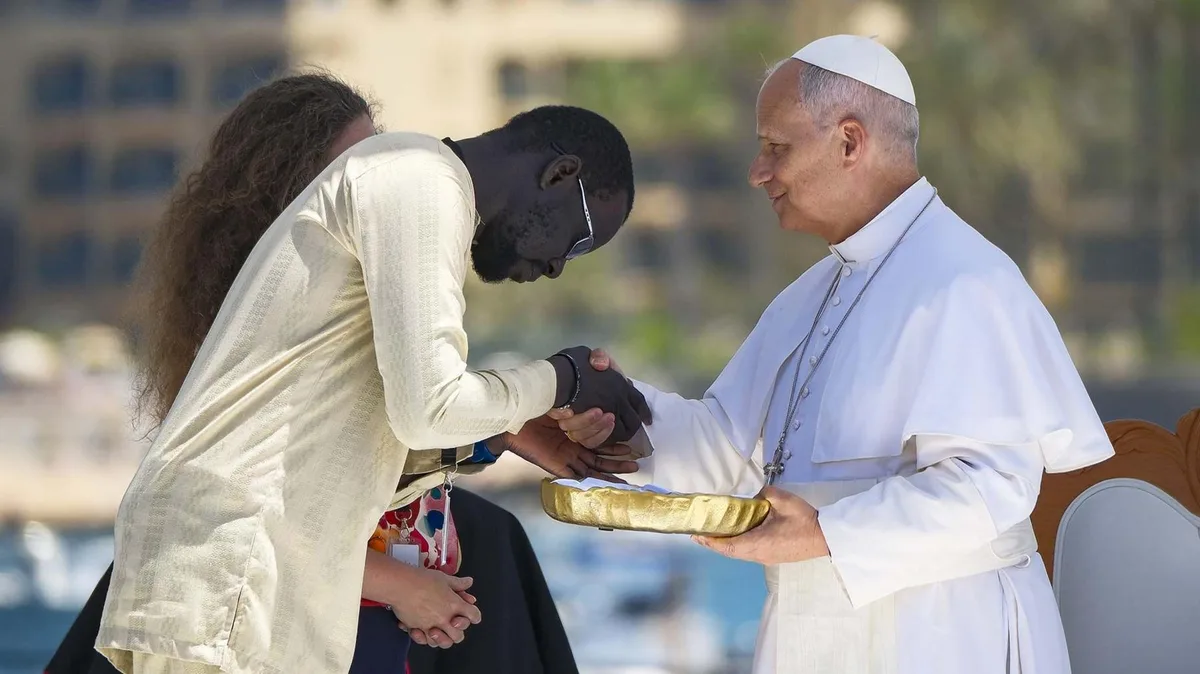
Pope Leo XIV visited the Italian island of Lampedusa on July 4, 2026, coinciding with the 250th anniversary of US independence. He prayed at a cemetery for unidentified migrants, visited the "Door of Europe" memorial, and spoke with a migrant family during his trip [1, 2, 3, 4, 5, 6]. Lampedusa is a key Mediterranean gateway receiving thousands of migrants crossing from North Africa, its migrant reception center currently overcrowded with arrivals in 2026 exceeding the island’s population of about 6,000 [1, 3]. More than 14,000 migrants have arrived in Italy by sea so far this year, with over half landing in Lampedusa [3, 7]. Over 1,400 people, including children, have died or gone missing crossing the Mediterranean in 2026 [1, 3, 7].
Pope Leo urged Europe to develop comprehensive, long-term plans to receive, protect, support, and integrate migrants. He said, "Europe is capable of addressing the crisis in this region in a comprehensive manner, integrating immediate relief efforts into a long-term strategic plan capable of receiving, protecting, supporting and integrating migrants" [1]. He called on European countries to assist migrants' home countries to improve conditions so fewer are forced to emigrate [1, 3, 7, 6]. The Pope strongly criticized harsh immigration policies and mass deportations, including those in the US, reaffirming his commitment by saying "the pope continues to accompany you, support you and encourage you" [1, 2, 6, 8].
The visit also opposed new EU migrant rules approved in mid-June 2026 that expanded detention and deportation powers, including deportation centers outside the bloc [2, 4, 5, 6]. Pope Leo, the first US-born pope, has publicly clashed with the Trump administration over anti-immigration policies [1, 8]. In a July 3 virtual address marking the US's 250th anniversary, he urged Americans to embrace the nation's history of welcoming immigrants, saying, "The moral greatness of a nation is manifested, above all, in its capacity to support, protect and cherish the lives of all, especially the most vulnerable and those whose worth is questioned" [8].
Lampedusa has a history marked by migrant tragedies, including a 2013 shipwreck that killed over 360 people [2, 4, 5]. The Pope blessed a plaque renaming a migrant arrival pier after his predecessor, Pope Francis, who visited the island in 2013 [7, 5]. Filippo Ungaro, UNHCR spokesman, said "Leo’s presence sends a clear message at a time when the global political debate on migration is often framed around borders and deterrence rather than protection and shared responsibility" [2]. Migrant and cultural mediator Kandeh Abdourahman said, "The pope's visit speaks to every one of us... a reminder that our stories are seen, that welcome is not just a word but an act of humanity" [3].
The Pope concluded, "Those who have lost their lives in this sea are victims both of decisions that were made and of decisions that were not made," emphasizing the urgency of action [1]. The visit highlighted the pressure on Lampedusa, where more than 7,000 migrants have arrived this year—outnumbering the island's population [3].
Pope Leo’s visit followed his July 3 virtual address from Philadelphia and occurs amid growing debates over migration policy in Europe and the United States.