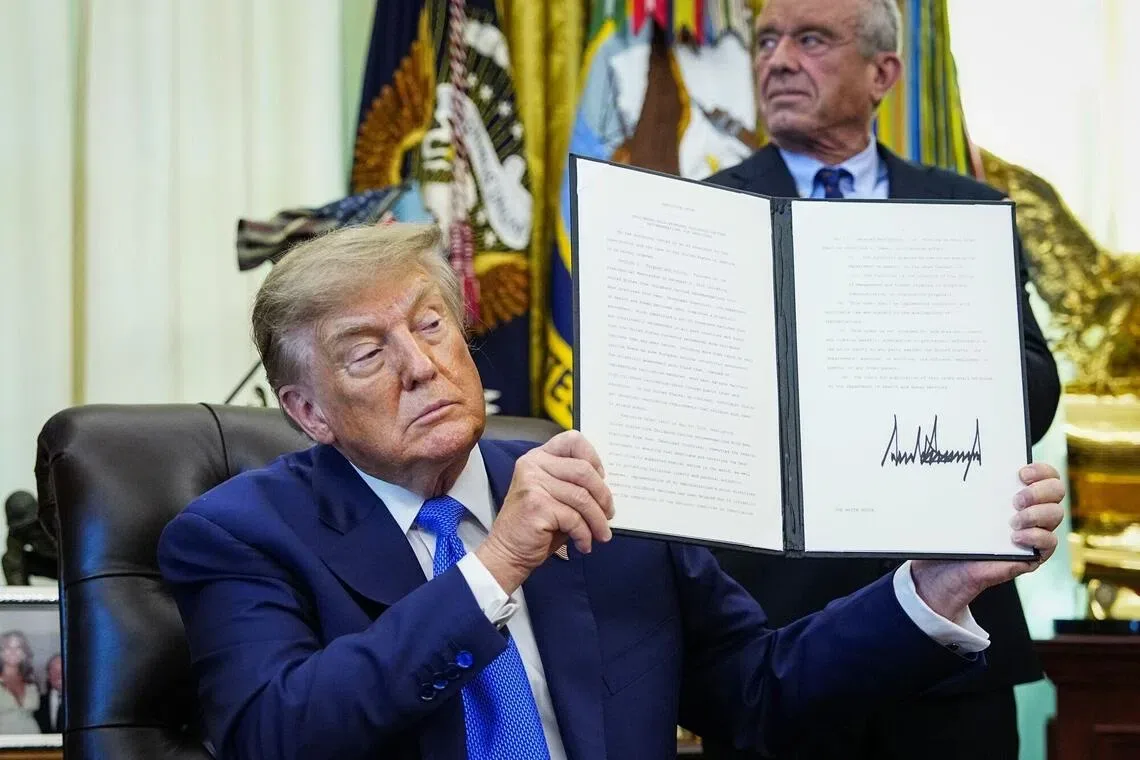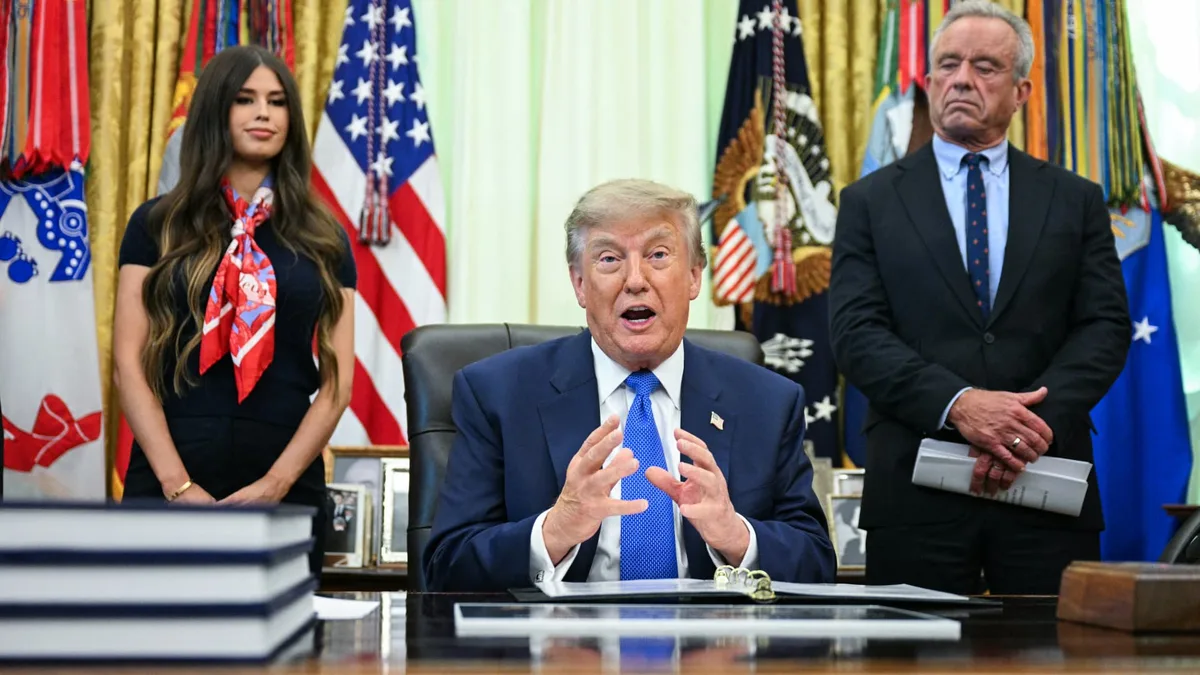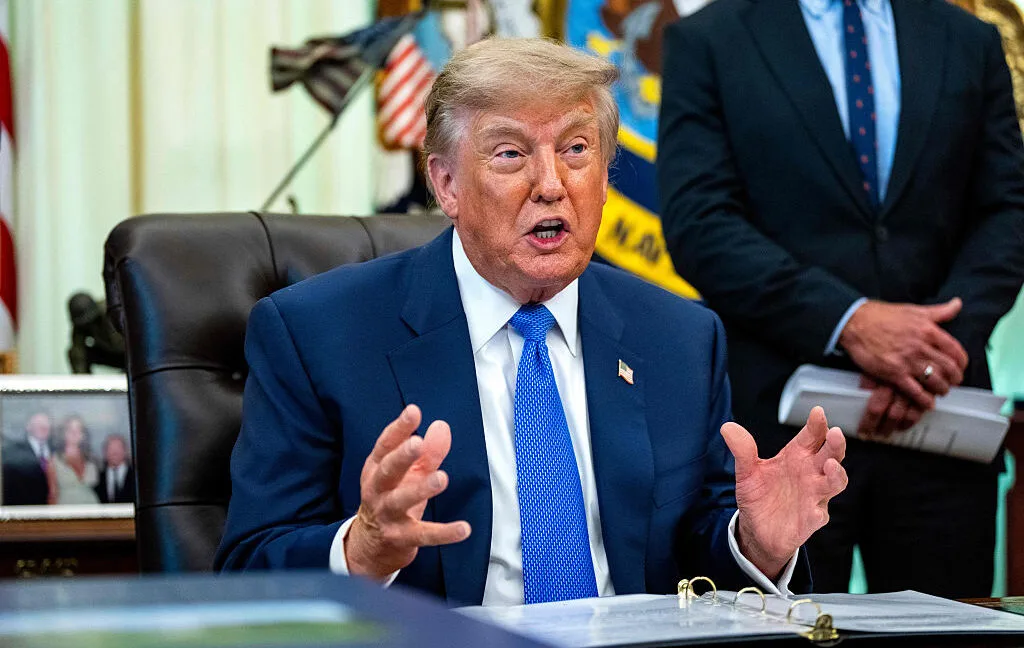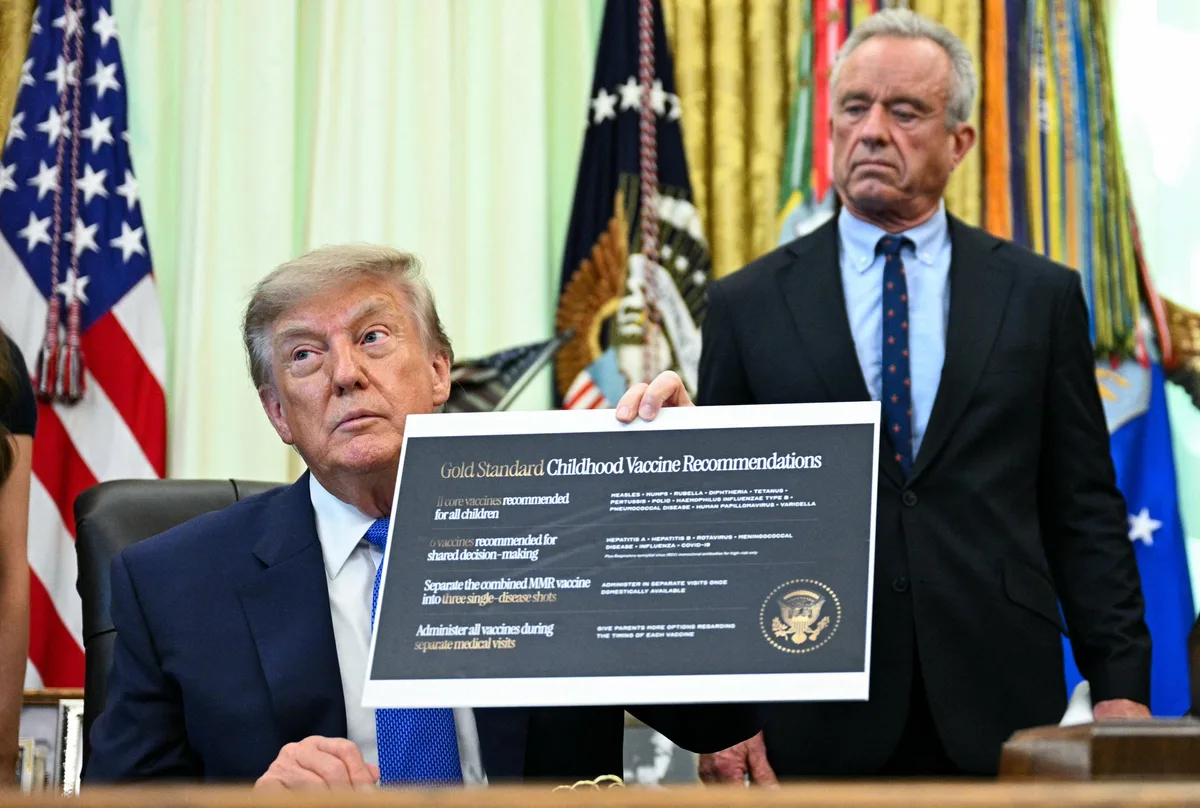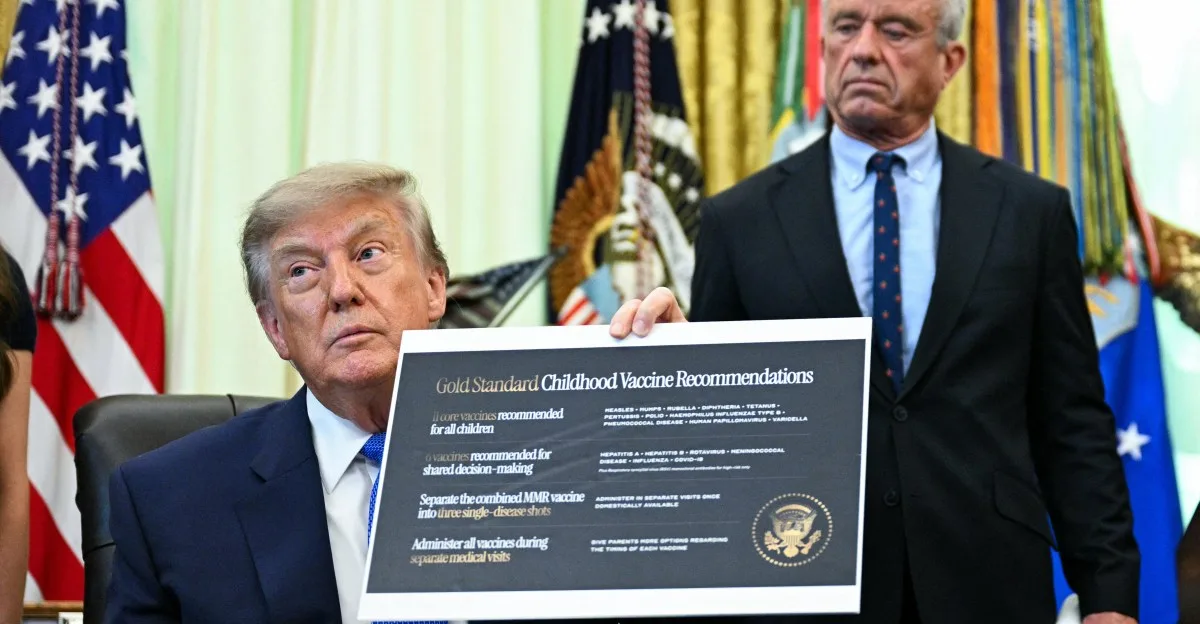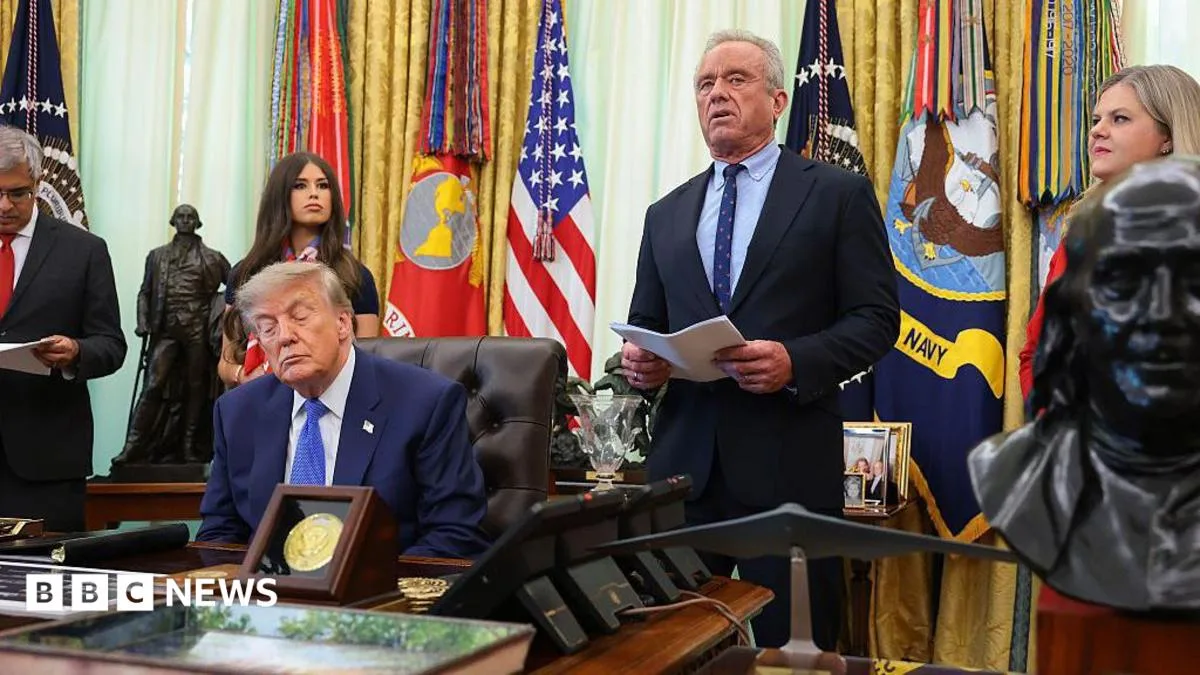
US President Donald Trump signed an executive order on August 10, 2026, reducing the routine childhood vaccines recommended from 18 to 11 and calling for the measles, mumps, and rubella (MMR) vaccine to be split into three separate shots given at different times [1, 2, 3, 4, 5]. Trump said, "The MMR we want to have separate visits, separate times. The vaccine being broken into three separate single doses and vaccines being administered in separate visits," adding, "It's inconvenient, it's five stops, but it's something that I think will have a huge impact on autism" [4].
Trump reiterated unfounded claims that vaccines contributed to rising autism rates and that current vaccine schedules overwhelm children's immune systems. He said, "Decades ago, children received only a small fraction of the vaccines required today. In those times, people were much healthier and of course the high rates of autism now observed did not exist" [1]. These claims contradict multiple scientific studies that have found no link between vaccines—including MMR—and autism [1, 3, 4]. Experts also dispute Trump's false statement comparing vaccine doses to "the size of a bottle of soda poured into children" [3, 5].
The executive order directs the Department of Health and Human Services to create a task force to assess separating MMR vaccines while keeping combination vaccines available [2, 4]. However, medical experts say splitting MMR lacks scientific basis, could lead to more missed vaccinations due to increased doctor visits, and that no approved separated MMR vaccines currently exist in the US [2, 4, 5]. Andrew Racine, president of the American Academy of Pediatrics, said, "It would take more than a decade to develop approved separated vaccines in the US" [2].
The federal government cannot enforce vaccine mandates at the state level; the order serves as a recommendation for states and territories to reconsider immunization requirements for school enrollment [2, 5]. Vaccines no longer recommended under the new schedule for all children include those for rotavirus, meningococcal disease, flu, and COVID-19 [5].
Health Secretary Robert F. Kennedy Jr., a known vaccine skeptic, has been influential in the vaccine schedule changes [2, 4, 5]. New York City health commissioner Alister Martin condemned the order as politically motivated and based on conspiracy theories, saying, "The order was based in politics and conspiracy theories. Fortunately, vaccination recommendations are not set by the president, nor should they be" [2].
The administration plans to continue task force work on separating the MMR vaccines while monitoring state decisions on immunization requirements.