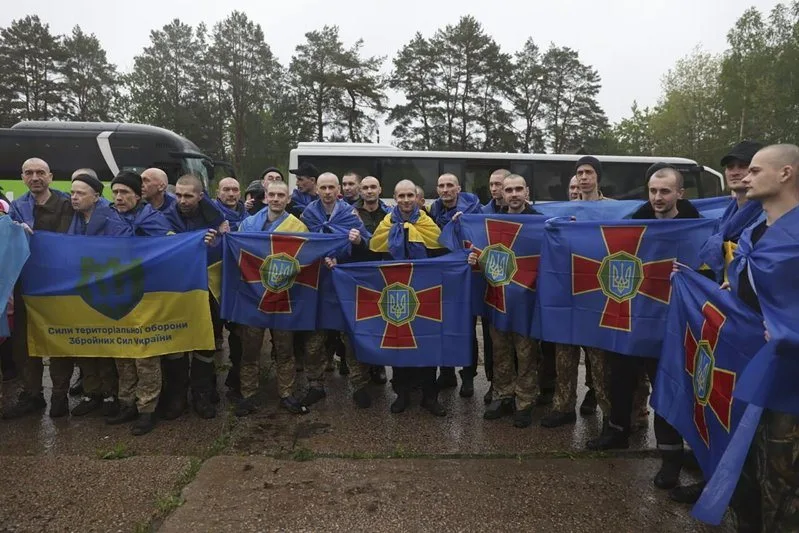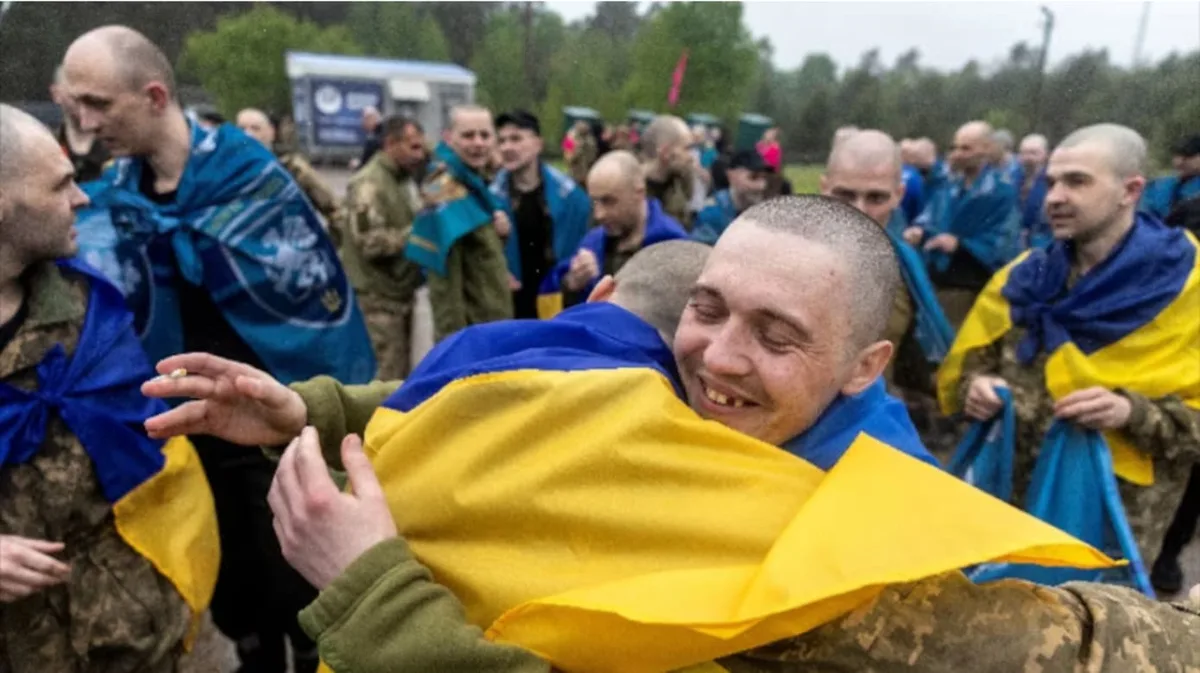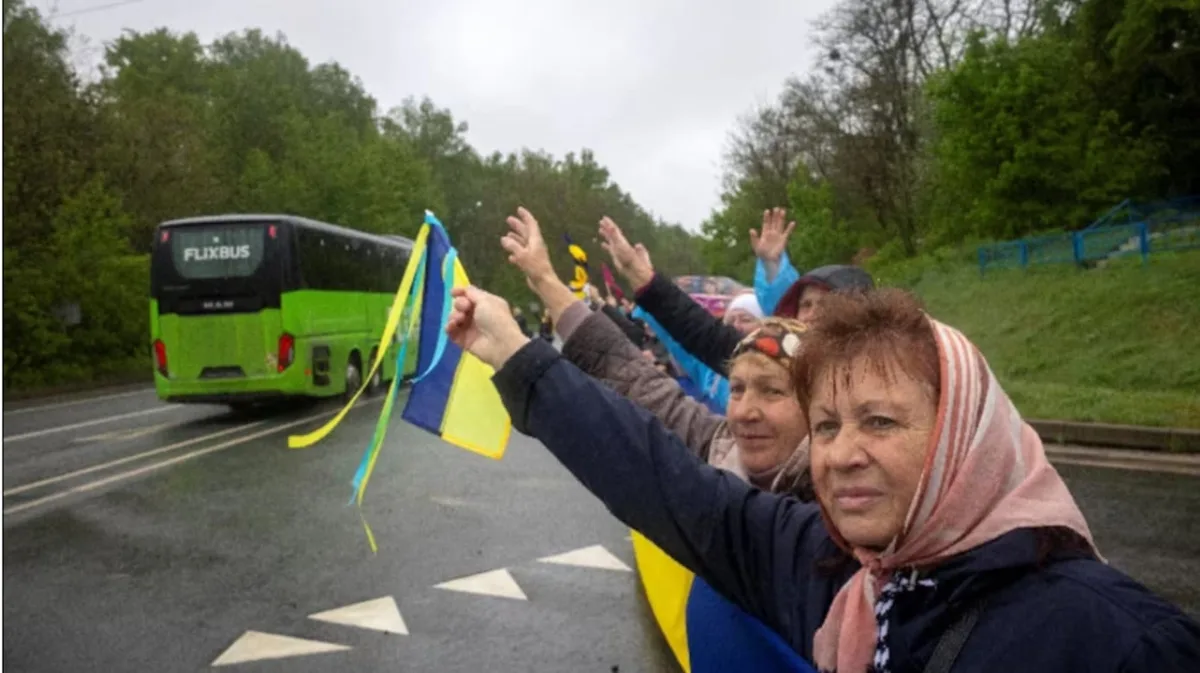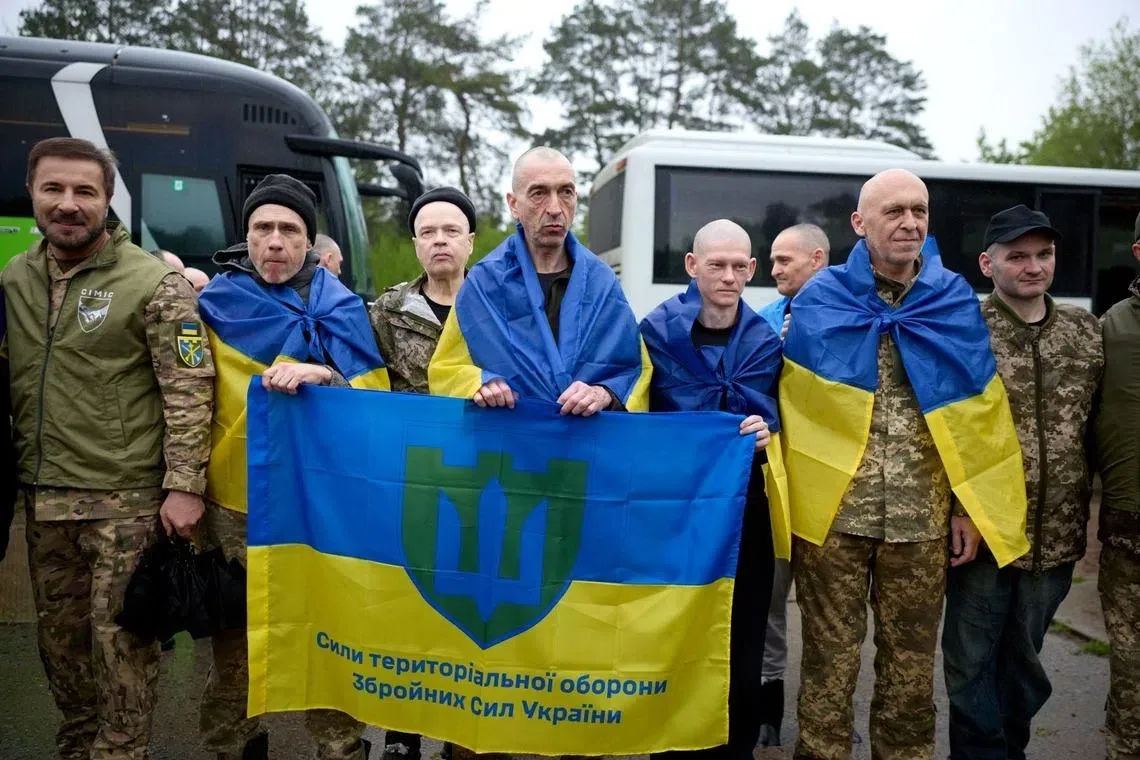
Russia and Ukraine exchanged 205 prisoners of war each on May 15, 2026, marking the first phase of a broader 1,000-for-1,000 prisoner swap agreement brokered by US President Donald Trump [1, 2, 3, 4, 5, 6].
The prisoner exchange followed a three-day ceasefire from May 9 to May 11, also arranged under the US-brokered deal [1, 2, 4, 5, 6]. Despite this ceasefire, Ukraine accused Russia of air raids on Kyiv on May 14 that killed at least 24 civilians [2, 5].
Among the Ukrainian prisoners released were fighters who took part in the defense of Mariupol's Azovstal steel plant and defenders of Chernobyl. Most had been held in Russian captivity since 2022, said Ukrainian President Volodymyr Zelenskyy. He called the exchange "the first phase of the 1,000-for-1,000 prisoner exchange" [2, 5, 6].
The Russian Defence Ministry confirmed 205 Russian servicemen were returned from Ukrainian-controlled territory. They were taken to Belarus to receive psychological and medical care before repatriation to Russia. The ministry added the United Arab Emirates provided humanitarian assistance during the transfer of Russian prisoners [2, 7].
Previous smaller exchanges between the two sides included swaps of 175 prisoners each during Orthodox Easter 2026 and 193 prisoners each on April 24, 2026 [6]. Since Russia's invasion in February 2022, prisoner exchanges have been one of the few areas of cooperation between Moscow and Kyiv [2, 5, 8].
In a related development, on or before May 16, Ukraine received 528 bodies of presumed Ukrainian soldiers killed in battle returned by Russia [8].
Further phases of the prisoner swap are expected to continue under the agreement brokered by President Trump, aiming for a full exchange of 1,000 prisoners on each side [1, 2, 3, 4, 5, 6].