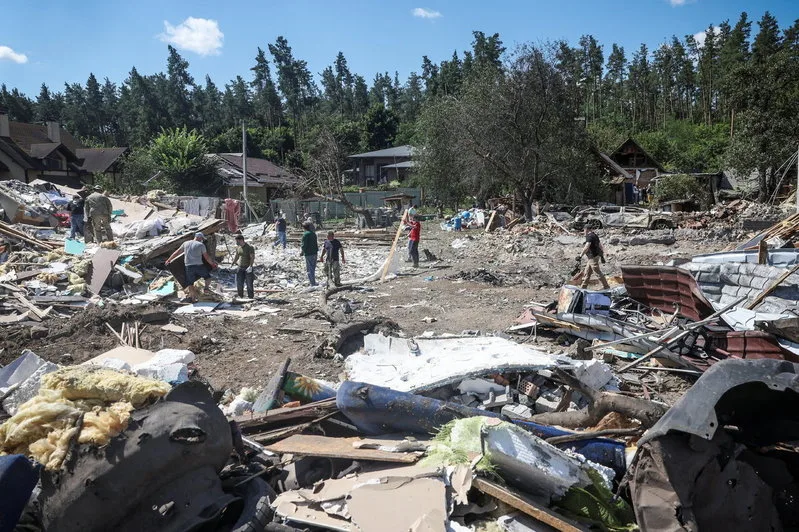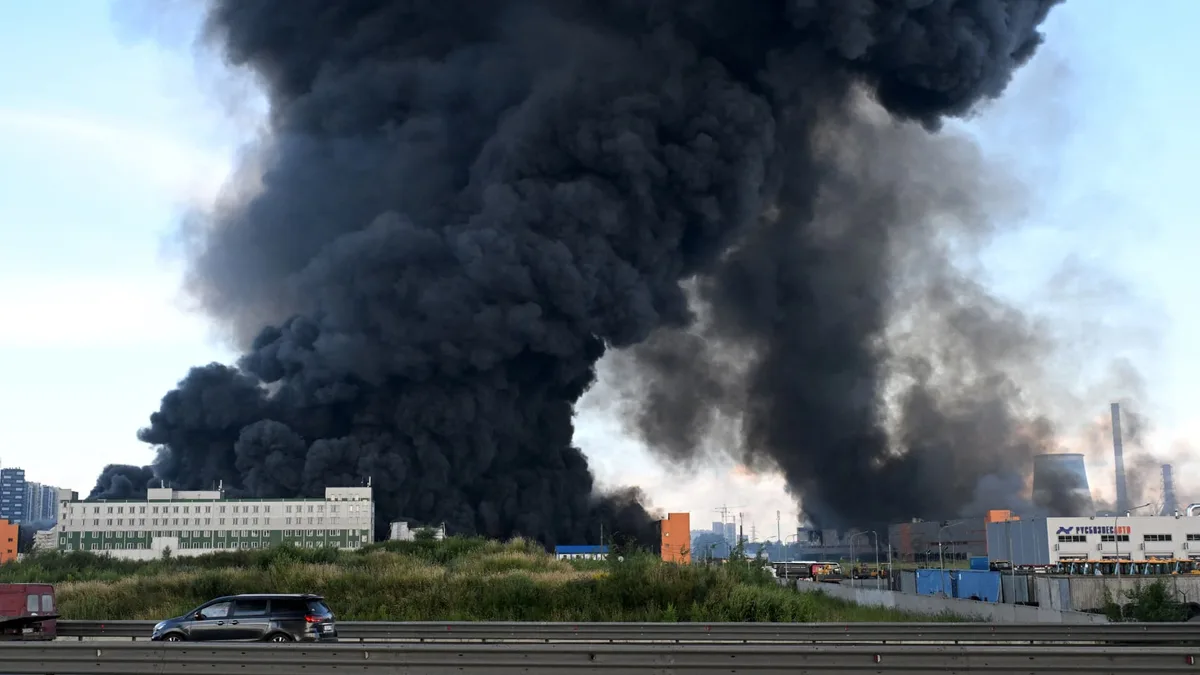
Russian forces attacked the Ukrainian capital Kyiv overnight on July 26 using ballistic missiles, causing fires in at least three districts of the city [1, 2]. Missile debris ignited a fire on the 7th and 8th floors of a multi-storey apartment block in Kyiv's central district, according to officials [1, 2].
Kyiv's mayor Vitali Klitschko reported the attacks and the resulting fires as Ukrainian air defenses worked through about 50 minutes of air raid alert before missile warnings were lifted [1, 3, 2]. There were no immediate reports of casualties from the missile strikes [1, 2].
The attack follows warnings from President Volodymyr Zelenskyy on July 24 that new Russian strikes were likely within 48 hours [1, 2]. That day saw Russian attacks cut power to around 150,000 residents in Chernihiv and northern districts after damage to an energy facility [3]. Ukrainian forces also repelled attacks on Kyiv on the same day [3].
On or before July 24, Ukrainian Defense Forces struck a missile components facility in the Russian city of Kirov and an oil facility approximately 1,350 kilometers away, as part of ongoing efforts against Russian military logistics [3]. Zelenskyy said, "The attack on the Kirov missile components facility is entirely justified given those same components had been used to target Ukrainian cities and communities." He added, "the operation against Russian logistics, which supplies the occupying army with drone components, navigation equipment, and military gear, remains underway" [3].
The broader context includes the European Union unveiling on July 23 its largest sanctions package in four years against Russia, targeting banks, crypto operators, vessels in Russia's shadow fleet, and oil refineries in Russia and Belarus. Estonian Prime Minister Kaja Kallas said, "Russia will only negotiate to end its illegal war and stop killing civilians if it is pressured to do so" [3].
Authorities continue monitoring Kyiv's security after the July 26 missile attack and fires. The air alert was lifted roughly 50 minutes after the strikes began, with emergency teams responding to the fires across three districts [1, 2].