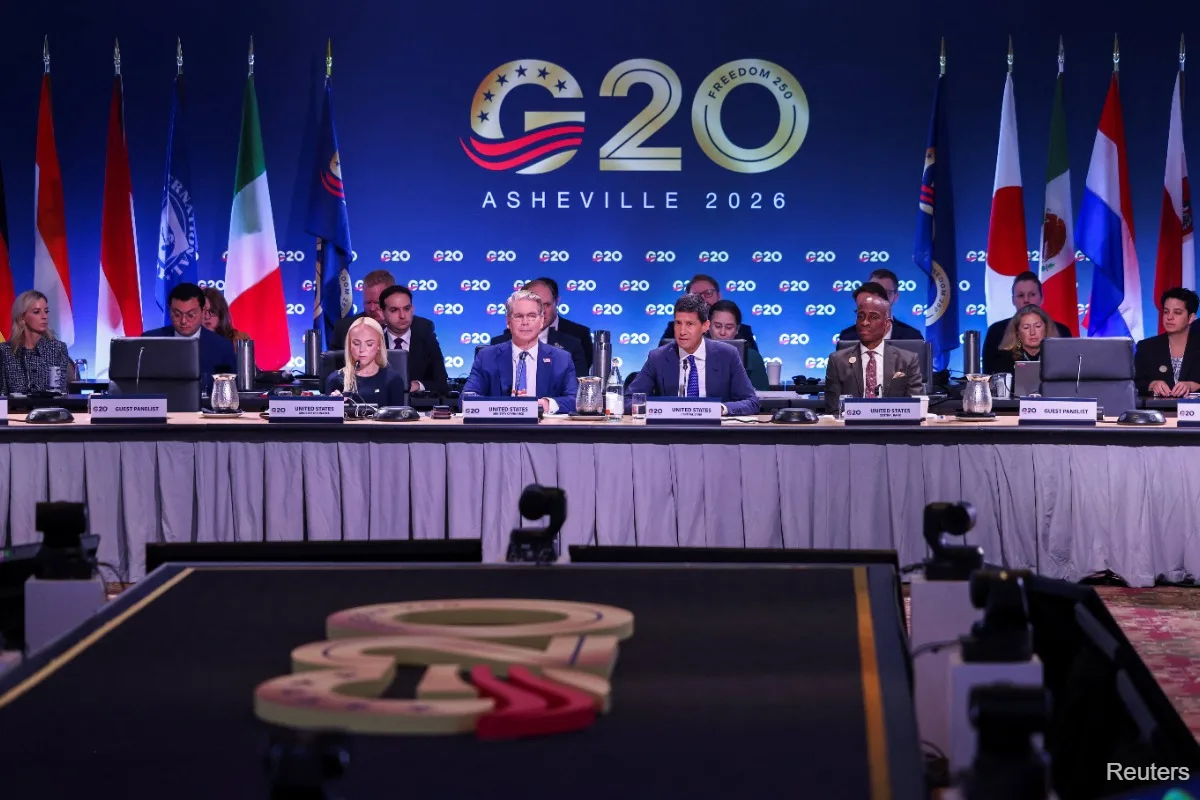
The 2026 G20 finance ministers and central bank governors meeting took place on August 31 and September 1 in Asheville, North Carolina. Russian Finance Minister Anton Siluanov attended in person for the first time since Russia’s 2022 invasion of Ukraine, after being invited by the United States, the G20 rotating president and host [1, 2, 3, 4, 5].
Siluanov’s presence sparked strong disapproval among European finance ministers and officials. They expressed discomfort about Russia’s participation given the ongoing war in Ukraine [1, 2, 6]. Polish Finance Minister Andrzej Domanski said, “We do not trust Russia. They lie constantly and you need to be really, really cautious while discussing with them. So for me it would be very difficult to have any kind of conversation with Russia” [1]. German Finance Minister Lars Klingbeil called Russia’s presence a “troubling signal” and said Europe is preparing further sanctions against Moscow [1, 2, 3, 4, 5]. European officials refused to appear alongside Siluanov in the traditional G20 family photo, which was taken without him [1, 2, 3, 4, 5].
Canadian Finance Minister François-Philippe Champagne said Siluanov’s attendance “created discomfort, no doubt about that” [6]. Despite tensions, Siluanov held a bilateral meeting with US Treasury Secretary Scott Bessent. The two discussed financial cooperation within the G20 framework and a peace plan for Ukraine proposed by former US President Donald Trump [1, 3, 4, 5]. Bessent said no economic relief or agreements for Russia would be made until the Ukraine war ends and called for fair market competition and global economic growth [1, 2, 7].
The G20 meeting concluded without a joint communique. China opposed language critical of its large trade surplus, non-market economic policies, mineral resources, and ensuring navigation security through the Strait of Hormuz [8, 9, 10, 7, 11]. China’s 2025 trade surplus reached a record $1.2 trillion, a 20% rise from 2024 [8, 9, 10, 11]. The chair’s statement was supported by 19 G20 members including Russia but opposed by China [8, 9, 10, 7, 11].
The conference also focused on global economic growth, reducing trade imbalances, sovereign debt restructuring, and applying economic pressure on Iran [1, 2, 8, 7, 11]. Meanwhile, the Trump administration excluded South Africa, the 2025 G20 host, provoking discontent [2, 5, 11]. Several major US media outlets faced reporting access restrictions at the meeting, drawing criticism [1, 2, 3].
On the sidelines, G7 finance ministers met to discuss continued support for Ukraine. Ukraine’s finance minister joined the talks remotely [2, 7, 11]. Rising tensions persisted over US tariffs, notably on Canada, and the war in Iran’s impact on energy prices and the global economy [1, 2, 8, 10, 7, 11].
The G20 finance ministers and central bank governors will reconvene next year in South Africa, the designated 2027 host, continuing efforts to address global economic challenges.