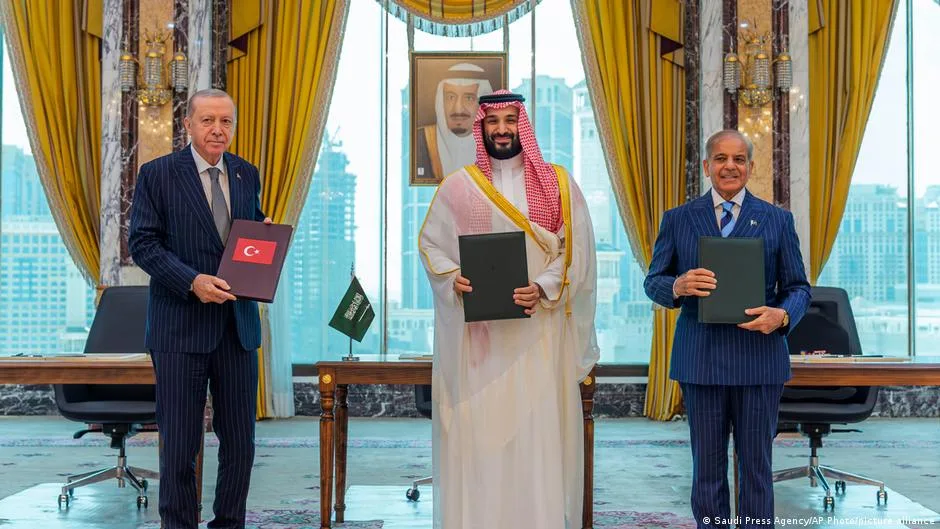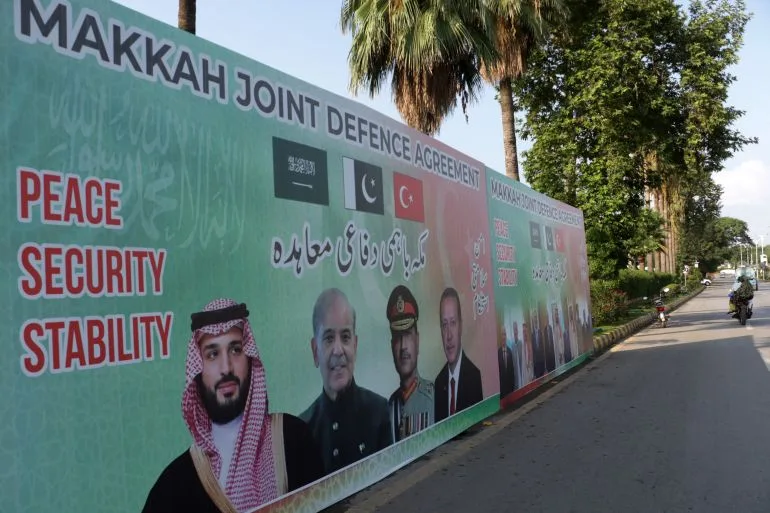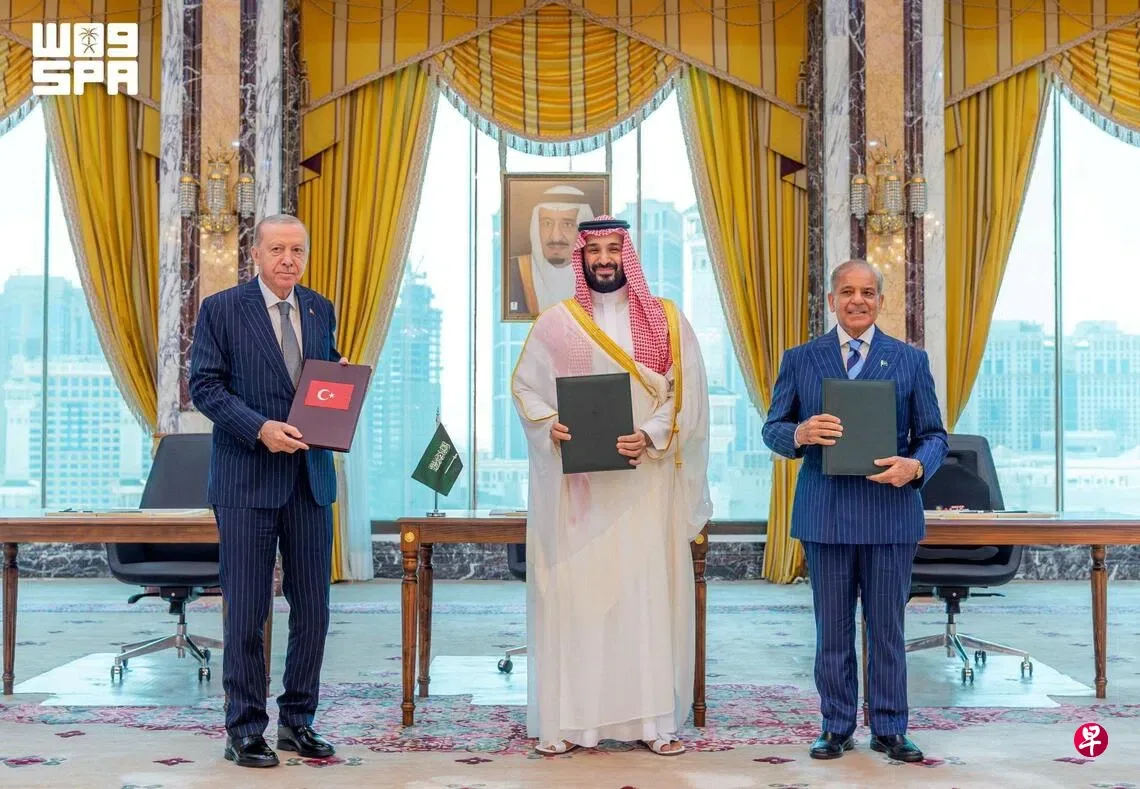
Saudi Arabia, Turkey, and Pakistan signed the Mecca Joint Defence Agreement on August 7, 2026, committing to collective defense where an attack on any member will be seen as an attack on all three states [1, 2, 3, 4, 5]. The pact was formalized in Mecca (or Jeddah) by Saudi Crown Prince Mohammed bin Salman, Turkish President Recep Tayyip Erdogan, and Pakistan Prime Minister Shehbaz Sharif [3, 4, 5].
The agreement aims to strengthen collective security, promote regional peace, and foster cooperation to resolve conflicts, including tensions between Iran and the US [1, 3, 6, 5]. It formalizes existing ties such as military training, joint exercises, personnel exchanges, and intelligence sharing among the three countries [2, 4]. Pakistan’s Foreign Ministry stated the pact is designed to bolster deterrence and collective defense [1, 3, 6].
The Mecca pact is often compared to NATO’s Article 5, leading some to call it an "Islamic NATO," though the full text remains unpublished, leaving questions about specific obligations and geographic scope [4, 5]. Saudi Arabia is seeking additional security partnerships amid uncertainty over the US security umbrella, while Turkey aims for greater regional influence and Pakistan seeks broader strategic standing [2].
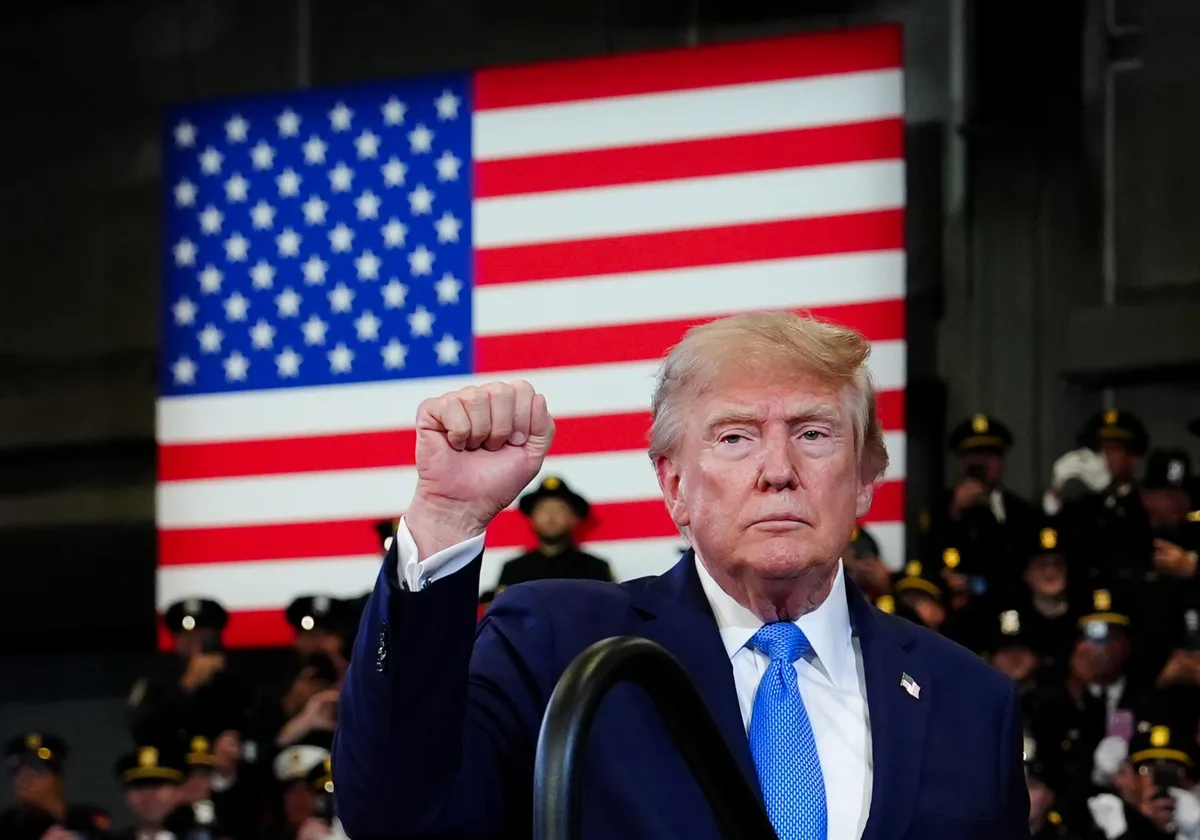
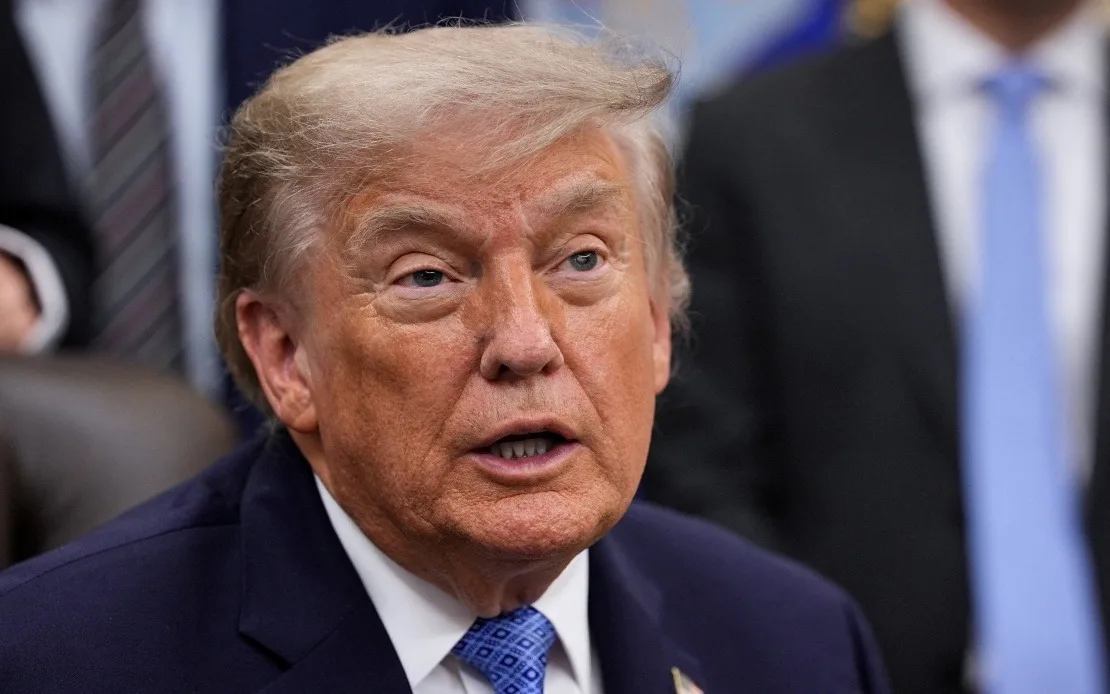
US President Donald Trump welcomed the agreement, calling it "big, bold, and important," praising the three countries for coming together to defend themselves more meaningfully consistent with his focus on allies sharing defense costs [1, 7, 8, 6, 9, 10]. Trump tweeted on August 16 that he was "very happy to see" the pact signed and called it a significant first step [1, 7, 8, 6, 9]. Pakistan Prime Minister Shehbaz Sharif responded by thanking Trump for his support and said the pact would play a constructive role in regional defense and peace [8, 10].
Turkish President Erdogan described the agreement as "a different kind of transformation" and an "important message for peace," especially during a period of US-Iran tensions and violence involving Iran-backed Houthi attacks in Yemen [5, 1, 3, 6].
Former Indian envoy Ajay Bisaria downplayed the pact’s significance, saying it was unlikely to change India-Pakistan dynamics or Saudi Arabia’s stance and called it mostly symbolic [2].
The pact was signed amid ongoing regional tensions, including US-Iran conflicts and proxy violence in Yemen [1, 3, 6]. The Mecca Joint Defence Agreement marks a step toward deeper regional defense cooperation by three key Muslim-majority states.
Next steps include ongoing implementation of joint military activities and efforts to clarify operational details, though the full agreement text has yet to be released publicly [4].