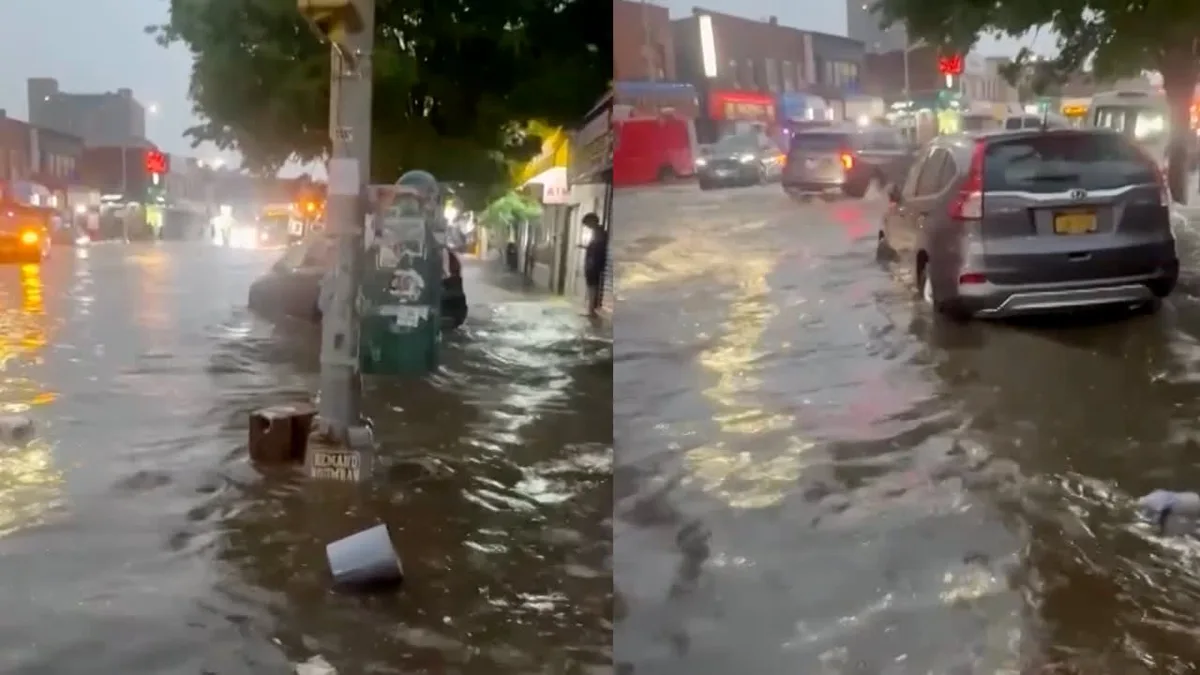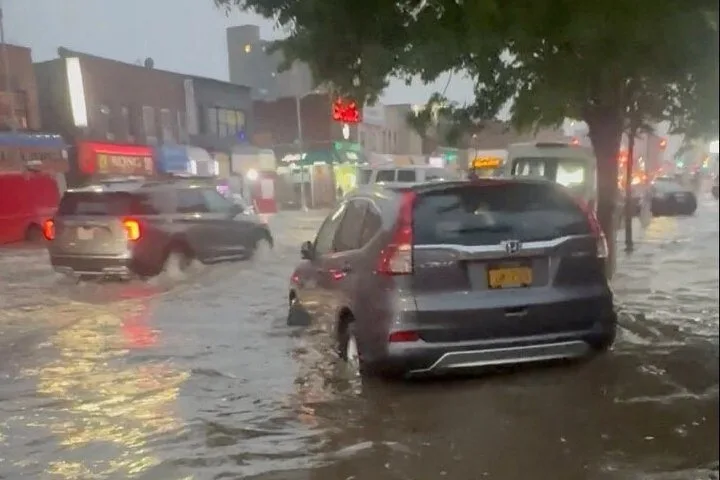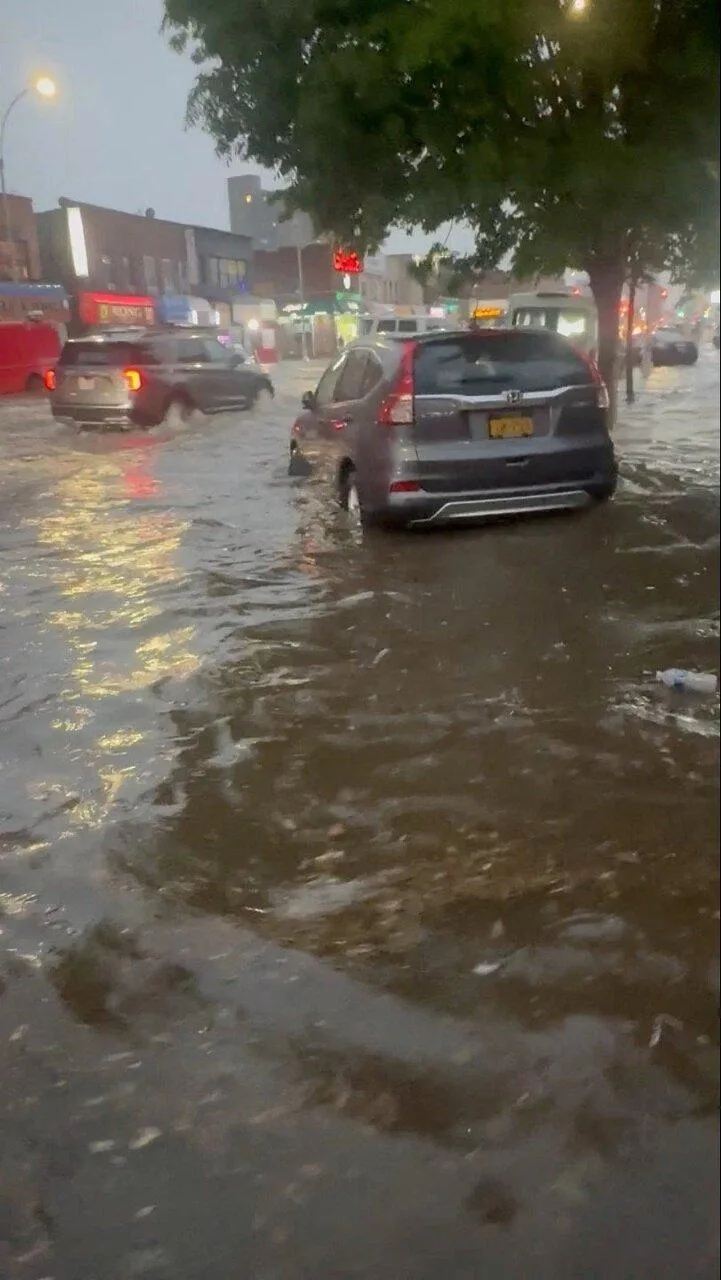
On the evening of May 20, 2026, New York City was hit by a severe thunderstorm that brought heavy rainfall and strong winds up to 60 mph (96 km/h), causing widespread flooding across the city [1, 2, 3, 4, 5, 6, 7, 8]. The storm dumped over 2.57 inches of rain in Queens' Bellerose area alone, exceeding the city drainage system's capacity designed for about 2 inches per hour [1, 2, 3, 4, 5, 6, 7, 8].
Multiple boroughs including Brooklyn, Queens—especially Bellerose and Hollis—Staten Island, and Manhattan were severely flooded. Floodwaters reached waist height in some locations and transformed streets into fast-flowing rivers, blocking roads and crippling traffic [1, 2, 3, 4, 5, 6, 7, 8]. Traffic on I-495 in Fresh Meadows, parts of Jackie Robinson Parkway, and several subway lines were closed, delayed or suspended [2, 3, 4, 5, 6, 7, 8].
Strong winds toppled trees from Staten Island to Brooklyn, damaging infrastructure and causing power outages. An explosion occurred near the Brooklyn port, reportedly linked to downed power lines [2, 3, 4, 5, 8]. Temperature rapidly dropped in nearby Newark from about 33°C to 22°C within 35 minutes during the storm [2, 3, 4, 5].
Many residents were stranded by floodwaters or forced to climb onto benches and elevated surfaces to seek safety. A widely shared video showed a woman in pink clothing swept off her feet after stepping off a bus halted in deep water in Queens; bystanders rescued her swiftly [1, 2, 3, 4, 5, 6, 7, 8].
Mayor Zohran Mamdani visited affected neighborhoods on May 21 and acknowledged the city's drainage system was overwhelmed. "This storm’s rainfall far exceeded the capacity of our sewer system, which is only designed to handle about 2 inches per hour," he said [6]. Mamdani urged residents to report damage online or call 311 for help with flooded basements and sewage backups [7]. Queens Borough President Donovan Richards said raising road elevations would help but is complicated by the need to raise homes as well [6].
The city is investing millions in the 10-year "Cloudburst" resilience project to improve rainwater storage and absorption capabilities [6, 7]. Residents expressed fears of repeated flooding, citing decades of damage and losses in prior storms [6, 7].
Officials continue damage assessments and clean-up operations following the storm. Traffic and public transit disruptions remain under review to restore normal service.