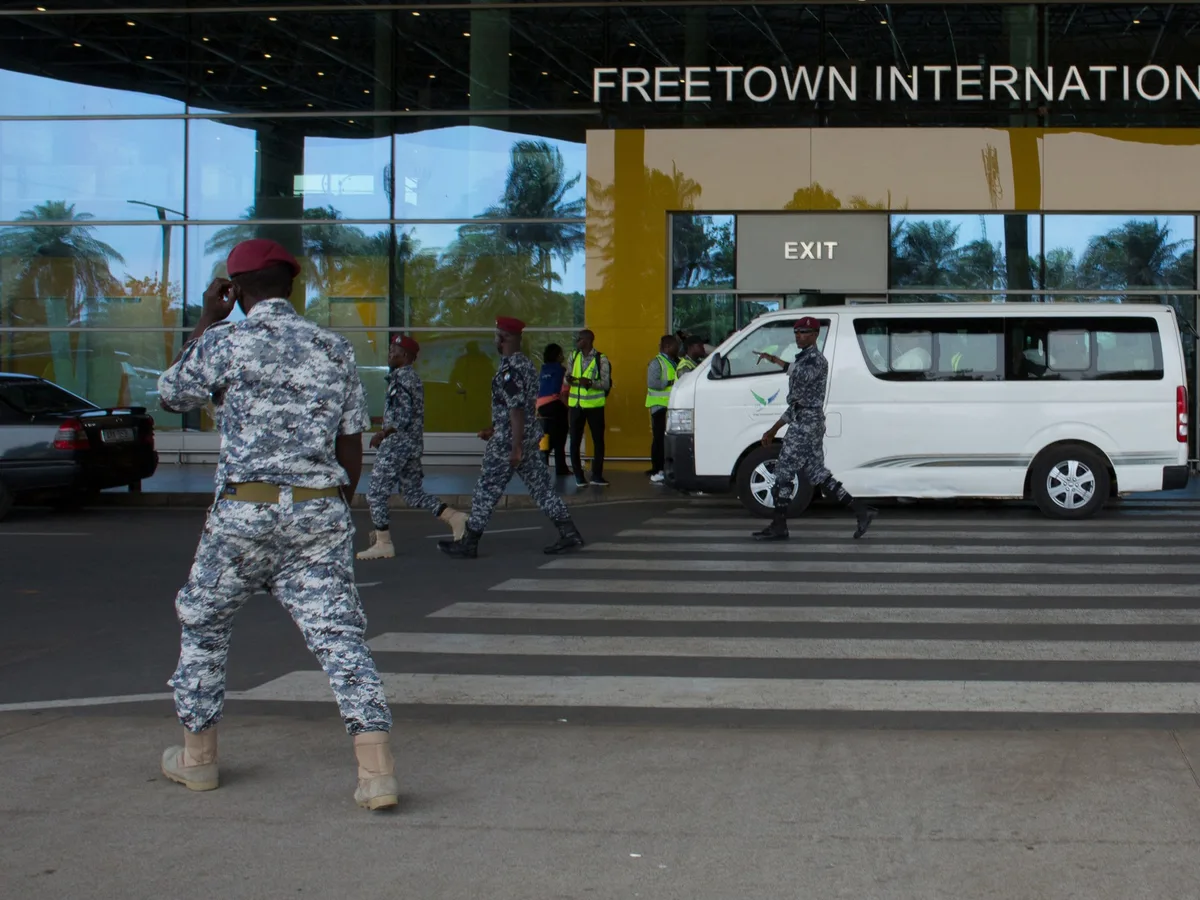
Sierra Leone received nine West African migrants deported from the United States on a plane that arrived Wednesday morning, marking the first group sent under a new repatriation deal between the two countries [1, 2].
The deportees include five from Ghana, two from Guinea, one from Nigeria, and one from Senegal, all countries within the Economic Community of West African States (ECOWAS) region [1, 2]. Sierra Leone agreed to accept up to 300 deportees annually from the US, but only if they originate from ECOWAS member states [1, 2].
ECOWAS agreements allow citizens to stay in member countries for up to 90 days [1, 2]. However, sources differ on how long the deportees will remain in Sierra Leone before onward travel. One report states the migrants will stay roughly two weeks in temporary housing such as hotels or facilities before returning home [1], while another says the migrants can stay about 90 days as allowed by the government agreement [2].
The US government provided a $1.5 million grant to Sierra Leone to cover humanitarian and operational costs related to the deportee agreement [2]. Similar third-country deportation arrangements exist between the US and at least nine African countries including Democratic Republic of Congo, Ghana, South Sudan, Equatorial Guinea, Rwanda, Uganda, Eswatini, Cameroon, and Sierra Leone [1, 2].
The deportations reflect actions by the Trump administration to tighten immigration policies since January 2017 [1, 2]. According to a minority US Senate committee report, over $40 million has likely been spent on third-country deportations through January 2026 [1].
Some deportees reported traumatic experiences in US custody. Doris Bah, a Sierra Leone health ministry official, said, “Some of the deportees were arrested on the streets and their place of work, while another was arrested while playing football in the US.” She added that “the deportees were traumatised due to the months in chains during detention in the US” [2].
Human Rights Watch criticized such third-country deportation deals as "opaque" and violative of international human rights law by using human suffering as leverage [1, 2]. The Sierra Leone government has not publicly announced any other concessions it received aside from the $1.5 million US grant [1, 2].
The nine deported migrants will be housed temporarily in Sierra Leone before they are sent to their respective home countries [1, 2].