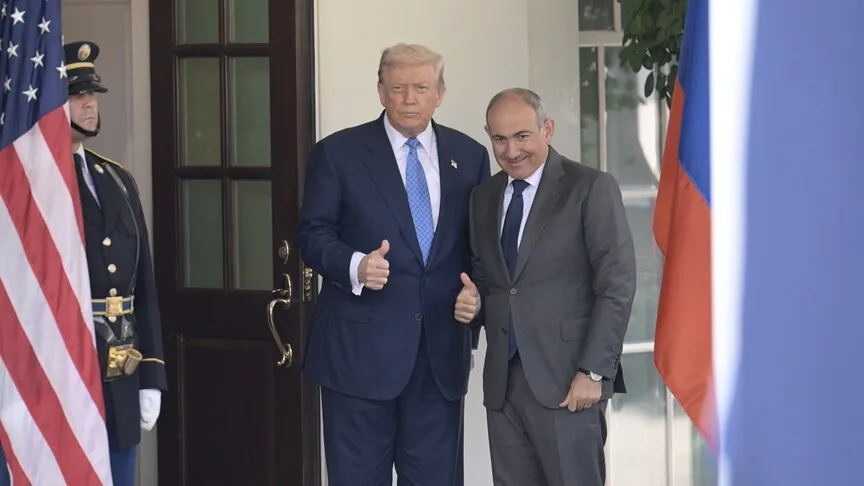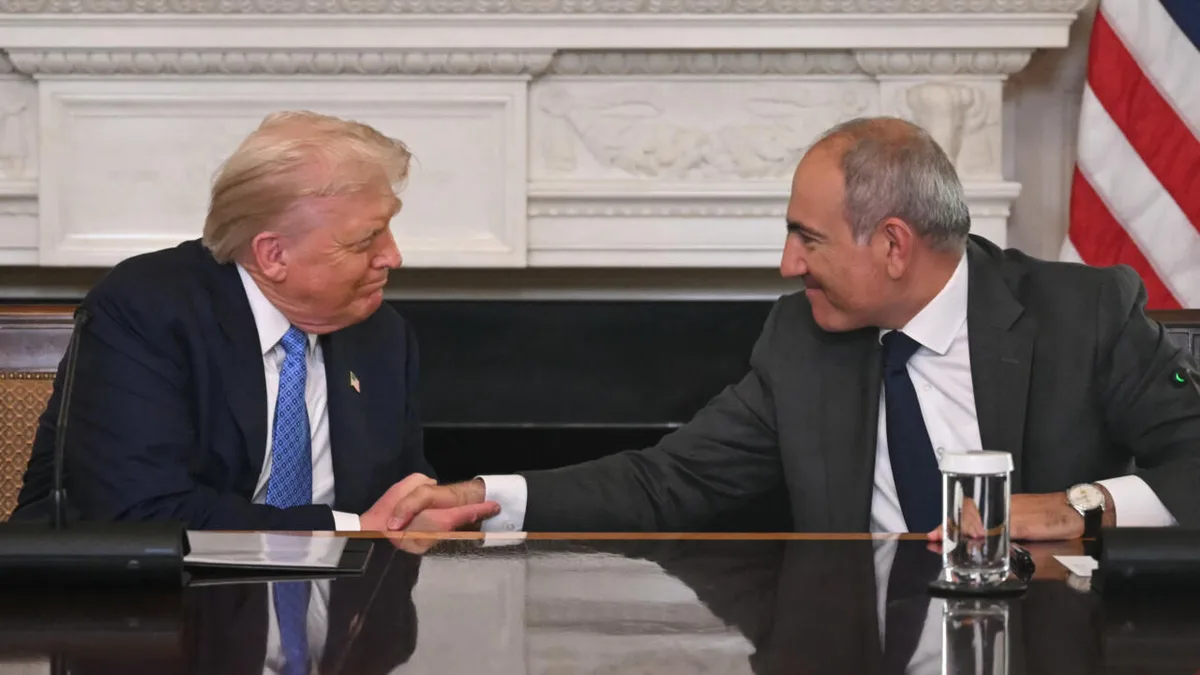
Former US President Donald Trump publicly endorsed Armenian Prime Minister Nikol Pashinyan for re-election in the June 7 parliamentary elections, describing him as "a great friend and Leader" who is "making his Country strong, wealthy, and very secure!" [1, 2, 3].
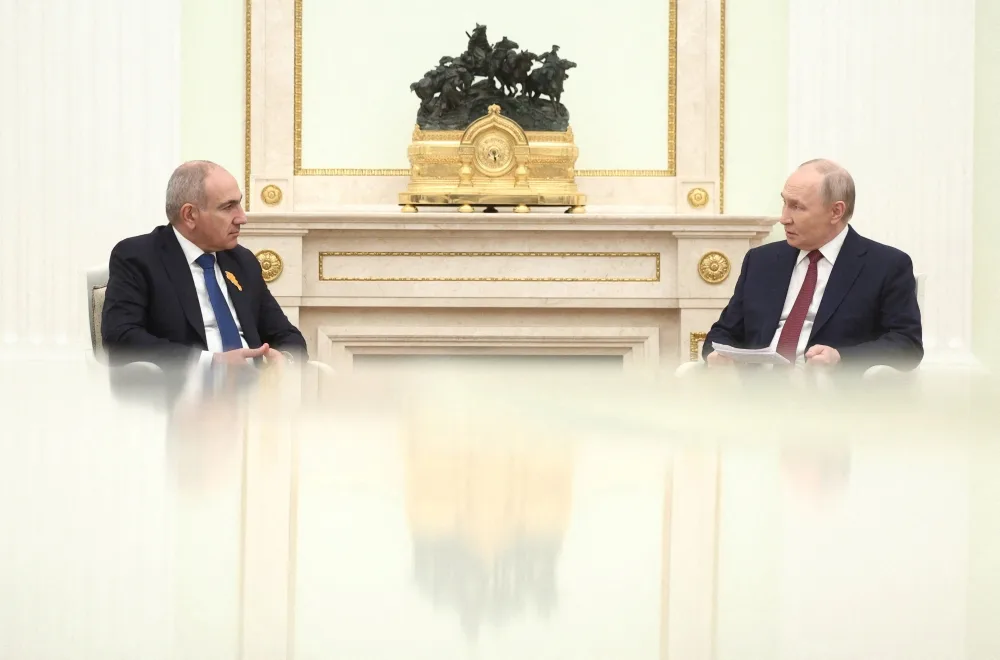
The upcoming elections are viewed as a key test for Pashinyan's government amid Armenia's ongoing shift toward the West and away from Russia [1, 2, 3]. Armenia is still coping with the consequences of Azerbaijan's 2023 military takeover of the Nagorno-Karabakh region, which triggered the mass exodus of about 100,000 ethnic Armenians [1, 2].
Trump emphasized the shared vision of peace and prosperity he sees between himself and Pashinyan. He stated, "Nikol completely shares my vision of PEACE and PROSPERITY for Armenia and the entire South Caucasus region," and declared, "Nikol has my COMPLETE and TOTAL Endorsement for Re-Election on June 7, 2026" [1, 2].
A landmark US-brokered peace deal, chaired by Trump, led Armenia to agree to establish a transit corridor linking Azerbaijan with its Nakhchivan exclave, named the Trump Route for International Peace and Prosperity (TRIPP) [1, 2, 3]. Trump noted on Truth Social that "soon, the United States and Armenia will break ground together on the TRIPP corridor, which will transform the South Caucasus, and help our wonderful American Energy Companies gain access from Central Asia all the way to the United States" [1, 3].
The TRIPP Development Company, backed by the US with a 74% stake and an initial 49-year term, will oversee rail, road, energy, and digital infrastructure along the corridor [3]. Armenia retains full sovereignty over all areas involved in the project [3].
On May 27, US Secretary of State Marco Rubio visited Armenia and signed a strategic partnership agreement and a memorandum of understanding on critical minerals, reinforcing the US-Armenia cooperation ahead of the elections [3].
The parliamentary elections on June 7 will serve as a barometer of Pashinyan's domestic standing and the direction of Armenia's foreign policy in the volatile South Caucasus region [1, 2, 3].